

Meta’s Threads doubles down on Communities, along with “Champion” badge and profile labels
Meta is retooling Threads with deeper community spaces, custom badges, and interest labels, a move designed to turn passive scrolling into active group participation.
Meta
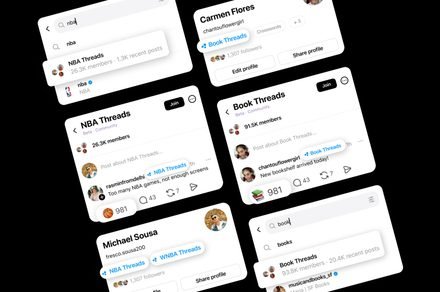
Meta’s microblogging platform, Threads, is expanding its Communities feature. It now supports more than 200 communities, up from just over 100 (via newsroom post). The increasing number of communities covers a broader array of interests, including general topics like books and K-pop to specific conversation points like favorite sports teams.
Furthermore, Meta is also testing engagement features inside the expanded communities. Highly engaging contributors will receive a “Champion” badge on their profile, signifying that they keep the conversation active and are highly followed on the platform. Meanwhile, users will be able to set customizable interest labels, functioning like tag labels beneath usernames.
Threads leans into identity-driven discussions
Both features add a sense of personal identity among peers within the app, signalling a shift from the chronological or algorithmic feed. In addition, they give users a reason to stay and contribute (beyond just posting to their feed), boosting platform engagement. However, they’re currently in the testing phase, and hence, not everyone has access to them.
If you’re an everyday Threads user, the expansion of the Communities feature and addition of badges and labels could reshape how you use the app. While community spaces make it easier to find focused conversations rather than scrolling endlessly, badges ensure that high-quality contributors stand out, and flair elevates the context.
For creators and influencers using Threads, the updates open another path to greater visibility beyond follower count, as they can be more active where their target audience already lives. The update also signals an investment in real discussions, rather than algorithmic recommendations.
Meta has also indicated that it will roll out similar features for Threads in the near future, including ranking tools within communities and ways to ensure the most relevant post appears at the top in users’ feeds. We could also see Threads pushing deeper into moderation tools, leaderboards, or reputation systems.
Ultimately, Theads is on its way to encourage topic-based discussion, a technique that has proven very effective for platforms like Reddit. Most recently, Meta also announced new features for its Edits app along with a “Your Algorithm” feature for Instagram users. While the former helps users or creators create content more easily, the latter lets them fine-tune their feed.
For more than five years, Shikhar has consistently simplified developments in the field of consumer tech and presented them…
Use a passkey on X? Update it by November 10 or lose access
Hardware keys and passkeys must be re-enrolled, authenticator apps are not affected, says X.
What’s happened? X has issued a warning to users that it’s moving logins to x.com and, as part of that, plans to phase out the twitter.com domain. Anyone using a hardware security key or a passkey needs to re-enroll by November 10 so the key is tied to x.com instead. X says this is not a security incident, and authenticator apps are unaffected.
The company’s Safety account said that accounts using security keys for 2FA must re-enroll to keep access, via posts on X.
Meta brings disappearing posts to Threads under a spooky name
You can now share posts that vanish from the public feed in 24 hours, and also keep their replies private.
Remember disappearing messages? Well, they are now coming to Threads, the X rival branched out of Instagram. Meta is calling them “ghost posts,” though the name is somewhat confusing, as they are not technically invisible.
What’s the big shift?
Facebook Dating is on the rise, and there’s an obvious reason you might like it too
Get in loser, we are going dating on Facebook
What Happened: Remember when Facebook launched a dating feature back in 2019? Most of us probably rolled our eyes or didn’t even notice. But get this: it has quietly become a huge deal.
We’re talking about 21 million people using it every single day. That’s actually more daily users than Hinge!
