Close Menu

    Subscribe to Updates

    Get the latest creative news from FooBar about art, design and business.

    What's Hot

    The European Union has put €700 million into NanoIC

    Ferrari’s New Jony Ive–Designed EV Is Swathed in Glass and Aluminum

    Best Ebike Locks (2026): Kryptonite, Litelok, Abus, Hiplok

    Facebook X (Twitter) Instagram
    • Artificial Intelligence
    • Business Technology
    • Cryptocurrency
    • Gadgets
    • Gaming
    • Health
    • Software and Apps
    • Technology
    Facebook X (Twitter) Instagram Pinterest Vimeo
    Tech AI Verse
    • Home
    • Artificial Intelligence

      Read the extended transcript: President Donald Trump interviewed by ‘NBC Nightly News’ anchor Tom Llamas

      February 6, 2026

      Stocks and bitcoin sink as investors dump software company shares

      February 4, 2026

      AI, crypto and Trump super PACs stash millions to spend on the midterms

      February 2, 2026

      To avoid accusations of AI cheating, college students are turning to AI

      January 29, 2026

      ChatGPT can embrace authoritarian ideas after just one prompt, researchers say

      January 24, 2026
    • Business

      New VoidLink malware framework targets Linux cloud servers

      January 14, 2026

      Nvidia Rubin’s rack-scale encryption signals a turning point for enterprise AI security

      January 13, 2026

      How KPMG is redefining the future of SAP consulting on a global scale

      January 10, 2026

      Top 10 cloud computing stories of 2025

      December 22, 2025

      Saudia Arabia’s STC commits to five-year network upgrade programme with Ericsson

      December 18, 2025
    • Crypto

      Arthur Hayes Attributes Bitcoin Crash to ETF-Linked Dealer Hedging

      February 8, 2026

      Monero XMR Attempts First Recovery in a Month, But Death Cross Risk Looms

      February 8, 2026

      HBAR Price Eyes a Potential 30% Rally – Here’s What the Charts are Signalling 

      February 8, 2026

      Bitcoin Mining Difficulty Hits Its Biggest Drop Since 2021 China Ban

      February 8, 2026

      How Severe Is This Bitcoin Bear Market and Where Is Price Headed Next?

      February 8, 2026
    • Technology

      The European Union has put €700 million into NanoIC

      February 9, 2026

      Ferrari’s New Jony Ive–Designed EV Is Swathed in Glass and Aluminum

      February 9, 2026

      Best Ebike Locks (2026): Kryptonite, Litelok, Abus, Hiplok

      February 9, 2026

      No Company Has Admitted to Replacing Workers With AI in New York

      February 9, 2026

      Soundcore Aerofit 2 Pro Review: Open Earbuds With ANC?

      February 9, 2026
    • Others
      • Gadgets
      • Gaming
      • Health
      • Software and Apps
    Check BMI
    Tech AI Verse
    You are at:Home»Technology»Microsoft says AI can create “zero day” threats in biology
    Technology

    Microsoft says AI can create “zero day” threats in biology

    TechAiVerseBy TechAiVerseOctober 3, 2025No Comments4 Mins Read2 Views
    Facebook Twitter Pinterest Telegram LinkedIn Tumblr Email Reddit
    Microsoft says AI can create “zero day” threats in biology
    Share
    Facebook Twitter LinkedIn Pinterest WhatsApp Email

    Microsoft says AI can create “zero day” threats in biology

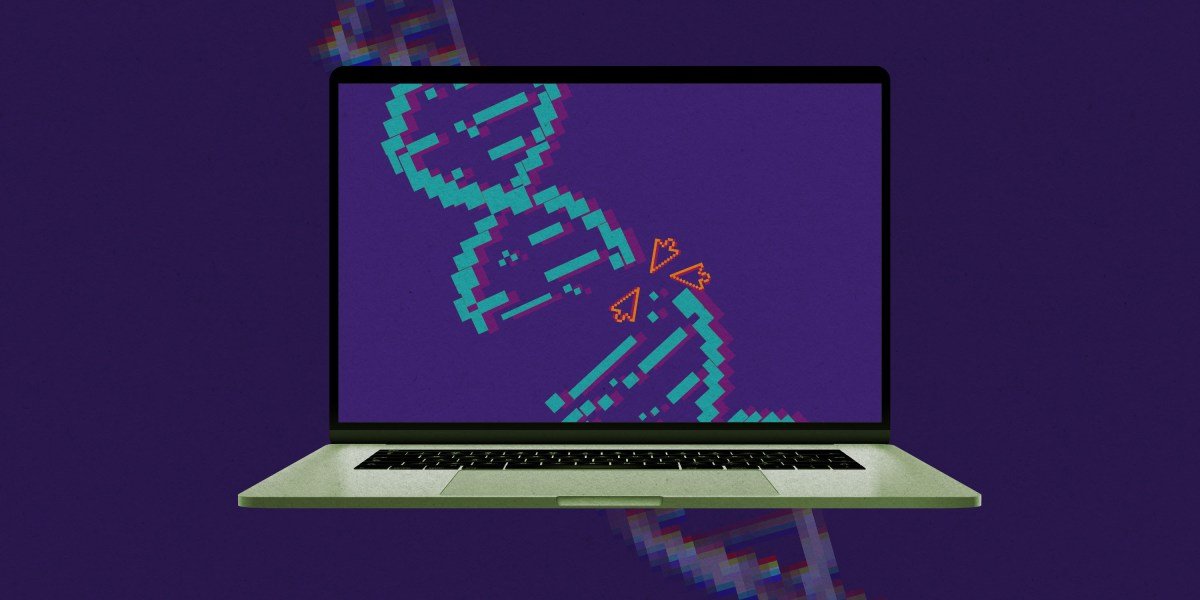
    A team at Microsoft says it used artificial intelligence to discover a “zero day” vulnerability in the biosecurity systems used to prevent the misuse of DNA.

    These screening systems are designed to stop people from purchasing genetic sequences that could be used to create deadly toxins or pathogens. But now researchers led by Microsoft’s chief scientist, Eric Horvitz, says they have figured out how to bypass the protections in a way previously unknown to defenders. 

    The team described its work today in the journal Science.

    Horvitz and his team focused on generative AI algorithms that propose new protein shapes. These types of programs are already fueling the hunt for new drugs at well-funded startups like Generate Biomedicines and Isomorphic Labs, a spinout of Google. 

    The problem is that such systems are potentially “dual use.” They can use their training sets to generate both beneficial molecules and harmful ones.

    Microsoft says it began a “red-teaming” test of AI’s dual-use potential in 2023 in order to determine whether “adversarial AI protein design” could help bioterrorists manufacture harmful proteins. 

    The safeguard that Microsoft attacked is what’s known as biosecurity screening software. To manufacture a protein, researchers typically need to order a corresponding DNA sequence from a commercial vendor, which they can then install in a cell. Those vendors use screening software to compare incoming orders with known toxins or pathogens. A close match will set off an alert.

    To design its attack, Microsoft used several generative protein models (including its own, called EvoDiff) to redesign toxins—changing their structure in a way that let them slip past screening software but was predicted to keep their deadly function intact.

    The researchers say the exercise was entirely digital and they never produced any toxic proteins. That was to avoid any perception that the company was developing bioweapons. 

    Before publishing the results, Microsoft says, it alerted the US government and software makers, who’ve already patched their systems, although some AI-designed molecules can still escape detection. 

    “The patch is incomplete, and the state of the art is changing. But this isn’t a one-and-done thing. It’s the start of even more testing,” says Adam Clore, director of technology R&D at Integrated DNA Technologies, a large manufacturer of DNA, who is a coauthor on the Microsoft report. “We’re in something of an arms race.”

    To make sure nobody misuses the research, the researchers say, they’re not disclosing some of their code and didn’t reveal what toxic proteins they asked the AI to redesign. However, some dangerous proteins are well known, like ricin—a poison found in castor beans—and the infectious prions that are the cause of mad-cow disease.

    “This finding, combined with rapid advances in AI-enabled biological modeling, demonstrates the clear and urgent need for enhanced nucleic acid synthesis screening procedures coupled with a reliable enforcement and verification mechanism,” says Dean Ball, a fellow at the Foundation for American Innovation, a think tank in San Francisco.

    Ball notes that the US government already considers screening of DNA orders a key line of security. Last May, in an executive order on biological research safety, President Trump called for an overall revamp of that system, although so far the White House hasn’t released new recommendations.

    Others doubt that commercial DNA synthesis is the best point of defense against bad actors. Michael Cohen, an AI-safety researcher at the University of California, Berkeley, believes there will always be ways to disguise sequences and that Microsoft could have made its test harder.

    “The challenge appears weak, and their patched tools fail a lot,” says Cohen. “There seems to be an unwillingness to admit that sometime soon, we’re going to have to retreat from this supposed choke point, so we should start looking around for ground that we can actually hold.” 

    Cohen says biosecurity should probably be built into the AI systems themselves—either directly or via controls over what information they give. 

    But Clore says monitoring gene synthesis is still a practical approach to detecting biothreats, since the manufacture of DNA in the US is dominated by a few companies that work closely with the government. By contrast, the technology used to build and train AI models is more widespread. “You can’t put that genie back in the bottle,” says Clore. “If you have the resources to try to trick us into making a DNA sequence, you can probably train a large language model.”

    Share. Facebook Twitter Pinterest LinkedIn Reddit WhatsApp Telegram Email
    Previous ArticleThe Download: RIP EV tax credits, and OpenAI’s new valuation
    Next Article The Download: using AI to discover “zero day” vulnerabilities, and Apple’s ICE app removal
    TechAiVerse
    • Website

    Jonathan is a tech enthusiast and the mind behind Tech AI Verse. With a passion for artificial intelligence, consumer tech, and emerging innovations, he deliver clear, insightful content to keep readers informed. From cutting-edge gadgets to AI advancements and cryptocurrency trends, Jonathan breaks down complex topics to make technology accessible to all.

    Related Posts

    The European Union has put €700 million into NanoIC

    February 9, 2026

    Ferrari’s New Jony Ive–Designed EV Is Swathed in Glass and Aluminum

    February 9, 2026

    Best Ebike Locks (2026): Kryptonite, Litelok, Abus, Hiplok

    February 9, 2026
    Leave A Reply Cancel Reply

    Top Posts

    Ping, You’ve Got Whale: AI detection system alerts ships of whales in their path

    April 22, 2025660 Views

    Lumo vs. Duck AI: Which AI is Better for Your Privacy?

    July 31, 2025248 Views

    6.7 Cummins Lifter Failure: What Years Are Affected (And Possible Fixes)

    April 14, 2025148 Views

    6 Best MagSafe Phone Grips (2025), Tested and Reviewed

    April 6, 2025111 Views
    Don't Miss
    Technology February 9, 2026

    The European Union has put €700 million into NanoIC

    The European Union has put €700 million into NanoIC The European Union has formally inaugurated…

    Ferrari’s New Jony Ive–Designed EV Is Swathed in Glass and Aluminum

    Best Ebike Locks (2026): Kryptonite, Litelok, Abus, Hiplok

    No Company Has Admitted to Replacing Workers With AI in New York

    Stay In Touch
    • Facebook
    • Twitter
    • Pinterest
    • Instagram
    • YouTube
    • Vimeo

    Subscribe to Updates

    Get the latest creative news from SmartMag about art & design.

    About Us
    About Us

    Welcome to Tech AI Verse, your go-to destination for everything technology! We bring you the latest news, trends, and insights from the ever-evolving world of tech. Our coverage spans across global technology industry updates, artificial intelligence advancements, machine learning ethics, and automation innovations. Stay connected with us as we explore the limitless possibilities of technology!

    Facebook X (Twitter) Pinterest YouTube WhatsApp
    Our Picks

    The European Union has put €700 million into NanoIC

    February 9, 20260 Views

    Ferrari’s New Jony Ive–Designed EV Is Swathed in Glass and Aluminum

    February 9, 20260 Views

    Best Ebike Locks (2026): Kryptonite, Litelok, Abus, Hiplok

    February 9, 20260 Views
    Most Popular

    7 Best Kids Bikes (2025): Mountain, Balance, Pedal, Coaster

    March 13, 20250 Views

    VTOMAN FlashSpeed 1500: Plenty Of Power For All Your Gear

    March 13, 20250 Views

    This new Roomba finally solves the big problem I have with robot vacuums

    March 13, 20250 Views
    © 2026 TechAiVerse. Designed by Divya Tech.
    • Home
    • About Us
    • Contact Us
    • Privacy Policy
    • Terms & Conditions

    Type above and press Enter to search. Press Esc to cancel.