MIT engineers turn waste heat into computing power with new silicon structures – NotebookCheck.net News
ⓘ MIT
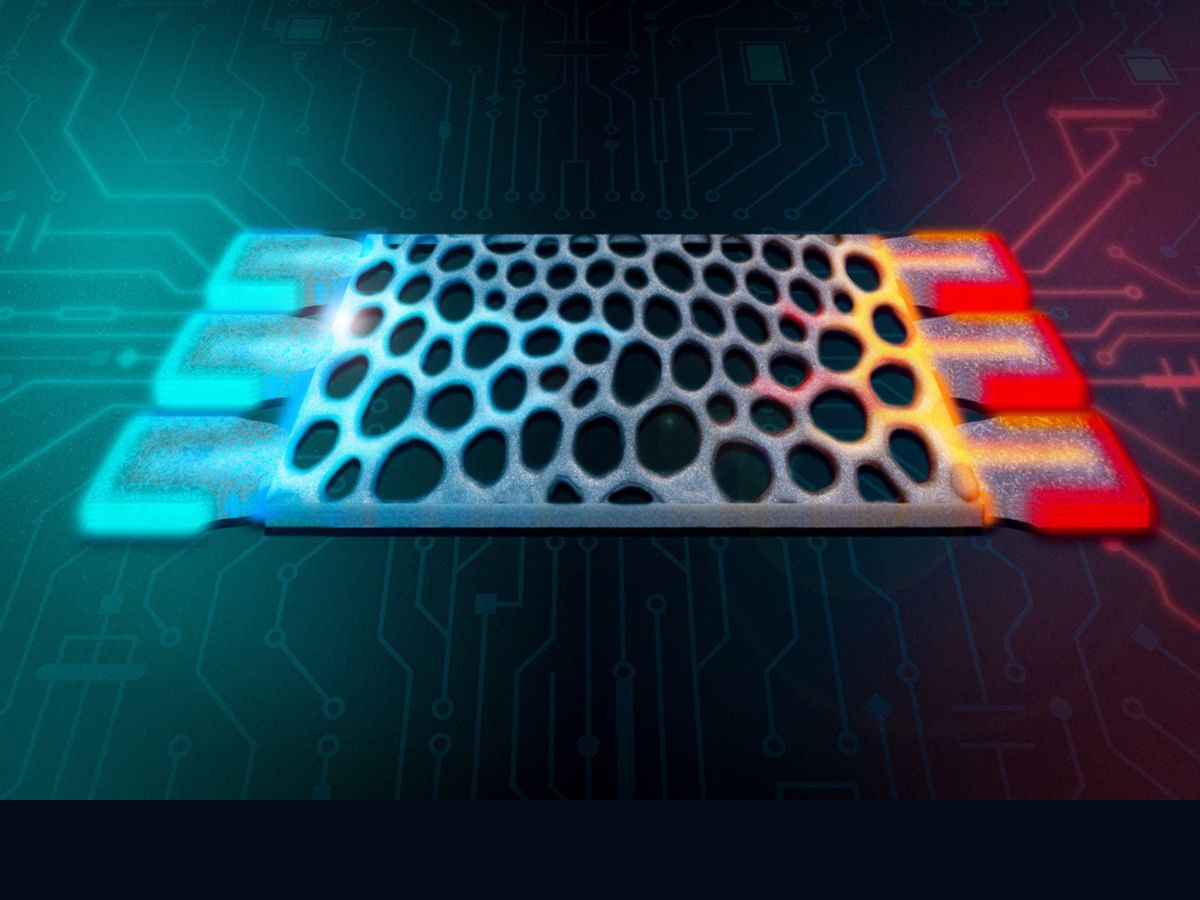
A team of researchers at MIT has created microscopic devices that perform machine-learning math using only the heat already present in electronics, achieving over 99% accuracy.
MIT engineers have turned a common electronic nuisance — waste heat — into a computational resource. In a study published in the journal Physical Review Applied, researchers revealed microscopic silicon structures capable of performing mathematical calculations using heat instead of electricity.
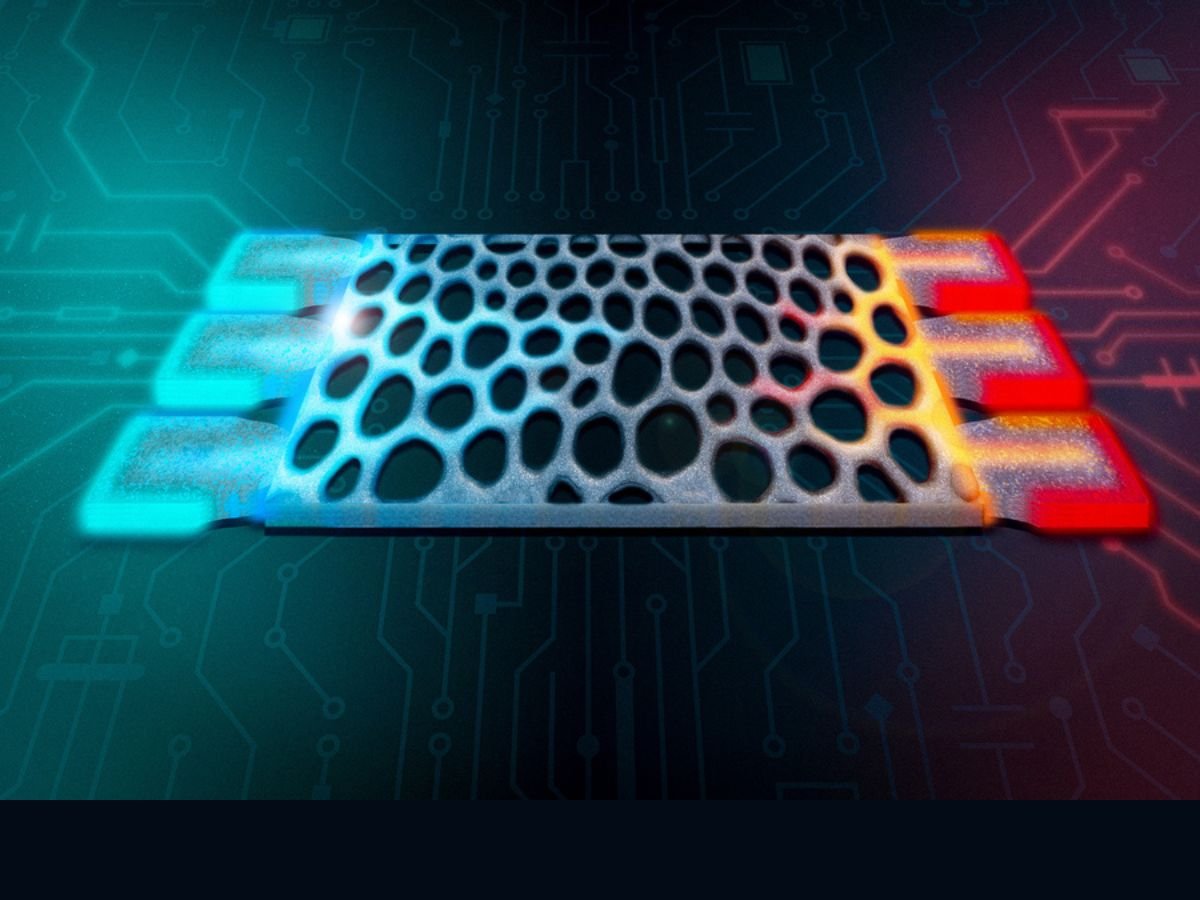
The research team, consisting of undergraduate student Caio Silva and research scientist Giuseppe Romano, utilized a technique called inverse design to create these structures. By feeding desired functionality into a software system, algorithms generated complex, pore-filled silicon geometries roughly the size of a dust particle. These structures guide the flow of heat to perform matrix vector multiplication — the fundamental math behind machine-learning models like Large Language Models (LLMs) — with over 99% accuracy in simulations.
Most of the time, when you are performing computations in an electronic device, heat is the waste product. You often want to get rid of as much heat as you can. But here, we’ve taken the opposite approach by using heat as a form of information itself and showing that computing with heat is possible. — Caio Silva, lead author of the paper.
To overcome the physical limitation that heat only flows from hot to cold, the team split target matrices into positive and negative components, processing them through separate structures. They also adjusted the thickness of the silicon to control heat conduction more precisely.
While the technology faces hurdles regarding bandwidth and scaling for complex deep-learning tasks, it has immediate potential in thermal management. The structures could autonomously detect overheating or temperature gradients in electronics without requiring external power or digital sensors. The team now aims to develop programmable structures capable of sequential operations.
Related Articles
Chibuike Okpara – Tech Writer – 378 articles published on Notebookcheck since 2024
I have always been fascinated by technology and digital devices my entire life and even got addicted to it. I have always marveled at the intricacy of even the simplest digital devices and systems around us. I have been writing and publishing articles online for about 6 years now, just about a year ago, I found myself lost in the marvel of smartphones and laptops we have in our hands every day. I developed a passion for learning about new devices and technologies that come with them and at some point, I asked myself, “Why not get into writing tech articles?” It is useless to say I followed up the idea — it is evident. I am an open-minded individual who derives an infinite amount of joy from researching and discovering new information, I believe there is so much to learn and such a short life to live, so I put my time to good use — learning new things. I am a ‘bookworm’ of the internet and digital devices. When I am not writing, you will find me on my devices still, I do explore and admire the beauty of nature and creatures. I am a fast learner and quickly adapt to changes, always looking forward to new adventures.
Chibuike Okpara, 2026-02- 8 (Update: 2026-02- 8)