

NASA astronaut who suffered serious medical issue on ISS steps forward
The identity of the astronaut had been kept secret up until now.
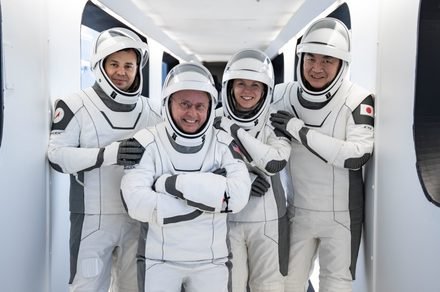
From left to right: Russian cosmonaut Oleg Platonov, NASA’s Mike Fincke, NASA’s Zena Cardman, and Kimiya Yui of Japan’s JAXA.
SpaceX
The NASA astronaut whose serious medical issue prompted the early return of SpaceX’s Crew-11 from the International Space Station (ISS) has spoken out about the incident.
In a statement posted on NASA’s website on Wednesday, NASA astronaut Mike Fincke stepped forward to say that while in orbit aboard the ISS, he experienced a medical event “that required immediate attention from my incredible crewmates,” adding that “thanks to their quick response and the guidance of our NASA flight surgeons, my status quickly stabilized.”
Fincke, 58, continued: “After further evaluation, NASA determined the safest course was an early return for Crew-11 — not an emergency, but a carefully coordinated plan to be able to take advantage of advanced medical imaging not available on the space station.”
Crew-11 arrived at the ISS in August 2025 and weren’t due to return until at least a month later. But it became apparent that all was not well aboard the orbital outpost on January 7 when NASA called off a spacewalk involving Fincke and colleague Zena Cardman that was scheduled for the following day.
In his statement, Fincke declined to give any details about the nature of his medical condition, but at the time the situation was deemed serious enough for newly installed NASA administrator Jared Isaacman to bring the four-person crew home early aboard their SpaceX Dragon spacecraft, which splashed down off the coast of San Diego on January 15.
“I am deeply grateful to my fellow Expedition 74 members — Zena Cardman, Kimiya Yui, Oleg Platonov, Chris Williams, Sergey Kud-Sverchkov, and Sergei Mikayev — as well as the entire NASA team, SpaceX, and the medical professionals at Scripps Memorial Hospital La Jolla near San Diego,” Fincke said in his statement. “Their professionalism and dedication ensured a positive outcome.”
He added that he’s “doing very well and continuing standard post-flight reconditioning at NASA’s Johnson Space Center in Houston,” describing spaceflight as “an incredible privilege,” and how it sometimes “reminds us just how human we are.”
Crewed space missions have, very occasionally, been shortened due to technical issues, but the rescheduling of Crew-11 marks the first time in NASA’s history that an astronaut mission has been cut short over health concerns.
While the ISS has various medical facilities to cope with health emergencies, in this case it was clear that the safest way forward was to bring the crew home.
Not so many moons ago, Trevor moved from one tea-loving island nation that drives on the left (Britain) to another (Japan)…
NASA’s moon rocket is about to leave the launchpad, but it ain’t going skyward
The four astronauts preparing to end a five-decade gap in crewed lunar flights will have to wait until at least April before they can begin the Artemis II mission.
During the SLS rocket’s second wet dress rehearsal last weekend, NASA discovered an issue with the flow of helium to the rocket’s upper stage.
Elon Musk confirms target window for next Starship launch
The mighty Starship rocket is undergoing preflight testing and is on course to launch soon.
If you’re wondering what happened to the Starship, then rest assured, SpaceX engineers are still working to get it airborne again soon.
In fact, in a post on X on Saturday, SpaceX chief Elon Musk confirmed an earlier stated target window for the 12th launch of the most powerful rocket: next month.
NASA’s report into troubled Starliner flight makes for uncomfortable reading
The failed astronaut mission has been classified as a “Type A mishap” — the most serious kind.
A review of the troubled Starliner mission in 2024 has classified the spacecraft’s first-ever crewed flight as a “Type A mishap,” a category encompassing the most severe unplanned events that pose a threat to life.
The spacecraft experienced issues with its thrusters on approach to the International Space Station (ISS) just over two years ago, and for a brief period of time lost the ability to safely orient itself.
