

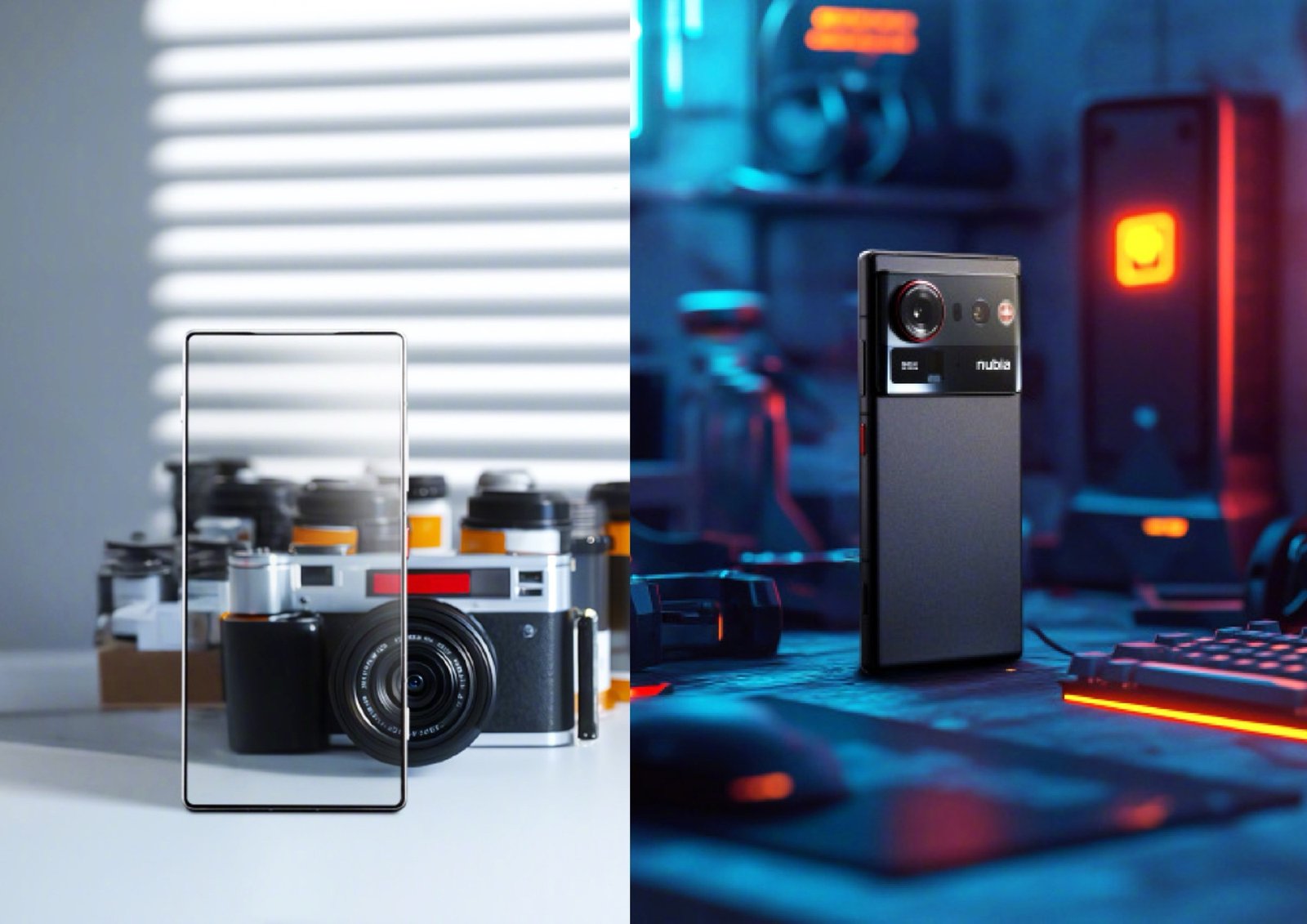
Nubia Z80 Ultra with 35 mm, 18 mm and 70 mm triple camera: Nubia confirms specs and unveils sample photos
The Nubia Z80 Ultra, one of the world’s most unusual flagship camera phones, will launch in just a few days. The device features a selfie camera invisibly integrated into the display and a triple camera with focal lengths of 35 mm, 18 mm and 70 mm. Many details about the camera system have already been revealed.
The Nubia Z80 Ultra will be officially unveiled on October 22. Over the weekend, Nubia published a number of images showcasing the smartphone’s design in detail. The look has barely changed compared to the Nubia Z70S Ultra.
While Nubia has slightly redesigned the camera module, it still has a slightly rounded frame with a dedicated shutter button and a display that, thanks to an under-display camera, eliminates the need for a notch or punch-hole. Nubia has now confirmed via new teaser images that the Z80 Ultra is equipped with the following three cameras:
- 18 mm ultra-wide-angle camera (1/1.55-inch sensor, f/1.8 lens)
- 35 mm main camera (50 MP, 1/1.3-inch sensor, f/1.7 lens)
- 70 mm telephoto camera (f/2.4 lens)
Nubia uses the same 35 mm f/1.7 main camera with a 1/1.3-inch OV990 sensor as in the Nubia Z70S Ultra. The telephoto camera retains a 70 mm focal length lens with a 35 mm format equivalent, but with an aperture of f/2.4, it is slightly brighter. Details on this camera’s sensor are still pending. The most significant upgrade is the ultra-wide-angle camera, as Nubia is replacing the 13 mm f/2.0 camera and its 1/2.88-inch sensor with an 18 mm f/1.8 camera and its 1/1.55-inch sensor.
Sample photos from the 35 mm main camera focus on a natural look
The first sample photos taken with the Nubia Z80 Ultra’s 35 mm main camera are primarily intended to demonstrate the camera’s “natural perspective”. Nubia also takes a restrained approach to image processing, focusing on natural rather than oversaturated colors and a relatively high contrast ratio. Some of the sample photos appear blurry, but viewers should not draw any conclusions about the low resolution of the shared images.
18 mm is just about “ultra-wide”
The ultra-wide-angle camera may have a significantly larger sensor, but with a focal length of 18 mm, it doesn’t capture nearly as large a field of view as its predecessor. The sample photos are not particularly informative, as Nubia took these pictures under relatively undemanding conditions. The model’s skin tones vary between the images, indicating a moderately reliable white balance, but these images also display subdued colors and natural-looking contrasts.
70 mm telephoto camera combined with digital zoom
According to the inscription on the camera module, the Nubia Z80 Ultra reaches 50x zoom, for which Nubia has to resort to 12x digital zoom – the image quality is unlikely to be acceptable. In the sample photos, Nubia limits itself to a maximum of 2x digital zoom, showing an even higher contrast ratio than with the ultra-wide-angle and main camera.
Related Articles
Editor of the original article: Hannes Brecher – Senior Tech Writer – 18936 articles published on Notebookcheck since 2018
Since 2009 I have written for different publications with a focus on consumer electronics. I joined the Notebookcheck news team in 2018 and have combined my many years of experience with laptops and smartphones with my lifelong passion for technology to create informative content for our readers about new developments in this sphere. In addition, my design background as an art director at an ad agency has allowed me to have deeper insights into the peculiarities of this industry.
Translator: Jacob Fisher – Translator – 2353 articles published on Notebookcheck since 2022
Growing up in regional Australia, I first became acquainted with computers in my early teens after a broken leg from a football (soccer) match temporarily condemned me to a predominately indoor lifestyle. Soon afterwards I was building my own systems. Now I live in Germany, having moved here in 2014, where I study philosophy and anthropology. I am particularly fascinated by how computer technology has fundamentally and dramatically reshaped human culture, and how it continues to do so.
Hannes Brecher, 2025-10-13 (Update: 2025-10-13)

