

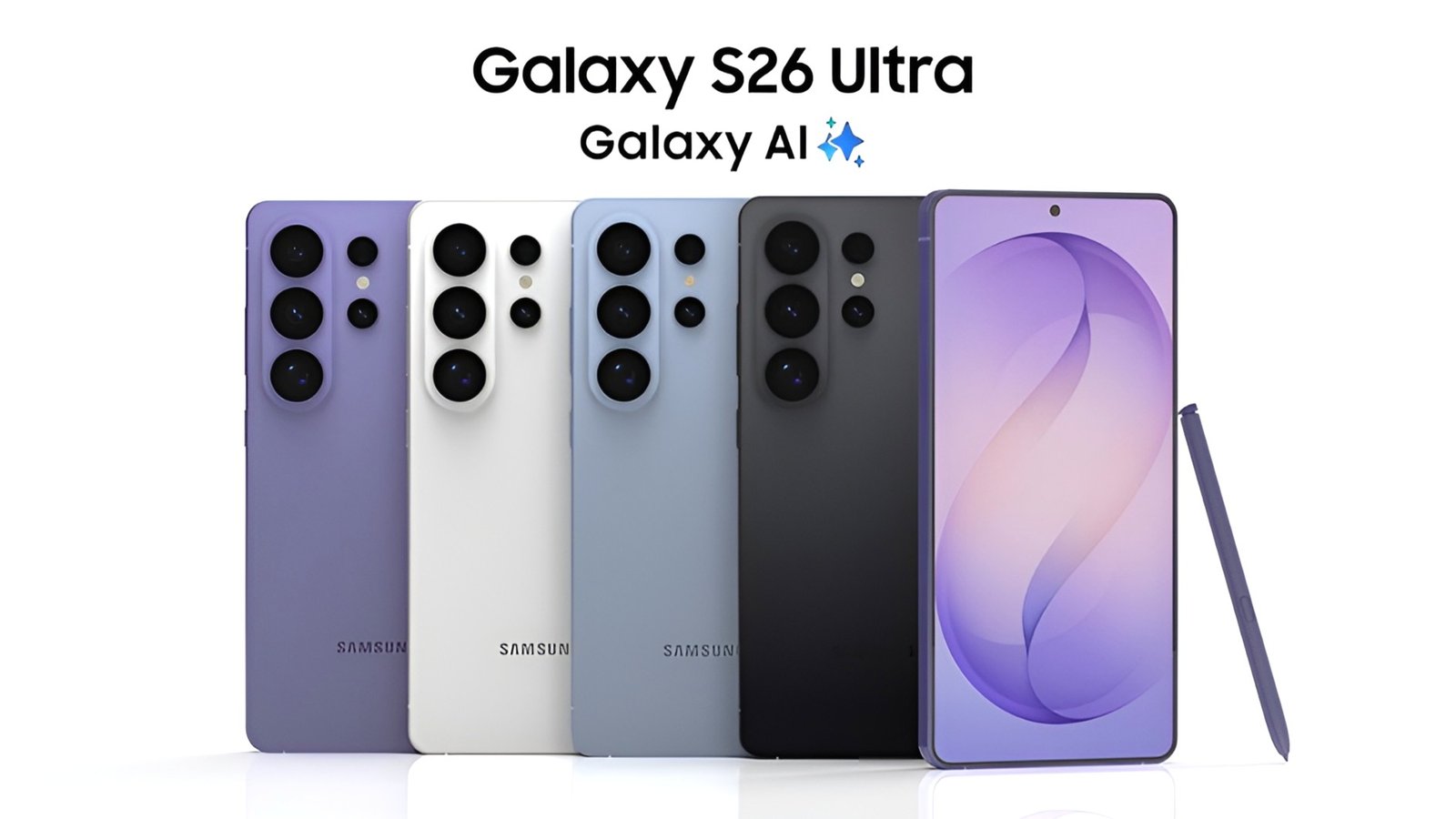
Samsung Galaxy S26 Ultra display may have more tricks up its sleeve – NotebookCheck.net News
Several weeks ahead of the Galaxy S26’s launch, new information has emerged about previously unknown features of Samsung’s upcoming flagship phone. In particular, the new AMOLED screen with Privacy Display may not just be more versatile than expected but also deliver improved visual quality thanks to an additional enhancement.
We’ve known for months that the Samsung Galaxy S26 Ultra is set to debut with a useful new feature known as Privacy Display, which Samsung has already begun teasing. Early information suggested that the entire screen can be configured to automatically or manually obscure content from prying eyes.
According to the highly reliable leaker Ice Universe on X, it might also be possible to shield only specific areas of the display. For instance, this would allow pop-ups with sensitive information, like passwords or access codes, to be hidden from people nearby, whilst the rest of the display remains visible. Since Samsung’s Privacy Display uses pixels with adjustable viewing angles, it can selectively darken portions of the display for anyone viewing the screen at an angle.
10-bit rather than 8-bit display
No less crucially, the launch of the Galaxy S26 Ultra may also mark the long-awaited debut of another premium display feature in a Samsung phone. Ice Universe has stated with full confidence that the new Samsung M14 panel supports 10-bit colour. A 10-bit display can render drastically more colours than an 8-bit screen, increasing the palette from 16.7 million to 1.07 billion. This enables far more natural colour gradients, though some 8-bit displays use Frame Rate Control (FRC) to help them deliver better colour performance than their non-FRC counterparts.
More articles related to this device
Samsung Galaxy S26 Ultra (Galaxy S26 Series)
Related Articles
Editor of the original article: Alexander Fagot – Managing Editor News – 11287 articles published on Notebookcheck since 2016
As a young tech enthusiast with a history involving assembling and overclocking projects, I ended up working as a projectionist with good old 35-mm films before I entered the computer world at a professional level. I assisted customers at an Austrian IT service provider called Iphos IT Solutions for seven years, working as a Windows client and server administrator as well as a project manager. As a freelancer who travels a lot, I have been able to write for Notebookcheck from all corners of the world since 2016. My articles cover brand-new mobile technologies in smartphones, laptops, and gadgets of all kinds.
Translator: Zhiwei Zhuang – Translator – 557 articles published on Notebookcheck since 2022
After graduating with a bachelor’s degree in environmental engineering, I moved from Singapore to
Cologne in 2014 and began pursuing a career as a freelance translator. Much of my translation work
focuses on science, engineering and technology. My fascination with computers and mobile
electronics began when I was young. And I have fond memories reading countless tech and gaming
magazines. Working with Notebookcheck gives me the opportunity to incorporate my personal
interests into my professional work.
Alexander Fagot, 2026-01-28 (Update: 2026-01-28)

