Close Menu

    Subscribe to Updates

    Get the latest creative news from FooBar about art, design and business.

    What's Hot

    ARC Raiders dev claims they built an auction house-like trading system for the game but later removed it as it’s “very risky territory”

    Citizen unveils 3 new tachymeter bezel chronographs with 43 mm stainless-steel cases

    Portable 27-inch monitor with Google TV, battery and built-in soundbar launches with discount

    Facebook X (Twitter) Instagram
    • Artificial Intelligence
    • Business Technology
    • Cryptocurrency
    • Gadgets
    • Gaming
    • Health
    • Software and Apps
    • Technology
    Facebook X (Twitter) Instagram Pinterest Vimeo
    Tech AI Verse
    • Home
    • Artificial Intelligence

      Ashley St. Clair, the mother of one of Elon Musk’s children, sues xAI over Grok sexual images

      January 17, 2026

      Anthropic joins OpenAI’s push into health care with new Claude tools

      January 12, 2026

      The mother of one of Elon Musk’s children says his AI bot won’t stop creating sexualized images of her

      January 7, 2026

      A new pope, political shake-ups and celebs in space: The 2025-in-review news quiz

      December 31, 2025

      AI has become the norm for students. Teachers are playing catch-up.

      December 23, 2025
    • Business

      New VoidLink malware framework targets Linux cloud servers

      January 14, 2026

      Nvidia Rubin’s rack-scale encryption signals a turning point for enterprise AI security

      January 13, 2026

      How KPMG is redefining the future of SAP consulting on a global scale

      January 10, 2026

      Top 10 cloud computing stories of 2025

      December 22, 2025

      Saudia Arabia’s STC commits to five-year network upgrade programme with Ericsson

      December 18, 2025
    • Crypto

      Trump Shifts on Fed Pick as Hassett Odds Fade: Who Will Replace Powell?

      January 17, 2026

      A Third of French Crypto Firms Still Unlicensed Under MiCA as Deadline Nears

      January 17, 2026

      DOJ Charges Venezuelan National in $1 Billion Crypto Laundering Scheme

      January 17, 2026

      One of Wall Street’s Top Strategists No Longer Trusts Bitcoin | US Crypto News

      January 17, 2026

      3 Altcoins To Watch This Weekend | January 17 – 18

      January 17, 2026
    • Technology

      ARC Raiders dev claims they built an auction house-like trading system for the game but later removed it as it’s “very risky territory”

      January 17, 2026

      Citizen unveils 3 new tachymeter bezel chronographs with 43 mm stainless-steel cases

      January 17, 2026

      Portable 27-inch monitor with Google TV, battery and built-in soundbar launches with discount

      January 17, 2026

      Civilization VII coming to iPhone and iPad

      January 17, 2026

      Flagship power with an XXL battery

      January 17, 2026
    • Others
      • Gadgets
      • Gaming
      • Health
      • Software and Apps
    Check BMI
    Tech AI Verse
    You are at:Home»Technology»Scientists built an AI co-pilot for prosthetic bionic hands
    Technology

    Scientists built an AI co-pilot for prosthetic bionic hands

    TechAiVerseBy TechAiVerseDecember 13, 2025No Comments6 Mins Read1 Views
    Facebook Twitter Pinterest Telegram LinkedIn Tumblr Email Reddit
    Scientists built an AI co-pilot for prosthetic bionic hands
    Share
    Facebook Twitter LinkedIn Pinterest WhatsApp Email

    Scientists built an AI co-pilot for prosthetic bionic hands


    Skip to content

    Managing each finger separately can, with the right sensors, ease control issues.

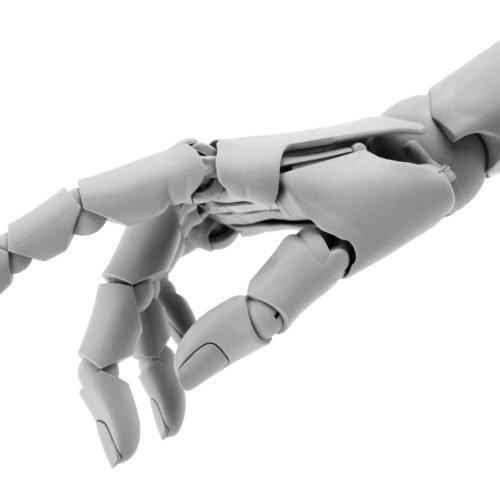
    Modern bionic hand prostheses nearly match their natural counterparts when it comes to dexterity, degrees of freedom, and capability. And many amputees who tried advanced bionic hands apparently didn’t like them. “Up to 50 percent of people with upper limb amputation abandon these prostheses, never to use them again,” says Jake George, an electrical and computer engineer at the University of Utah.

    The main issue with bionic hands that drives users away from them, George explains, is that they’re difficult to control. “Our goal was making such bionic arms more intuitive, so that users could go about their tasks without having to think about it,” George says. To make this happen, his team came up with an AI bionic hand co-pilot.

    Micro-management issues

    Bionic hands’ control problems stem largely from their lack of autonomy. Grasping a paper cup without crushing it or catching a ball mid-flight appear so effortless because our natural movements rely on an elaborate system of reflexes and feedback loops. When an object you hold begins to slip, tiny mechanoreceptors in your fingertips send signals to the nervous system that make the hand tighten its grip. This all happens within 60 to 80 milliseconds—before you even consciously notice. This reflex is just one of many ways your brain automatically assists you in dexterity-based tasks.

    Most commercially available bionic hands do not have that built-in autonomic reflex—everything must be controlled by the user, which makes them extremely involved to use. To get an idea of how hard this is, you’d need to imagine trying to think about precisely adjusting the position of 27 major joints and choosing the appropriate force to apply with each of the 20 muscles present in a natural hand. It doesn’t help that the bandwidth of the interface between the bionic hand and the user is often limited.

    In most cases, users controlled bionic hands via an app where they could choose predetermined grip types and adjust forces applied by various actuators. A slightly more natural alternative is electromyography, where electric signals from the remaining muscles are in commands the bionic hand followed. But this too was far from perfect. “To grasp the object, you have to reach towards it, flex the muscles, and then effectively sit there and concentrate on holding your muscles in the exact same position to maintain the same grasp,” explains Marshall Trout, a University of Utah researcher and lead author of the study.

    To build their “intuitive” bionic hand, George, Trout, and their colleagues started by fitting it with custom sensors.

    Feeling the grip

    The researchers started their work with taking one of the commercially available bionic hands and replacing its fingertips with silicone-wrapped pressure and proximity sensors. This allowed the hand to detect when it was getting close to an object and precisely measure the force required to hold it without crushing it or letting it slip. To process the data gathered by the sensors, the team built an AI controller that moved the joints and adjusted the force of the grip. “We had the hand still and moved it back and forth so that the fingertips would touch the object and then we backed away,” Tout says.

    By repeating those back-and-forth movements countless times, the team collected enough training data to have the AI recognize various objects and switch between different grip types. The AI also controlled each finger individually. “This way we achieved natural grasping patterns,” George explains. “When you put an object in front of the hand it will naturally conform and each finger will do its own thing.”

    Assisted driving

    While this kind of autonomous gripping was demonstrated before, the brand-new touch the team applied was deciding what was in charge of the system. Earlier research projects that investigated autonomous prostheses relied on the user switching the autonomy on and off. By contrast, George and Trout’s approach focused on shared control.

    “It’s a subtle way the machine is helping. It’s not a self-driving car that drives you on its own and it’s not like an assistant that pulls you back into the lane when you turn the steering wheel without an indicator turned on,” George says. Instead, the system quietly works behind the scenes without it feeling like it’s fighting the user or taking over. The user remained in charge at all times and can tighten or loosen the grip, or release the object to let it drop.

    To test their AI-powered hand, the team asked intact and amputee participants to manipulate fragile objects: pick up a paper cup and drink from it, or take an egg from a plate and put it down somewhere else. Without the AI, they could succeed roughly one or two times in 10 attempts. With the AI assistant turned on, their success rate jumped to 80 or 90 percent. The AI also decreased the participants’ cognitive burden, meaning they had to focus less on making the hand work.

    But we’re still a long way away from seamlessly integrating machines with the human body.

    Into the wild

    “The next step is to really take this system into the real world and have someone use it in their home setting,” Trout says. So far, the performance of the AI bionic hand was assessed under controlled laboratory conditions, working with settings and objects the team specifically chose or designed.

    “I want to make a caveat here that this hand is not as dexterous or easy to control as a natural, intact limb,” George cautions. He thinks that every little increment that we make in prosthetics is allowing amputees to do more tasks in their daily life. Still, to get to the Star Wars or Cyberpunk technology level where bionic prostheses are just as good or better than natural limbs, we’re going to need more than just incremental changes.

    Trout says we’re almost there as far as robotics go. “These prostheses are really dexterous, with high degrees of freedom,” Trout says, “but there’s no good way to control them.” This in part comes down to the challenge of getting the information in and out of users themselves. “Skin surface electromyography is very noisy, so improving this interface with things like internal electromyography or using neural implants can really improve the algorithms we already have,” Trout argued. This is why the team is currently working on neural interface technologies and looking for industry partners.

    “The goal is to combine all these approaches in one device,” George says. “We want to build an AI-powered robotic hand with a neural interface working with a company that would take it to the market in larger clinical trials.”

    Nature Communications, 2025.  DOI: 10.1038/s41467-025-65965-9

    Jacek Krywko is a freelance science and technology writer who covers space exploration, artificial intelligence research, computer science, and all sorts of engineering wizardry.


    26 Comments

    Share. Facebook Twitter Pinterest LinkedIn Reddit WhatsApp Telegram Email
    Previous ArticleAKASO EK7000 Launches in Malaysia with 4K Action Camera Performance at Just RM299
    Next Article Ukrainians sue US chip firms for powering Russian drones, missiles
    TechAiVerse
    • Website

    Jonathan is a tech enthusiast and the mind behind Tech AI Verse. With a passion for artificial intelligence, consumer tech, and emerging innovations, he deliver clear, insightful content to keep readers informed. From cutting-edge gadgets to AI advancements and cryptocurrency trends, Jonathan breaks down complex topics to make technology accessible to all.

    Related Posts

    ARC Raiders dev claims they built an auction house-like trading system for the game but later removed it as it’s “very risky territory”

    January 17, 2026

    Citizen unveils 3 new tachymeter bezel chronographs with 43 mm stainless-steel cases

    January 17, 2026

    Portable 27-inch monitor with Google TV, battery and built-in soundbar launches with discount

    January 17, 2026
    Leave A Reply Cancel Reply

    Top Posts

    Ping, You’ve Got Whale: AI detection system alerts ships of whales in their path

    April 22, 2025619 Views

    Lumo vs. Duck AI: Which AI is Better for Your Privacy?

    July 31, 2025235 Views

    6.7 Cummins Lifter Failure: What Years Are Affected (And Possible Fixes)

    April 14, 2025135 Views

    6 Best MagSafe Phone Grips (2025), Tested and Reviewed

    April 6, 2025109 Views
    Don't Miss
    Technology January 17, 2026

    ARC Raiders dev claims they built an auction house-like trading system for the game but later removed it as it’s “very risky territory”

    ARC Raiders dev claims they built an auction house-like trading system for the game but…

    Citizen unveils 3 new tachymeter bezel chronographs with 43 mm stainless-steel cases

    Portable 27-inch monitor with Google TV, battery and built-in soundbar launches with discount

    Civilization VII coming to iPhone and iPad

    Stay In Touch
    • Facebook
    • Twitter
    • Pinterest
    • Instagram
    • YouTube
    • Vimeo

    Subscribe to Updates

    Get the latest creative news from SmartMag about art & design.

    About Us
    About Us

    Welcome to Tech AI Verse, your go-to destination for everything technology! We bring you the latest news, trends, and insights from the ever-evolving world of tech. Our coverage spans across global technology industry updates, artificial intelligence advancements, machine learning ethics, and automation innovations. Stay connected with us as we explore the limitless possibilities of technology!

    Facebook X (Twitter) Pinterest YouTube WhatsApp
    Our Picks

    ARC Raiders dev claims they built an auction house-like trading system for the game but later removed it as it’s “very risky territory”

    January 17, 20260 Views

    Citizen unveils 3 new tachymeter bezel chronographs with 43 mm stainless-steel cases

    January 17, 20260 Views

    Portable 27-inch monitor with Google TV, battery and built-in soundbar launches with discount

    January 17, 20260 Views
    Most Popular

    A Team of Female Founders Is Launching Cloud Security Tech That Could Overhaul AI Protection

    March 12, 20250 Views

    Senua’s Saga: Hellblade 2 leads BAFTA Game Awards 2025 nominations

    March 12, 20250 Views

    7 Best Kids Bikes (2025): Mountain, Balance, Pedal, Coaster

    March 13, 20250 Views
    © 2026 TechAiVerse. Designed by Divya Tech.
    • Home
    • About Us
    • Contact Us
    • Privacy Policy
    • Terms & Conditions

    Type above and press Enter to search. Press Esc to cancel.