

Secret Mode busted out of the Tencent-owned Sumo Group last year. Now what?
Back in February 2025, the UK-based Sumo Group – which has been owned by Tencent since 2021 – announced it would be focusing “exclusively on development services for partners.” In other words, it would be doubling down on things like co-development, and would no longer be making its own games (the group’s previous titles include Crackdown 3 and Sackboy: A Big Adventure).
Naturally, when this news was delivered internally in late 2024, staff at the Sumo-owned indie publisher Secret Mode turned to look at each other with raised eyebrows and concerned expressions. “We were in this tricky situation where we didn’t fit that, and we didn’t really fit what Tencent were looking to do in the West either at that time,” recalls Secret Mode CEO Ed Blincoe.
The indie publisher immediately set course for independence – and got there surprisingly quickly. Blincoe recalls that in late November 2024 they had a meeting with the investment firm Emona Capital, which had recently helped Relic Entertainment to break away from Sega. Emona signalled it was keen to do a deal after just a two-hour meeting, and within around three months, the whole thing was wrapped up. “Which from our point of view was ridiculously fast, but very good,” says Blincoe. “It helped our employees, because Sumo were going through some difficult times at that point.” (Notably, a few months later in May 2025, Sumo Group co-founders Carl Cavers and Paul Porter would leave the company.)
But fleeing into the arms of a private equity company isn’t necessarily the safest tactic. Just ask UK developer Splash Damage, which broke away from Tencent with the help of an unnamed private equity firm in September 2025, only to announce a company-wide redundancy consultation just two months later.
Yet chief publishing officer James Schall had done his due diligence, and was confident in the company with which Secret Mode was about to tie its fortunes. “I worked a lot with Relic when I was at Sega, so I picked up the phone and chatted to the Relic guys,” he says. “We had a very candid conversation, and nothing there was worrying. The first thing you want to do when you’re in a position of needing help is to find out if the people helping you are who they say they are.”
For his part, Blincoe was impressed that Emona actually seemed to know a thing or two about video games, which isn’t necessarily a given when it comes to private equity. “Sometimes when you end up talking to people outside the industry, there’s some very basic things you have to try and educate them on,” he says. “Not having to do that helped massively.”
Quid pro quo
Yet there always remains that lingering question: what’s in it for them? Why exactly was Emona so keen to purchase Secret Mode? An Emona spokesperson says only that “Ed and James have impressed us with their deep sector knowledge and entrepreneurial drive.” Schall partly puts it down to his and Blincoe’s positive energy. “It’s the right mindset, I think.” But he adds that Secret Mode is just a “good business”, with a back catalogue including titles like The Chinese Room’s Still Wakes The Deep. “We’d already had massive success with A Little to the Left. We’d already released games like Make Way and Loddlenaut that were performing really well for us, and they were really good catalogue titles. So when you look at us as a standalone business, we were actually a really good purchase. If it wasn’t Emona, I’m convinced it would have been another company that would have come in for us.”
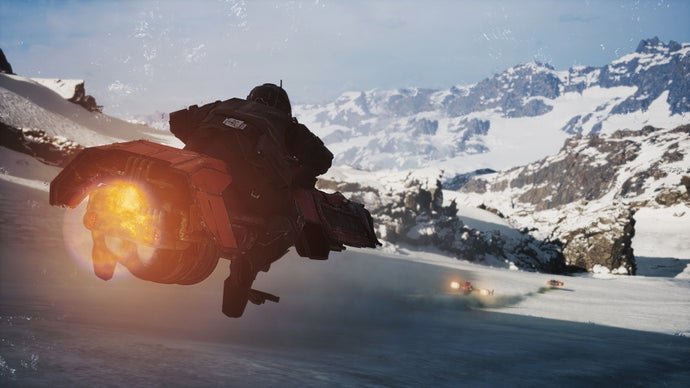
It’s a solid base, in other words. But investors are always looking for growth – and that’s something Secret Mode has done a lot of over the past year. The publisher announced one of its biggest ever titles at The Game Awards in December – Star Wars: Galactic Racer, which is being developed by the UK studio Fuse Games, founded by alumni of the Burnout studio Criterion.
The game marks a significant shift in Secret Mode’s ambitions. Blincoe credits Emona for the “stuff that they’ve brought to the table: things like Escape the Backrooms. They’ve enabled us to go after Star Wars: Galactic Racer, they’ve enabled us to look at other titles and bring in other titles.” When Secret Mode initially departed Sumo, their main ambition was to simply survive, says Schall, but Emona’s backing has helped the publisher to “move forward” into “bigger and better opportunities.”
And the team has been growing, too. “We’re actively hiring at the moment,” says Blincoe, proudly. “We came out of Sumo with just over 40 people, we’re currently at just over 55, and we’ve still got jobs available on the website.” Some of those new hires are to fill gaps that were previously covered by Sumo Group, such as roles in HR or IT. But many are newly created positions in areas like product marketing or community management, and Schall is particularly keen to build up Secret Mode’s QA team. “We really believe in internal QA,” he says. “It’s something I think a lot of publishers moved away from, but we think there’s massive value in having people in the building.”
Part of that value is the ability to raise red flags very early on. “That enables Ed and I to then have conversations and make decisions: ‘Do we delay? What do we do?’ And I think that is massively valuable to a business, as opposed to just looking at a spreadsheet and going, ‘Oh, we could probably get cheaper QA over here.'”
But what is Emona like as a boss? Blincoe says the management team has provided Secret Mode with a “phenomenal” level of support. “So it wasn’t just, ‘We’ll help you do this deal and then we’ll walk away.’ It was, ‘We’ll help you do this deal and we will really help you drive the business forward as well.'” Yet at the same time, the private equity company has been relatively hands off. “They’re not here ticking boxes and looking at Excel spreadsheets, but they want to know what’s happening,” says Blincoe. “They want to be involved, but they don’t want to make the decisions.”
Go your own way
Secret Mode was founded as part of Sumo in 2020, and one of the biggest challenges for the publisher over the past year has been to define its own values as an independent company. One of the biggest changes is that now, whenever a game reaches a milestone, Secret Mode asks everyone in the company to play it. “Previous to that, only a small percentage of people were playing the game because it was their job,” explains Schall. “So you’d have folks in different roles maybe never being exposed to the products that they were working on or trying to sell.” He thinks the new policy brings the benefit of a greater range of opinions. “That allows us to see things that we may not be exposed to, because you’re not just getting the same voices. So it’s been really good for us.”
There’s also been a bit of soul searching, asking the question of what exactly makes a Secret Mode game. Looking at the company’s recent back catalogue, it has worked on everything from an elaborate action RPG (Empyreal) to a bicycle delivery game (Parcel Corps) to a cosy café builder (Critter Café). The publisher’s upcoming slate is similarly eclectic, featuring a AAA Star Wars racer, a football management deckbuilder (Nutmeg!), and a wholesome narrative puzzle game (A Storied Life: Tabitha), among others.
Schall says Secret Mode used to have a pillar structure, built around ‘types’ of titles. But now the “strength of the game” has become the pillar, he says, “so we can move into any genre.” He says it’s about asking the question, ‘Why does this game exist?’ Partly this is down to feeling the developer’s inspiration and personal investment in the game. Nutmeg!, for example, leans heavily into childhood memories of football in the 1990s, while Tabitha is an intimate tale of family bereavement.
The feeling of authenticity is key. Schall gives Still Wakes The Deep’s uncompromisingly sweary portrayal of 1970s Scotland as an example. “We doubled down on it, and that was something that our Chinese players adored, our American players adored, our German players adored, because it had that level of authenticity.”
The strategy is also about targeting specific, sometimes tiny niches. “The reason niche is interesting is because there’s not a lot of competition,” says Schall. “There are so many games being released every hour of every day across so many different platforms that it’s very difficult to get noticed. You can spend a huge amount of money and still not sell any games.”
“Just because someone plays Forza doesn’t mean they’re never going to touch another racing game”
James Schall
Even something as seemingly mainstream as Star Wars: Galactic Racer is targeting an underexploited niche. Schall explains that when examining the data, they realised a significant number of people were playing racing games, but the genre had relatively few titles to choose from. “And that’s because in the past, we had these behemoths of Forza, of Gran Turismo,” he says – games that people didn’t think they could compete against. “But actually, those audiences were voracious for new experiences. Just because someone plays Forza doesn’t mean they’re never going to touch another racing game.”
By contrast, and similarly to 11-Bit Studios, Secret Mode tends to avoid platformers, judging the market to be oversaturated. “The most unlikely game for success is a platformer,” says Schall, “because the least amount of people are playing platformers, but it’s got the most amount of releases, because platformers are easy. When devs get the freedom to create their own game, usually the first one is a platformer.”
Like most publishers in today’s more risk-averse environment, Secret Mode typically won’t sign a game based on a paper pitch. “You’re probably not going to get a deal without some sort of prototype,” says Schall. Blincoe clarifies: “It could be white box, it could be unfinished, but we do need to see something that’s going to sell us on that game. A lot of the stuff that we’re looking at right now is either games that are already significantly a way along in Early Access or certainly at a point where they’re at demo or certainly prototype [stage].”
“We have had a bit of success with Early Access,” adds Schall. “A number of devs have come to us, or we’ve approached them, where they are in Early Access. And the tale you get is a game’s in Early Access for four or five years, the dev’s a bit stuck because they don’t know how to exit, the community are raging at them because they want X, Y, and Z, and then they’ll start shouting, ‘Dead game, dead game’. You get in this kind of loop where the developer feels betrothed to that community, and they can’t escape. So us being able to go in, support their team, help them get to 1.0 and then beyond, that’s been a particular success of ours.”
Although it’s not a prerequisite, pre-existing audience for a game can also help its chances of being signed – although Schall puts little store in Steam wishlist figures alone. “Wishlists can be manipulated, so you have to be very careful,” he says. “I would look at community groups, I’d look at the discussion forums on Steam, because if you’ve got a game which has got a hundred thousand wishlists but it’s got one Steam forum post which was three years ago, you’re kind of going, ‘Is this a thing?'”
Show me the money
What about budgets? “We’ll fund anything up to around about a million at the moment,” says Blincoe. “That’s for games that are unannounced or unreleased at that point, and the dev is looking for pretty much all of the development of the game to be funded by Secret Mode.”
“But if we’re looking at games that are in Early Access or have got a good level of success behind them, they’re experienced devs that have got a track record, there’s a game there with a big license, a bit like Star Wars, then the finishing funds that we can bring to bear through Emona are much bigger than that. It’s multiple millions to get those finished off, but those games do need some sort of traction somewhere. It can’t be, ‘I’ve got this great idea for a platformer that’s £10 million’.”
Looking at the bigger picture – with a looming content gap caused by the collapse of game funding after the COVID pandemic, combined with the huge increase in development time over the past two decades – Schall thinks changes are needed. “As an industry, we have to look at shorter runways to go from concept into people’s hands.” He points out that it can take four or five years between an initial idea and a finished product, during which time the market might have changed dramatically.
“There’s got to be ways that we can help get things into people’s hands, and then if they’re shown to be popular, you can invest in them”
James Schall
Much of that development effort might also be wasted, as shown by how few AAA players pop the achievements for completing the game. “And it’s like, that cost in excess of two million quid to create that end level, and no one ever played it or got there, because the game was too hard. And you kind of have to go, ‘Well, something’s got to break in the way the industry approaches games’. Reusing assets, making swifter decisions, maybe using Roblox and UEFN to test things out. There’s got to be ways that we can help get things into people’s hands, and then if they’re shown to be popular, you can invest in them.”
Schall says that Emona is “still looking for deals, for potential investments, for acquisitions.” Many backers fled the market after the COVID bubble burst, but it seems that Emona remains committed to the games industry. “It’s not that they’re hedging their bets here with ten different tech companies and a bunch of different things, they fundamentally believe that video games are a great investment.”
In many ways, this is the perfect time to invest. As Blincoe says, backers might not be getting “the multiples that they were in 2020 or 2021,” but that was also a time when many games companies were dramatically overvalued. Now, when fewer firms are buying, there’s a sense that the market has swung to the opposite extreme, and games companies are being undervalued. “It’s absolutely the right time for investors to come into the market,” concludes Blincoe. “And Emona will, along with others, fill that void quite happily.”
Disclaimer: Lewis Packwood previously wrote the book The Art of Still Wakes The Deep, published by Lost in Cult/Cook and Becker.
