

Special Forces Vs Special Operations: How They’re Different (And Why It Matters)
Whether or not you’ve served in the United States military, there’s little doubt you’ve heard the terms “Special Forces” and “Special Operations.” These have become interchangeable in the media such that most people who aren’t familiar with the specifics believe they mean the same thing. In fact, the two are completely different. While they share similar training and tactics, their missions often diverge significantly and there is a big difference between Special Forces and Special Operations.
Historically, Special Forces has referred to key infiltrators who engage in hit-and-run warfare. The modern term isn’t entirely different, but its primary focus is on specialized units within established militaries. For example, the German Stormtroopers of World War I are considered to be precursors to today’s Special Forces.
Meanwhile, Special Operations Forces utilize asymmetric warfare tactics to conduct operations deep behind enemy lines. These date back to around the 17th century, but for the United States and its allies, Special Operations weren’t heavily employed until World War II. In the United States, they began as the Army Rangers, tracing their history back to the “Devil’s Brigade” in the Seven Years’ War. Modern U.S. Special Operations take part in highly secretive missions, including Operation Neptune Spear: the killing of Osama bin Laden in 2011 using specialized stealth helicopters. In a way, Special Forces and Special Operations are two sides of the same coin, but their missions are quite different from one another.
Missions involving Special Forces
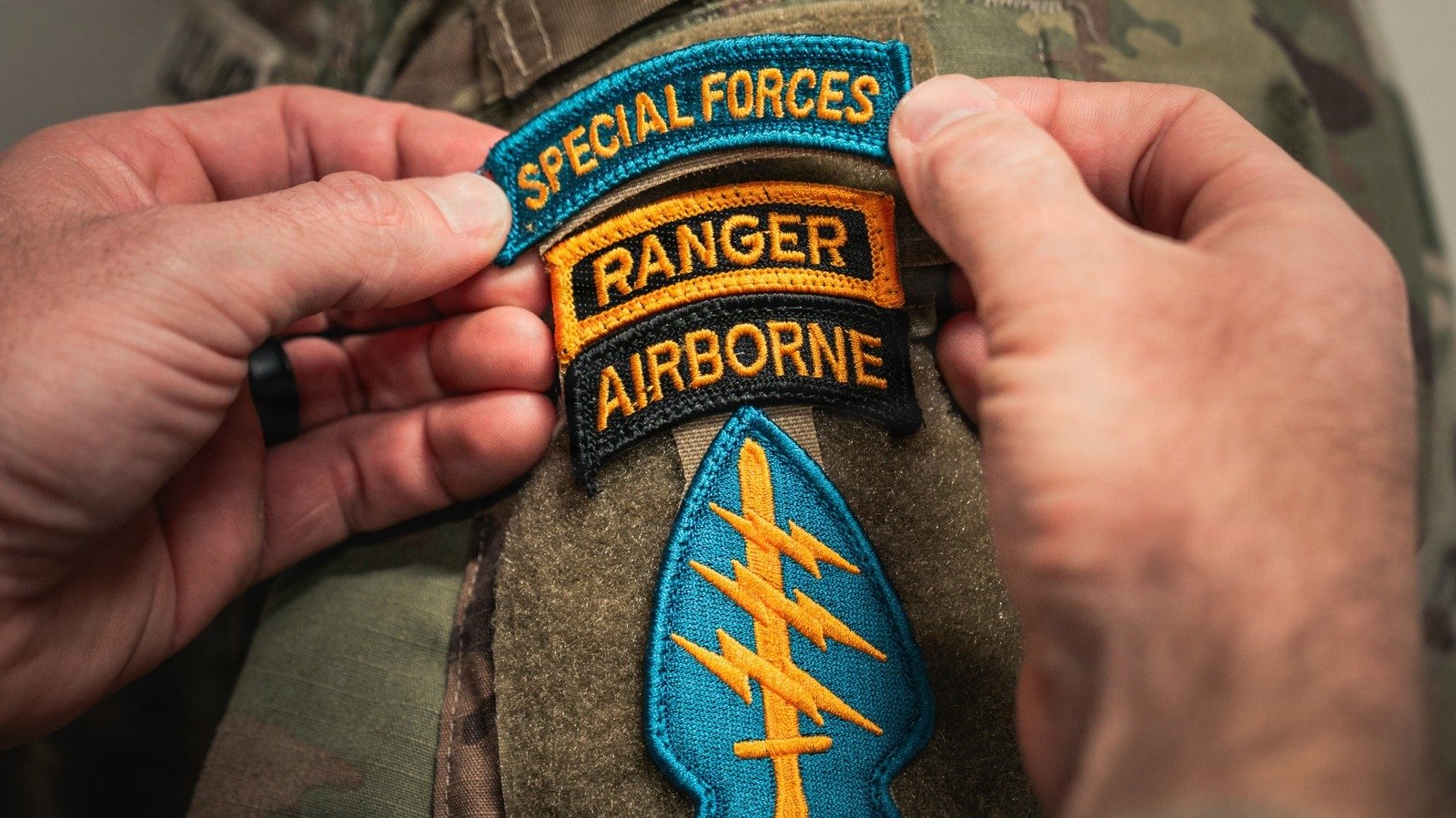
In the U.S. military, the term Special Forces is reserved for the U.S. Army Special Forces. This group is better known as the “Green Berets,” garnering its nickname from the distinctive soft caps worn when not in the field. They have five doctrinal missions: unconventional warfare, direct action, foreign internal defense, special reconnaissance, and counterterrorism. Modern Special Forces can be traced back to the Cold War, where small teams were sent behind enemy lines to raise guerrilla forces and ensure their survival until mission completion.
To this end, Special Forces soldiers are often trained to speak multiple languages, have widespread cultural awareness, and present the peak in physical and mental fitness. As time passed and their range of missions expanded, the other core doctrinal aspects came into focus. Special Forces are called “Quiet Professionals” because they work almost entirely in secret and are best employed when they’re both unnoticed and unrecognized. While you might meet a Quiet Professional out on the street, odds are, you’d never know it.
Special Forces are part of Special Operations Command (SOC), but they’re distinctive from the other branches and their counterparts. While their missions and tactics appear similar to the casual observer, their missions, selection criteria, and histories are vastly different. For this reason, a Green Beret isn’t the same thing as a Ranger, which isn’t a Marine Raider, which, in turn, isn’t the same as an operator in Air Force Special Operations Command.
Missions involving Special Operations
When looking into Special Operations, the primary unit is the U.S. Navy SEALs, which stands for Sea, Air, and Land. Despite being a Navy unit, anyone from another branch can join the Navy SEALs so long as they are accepted and pass selection, which is no easy task. Navy SEAL missions are vastly different from those of Special Forces, and they employ some of the military’s coolest gear. If Green Berets are active in an area, they might be training a small force of guerrillas, while a nearby SEAL team infiltrates and takes over or destroys an important maritime target.
SEALs are primarily situated to act in and around maritime operations, but they aren’t always limited to coastal areas. It was the famous SEAL Team Six that captured/killed Osama bin Laden in Abadabad, Pakistan, which is nowhere near the coast. The U.S. sent in its primary Tier 1 special operations unit for the task, as it was best suited to complete the operation. While Special Forces troops could have been engaged in taking out bin Laden, that’s not really what they’re in the field to do.
Every unit, group, and organization has its capabilities. Another Special Operations unit that comes from the Army and likely could have handled Operation Neptune Spear is the Delta Force, or 1st Special Forces Operational Detachment–Delta. This is another enigmatic military unit that takes on some of the most dangerous missions requiring highly specific sets of skills. Like the other comparisons, Delta Force is not the same thing as the Navy SEALs, and vice versa.
