Close Menu

    Subscribe to Updates

    Get the latest creative news from FooBar about art, design and business.

    What's Hot

    OpenAI’s ad push begins, and The Knot is co-piloting

    From Boll & Branch to Bogg, brands battle a surge of AI-driven return fraud

    Agencies grapple with economics of a new marketing currency: the AI token

    Facebook X (Twitter) Instagram
    • Artificial Intelligence
    • Business Technology
    • Cryptocurrency
    • Gadgets
    • Gaming
    • Health
    • Software and Apps
    • Technology
    Facebook X (Twitter) Instagram Pinterest Vimeo
    Tech AI Verse
    • Home
    • Artificial Intelligence

      What the polls say about how Americans are using AI

      February 27, 2026

      Tensions between the Pentagon and AI giant Anthropic reach a boiling point

      February 21, 2026

      Read the extended transcript: President Donald Trump interviewed by ‘NBC Nightly News’ anchor Tom Llamas

      February 6, 2026

      Stocks and bitcoin sink as investors dump software company shares

      February 4, 2026

      AI, crypto and Trump super PACs stash millions to spend on the midterms

      February 2, 2026
    • Business

      Weighing up the enterprise risks of neocloud providers

      March 3, 2026

      A stolen Gemini API key turned a $180 bill into $82,000 in two days

      March 3, 2026

      These ultra-budget laptops “include” 1.2TB storage, but most of it is OneDrive trial space

      March 1, 2026

      FCC approves the merger of cable giants Cox and Charter

      February 28, 2026

      Finding value with AI and Industry 5.0 transformation

      February 28, 2026
    • Crypto

      Strait of Hormuz Shutdown Shakes Asian Energy Markets

      March 3, 2026

      Wall Street’s Inflation Alarm From Iran — What It Means for Crypto

      March 3, 2026

      Ethereum Price Prediction: What To Expect From ETH In March 2026

      March 3, 2026

      Was Bitcoin Hijacked? How Institutional Interests Shaped Its Narrative Since 2015

      March 3, 2026

      XRP Whales Now Hold 83.7% of All Supply – What’s Next For Price?

      March 3, 2026
    • Technology

      OpenAI’s ad push begins, and The Knot is co-piloting

      March 3, 2026

      From Boll & Branch to Bogg, brands battle a surge of AI-driven return fraud

      March 3, 2026

      Agencies grapple with economics of a new marketing currency: the AI token

      March 3, 2026

      Ad Tech Briefing: Criteo named first ad tech partner to OpenAI’s ChatGPT ad pilot

      March 3, 2026

      As hold cos restructure, BBDO reframes client relationships

      March 3, 2026
    • Others
      • Gadgets
      • Gaming
      • Health
      • Software and Apps
    Check BMI
    Tech AI Verse
    You are at:Home»Technology»Tariffs are bad news for batteries
    Technology

    Tariffs are bad news for batteries

    TechAiVerseBy TechAiVerseApril 11, 2025No Comments5 Mins Read3 Views
    Facebook Twitter Pinterest Telegram LinkedIn Tumblr Email Reddit
    Tariffs are bad news for batteries
    Share
    Facebook Twitter LinkedIn Pinterest WhatsApp Email

    Tariffs are bad news for batteries

    Update: Since this story was first published in The Spark, our weekly climate newsletter, the White House announced that most reciprocal tariffs would be paused for 90 days. That pause does not apply to China, which will see an increased tariff rate of 125%.

    Today, new tariffs go into effect for goods imported into the US from basically every country on the planet.

    Since Donald Trump announced his plans for sweeping tariffs last week, the vibes have been, in a word, chaotic. Markets have seen one of the quickest drops in the last century, and it’s widely anticipated that the global economic order may be forever changed.  

    While many try not to look at the effects on their savings and retirement accounts, experts are scrambling to understand what these tariffs might mean for various industries. As my colleague James Temple wrote in a new story last week, anxieties are especially high in climate technology.

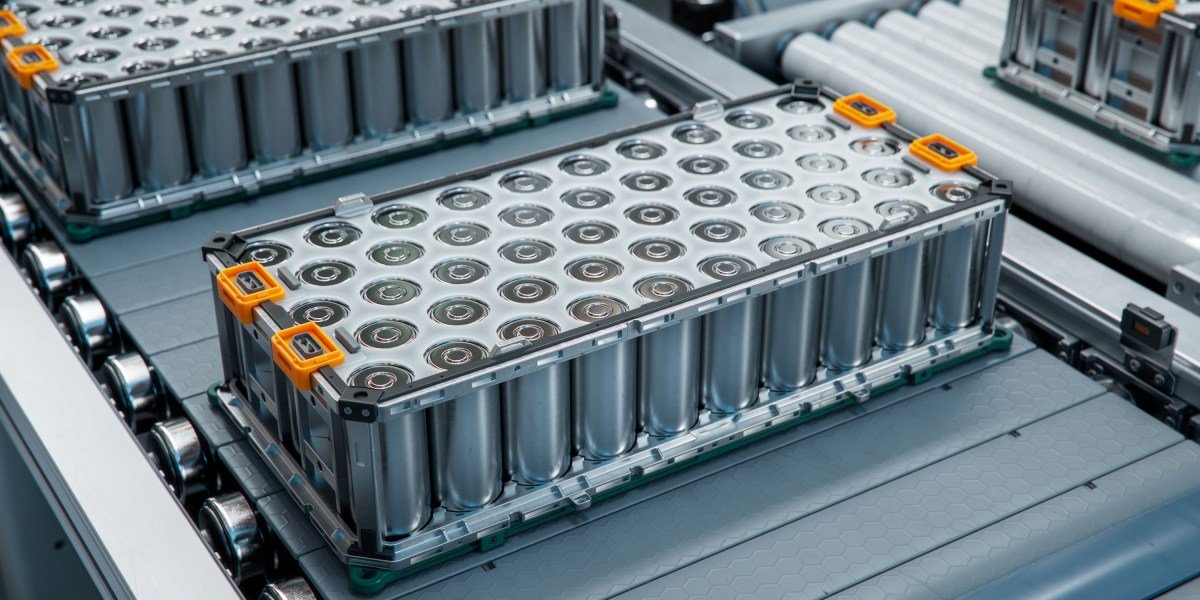
    These tariffs could be particularly rough on the battery industry. China dominates the entire supply chain and is subject to monster tariff rates, and even US battery makers won’t escape the effects.   

    First, in case you need it, a super-quick refresher: Tariffs are taxes charged on goods that are imported (in this case, into the US). If I’m a US company selling bracelets, and I typically buy my beads and string from another country, I’ll now be paying the US government an additional percentage of what those goods cost to import. Under Trump’s plan, that might be 10%, 20%, or upwards of 50%, depending on the country sending them to me. 

    In theory, tariffs should help domestic producers, since products from competitors outside the country become more expensive. But since so many of the products we use have supply chains that stretch all over the world, even products made in the USA often have some components that would be tariffed.

    In the case of batteries, we could be talking about really high tariff rates, because most batteries and their components currently come from China. As of 2023, the country made more than 75% of the world’s lithium-ion battery cells, according to data from the International Energy Agency.

    Trump’s new plan adds a 34% tariff on all Chinese goods, and that stacks on top of a 20% tariff that was already in place, making the total 54%. (Then, as of Wednesday, the White House further raised the tariff on China, making the total 104%.)

    But when it comes to batteries, that’s not even the whole story. There was already a 3.5% tariff on all lithium-ion batteries, for example, as well as a 7.5% tariff on batteries from China that’s set to increase to 25% next year.

    If we add all those up, lithium-ion batteries from China could have a tariff of 82% in 2026. (Or 132%, with this additional retaliatory tariff.) In any case, that’ll make EVs and grid storage installations a whole lot more expensive, along with phones, laptops, and other rechargeable devices.

    The economic effects could be huge. The US still imports the majority of its lithium-ion batteries, and nearly 70% of those imports are from China. The US imported $4 billion worth of lithium-ion batteries from China just during the first four months of 2024.

    Although US battery makers could theoretically stand to benefit, there are a limited number of US-based factories. And most of those factories are still purchasing components from China that will be subject to the tariffs, because it’s hard to overstate just how dominant China is in battery supply chains.

    While China makes roughly three-quarters of lithium-ion cells, it’s even more dominant in components: 80% of the world’s cathode materials are made in China, along with over 90% of anode materials. (For those who haven’t been subject to my battery ramblings before, the cathode and anode are two of the main components of a battery—basically, the plus and minus ends.)

    Even battery makers that work in alternative chemistries don’t seem to be jumping for joy over tariffs. Lyten is a California-based company working to build lithium-sulfur batteries, and most of its components can be sourced in the US. (For more on the company’s approach, check out this story from 2024.) But tariffs could still spell trouble. Lyten has plans for a new factory, scheduled for 2027, that rely on sourcing affordable construction materials. Will that be possible? “We’re not drawing any conclusions quite yet,” Lyten’s chief sustainability officer, Keith Norman, told Heatmap News.

    The battery industry in the US was already in a pretty tough spot. Billions of dollars’ worth of factories have been canceled since Trump took office.  Companies making investments that can total hundreds of millions or billions of dollars don’t love uncertainty, and tariffs are certainly adding to an already uncertain environment.

    We’ll be digging deeper into what the tariffs mean for climate technology broadly, and specifically some of the industries we cover. If you have questions, or if you have thoughts to share about what this will mean for your area of research or business, I’d love to hear them at casey.crownhart@technologyreview.com. I’m also on Bluesky @caseycrownhart.bsky.social.

    This article is from The Spark, MIT Technology Review’s weekly climate newsletter. To receive it in your inbox every Wednesday, sign up here.

    Share. Facebook Twitter Pinterest LinkedIn Reddit WhatsApp Telegram Email
    Previous ArticleThe Download: detecting bird flu, and powering industrial processes with nuclear energy
    Next Article How AI can help supercharge creativity
    TechAiVerse
    • Website

    Jonathan is a tech enthusiast and the mind behind Tech AI Verse. With a passion for artificial intelligence, consumer tech, and emerging innovations, he deliver clear, insightful content to keep readers informed. From cutting-edge gadgets to AI advancements and cryptocurrency trends, Jonathan breaks down complex topics to make technology accessible to all.

    Related Posts

    OpenAI’s ad push begins, and The Knot is co-piloting

    March 3, 2026

    From Boll & Branch to Bogg, brands battle a surge of AI-driven return fraud

    March 3, 2026

    Agencies grapple with economics of a new marketing currency: the AI token

    March 3, 2026
    Leave A Reply Cancel Reply

    Top Posts

    Ping, You’ve Got Whale: AI detection system alerts ships of whales in their path

    April 22, 2025702 Views

    Lumo vs. Duck AI: Which AI is Better for Your Privacy?

    July 31, 2025285 Views

    6.7 Cummins Lifter Failure: What Years Are Affected (And Possible Fixes)

    April 14, 2025164 Views

    6 Best MagSafe Phone Grips (2025), Tested and Reviewed

    April 6, 2025124 Views
    Don't Miss
    Technology March 3, 2026

    OpenAI’s ad push begins, and The Knot is co-piloting

    OpenAI’s ad push begins, and The Knot is co-piloting By Kimeko McCoy  •  March 3,…

    From Boll & Branch to Bogg, brands battle a surge of AI-driven return fraud

    Agencies grapple with economics of a new marketing currency: the AI token

    Ad Tech Briefing: Criteo named first ad tech partner to OpenAI’s ChatGPT ad pilot

    Stay In Touch
    • Facebook
    • Twitter
    • Pinterest
    • Instagram
    • YouTube
    • Vimeo

    Subscribe to Updates

    Get the latest creative news from SmartMag about art & design.

    About Us
    About Us

    Welcome to Tech AI Verse, your go-to destination for everything technology! We bring you the latest news, trends, and insights from the ever-evolving world of tech. Our coverage spans across global technology industry updates, artificial intelligence advancements, machine learning ethics, and automation innovations. Stay connected with us as we explore the limitless possibilities of technology!

    Facebook X (Twitter) Pinterest YouTube WhatsApp
    Our Picks

    OpenAI’s ad push begins, and The Knot is co-piloting

    March 3, 20262 Views

    From Boll & Branch to Bogg, brands battle a surge of AI-driven return fraud

    March 3, 20261 Views

    Agencies grapple with economics of a new marketing currency: the AI token

    March 3, 20262 Views
    Most Popular

    7 Best Kids Bikes (2025): Mountain, Balance, Pedal, Coaster

    March 13, 20250 Views

    VTOMAN FlashSpeed 1500: Plenty Of Power For All Your Gear

    March 13, 20250 Views

    Best TV Antenna of 2025

    March 13, 20250 Views
    © 2026 TechAiVerse. Designed by Divya Tech.
    • Home
    • About Us
    • Contact Us
    • Privacy Policy
    • Terms & Conditions

    Type above and press Enter to search. Press Esc to cancel.