

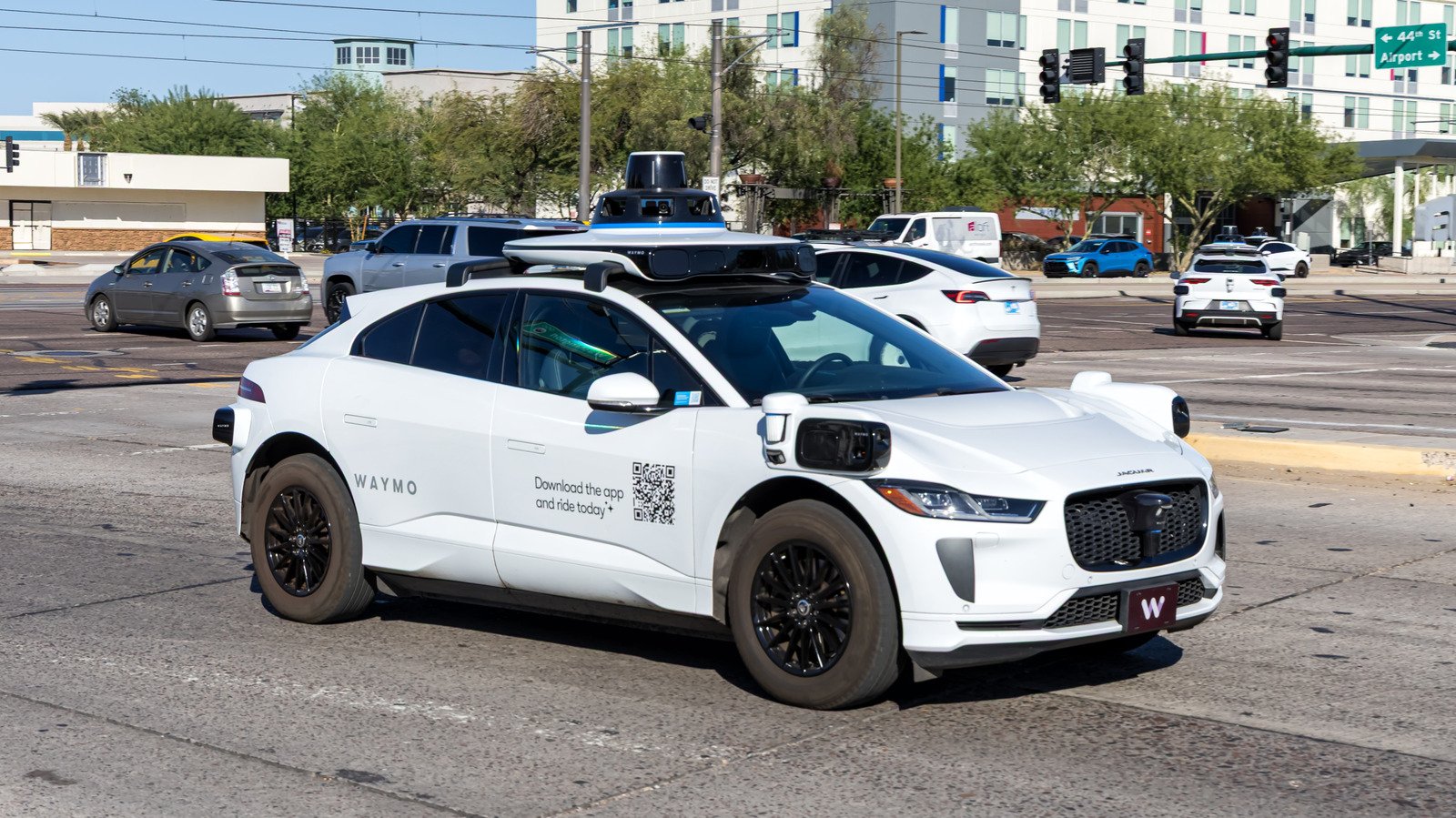
Tesla And Waymo Push Back On Robotaxi Critics In Front Of The US Senate
Markus Mainka/Shutterstock
There are several levels of autonomous driving, each corresponding to the extent to which a given vehicle can operate autonomously. Leaders in the field, such as Waymo and Tesla, continue to advance their efforts in this area, but to further develop, establishing a legal framework across the United States for their implementation is critical.
In February 2026, the Senate Committee on Commerce, Science, and Transportation met to discuss the matter of autonomous vehicles. The vice president of vehicle engineering at Tesla, Lars Moravy, testified at the meeting, as did Waymo chief safety officer Dr. Mauricio Peña. There were some pivotal issues on the agenda, as CBS News reported: “At least 24 times in the last year, Waymos failed to yield to school buses in Austin.” Under scrutiny from Senator Ted Cruz of Texas, who demanded to know how the company would “protect school bus riders moving forward,” Peña highlighted the critical importance of safety measures in Waymo’s work, stating, “We are evaluating every one of those events and developing fixes to address them, and we have already incorporated many changes to our software to dramatically improve our performance.” For Tesla, meanwhile, Moravy stated that the company would accept responsibility for any “software error” that could cause an incident, “much in the same way that a driver takes liability in our current legal system if they make an error.”
This meeting was not intended purely to cast aspersions on driverless vehicles. Quite the contrary, in fact: The hearing was titled “Hit the Road, Mac: The Future of Self-Driving Cars,” focusing on the potential of the technology and how it can continue to be rolled out safely and in a thoroughly regulated way.
The discussion regarding self-driving cars
Michael Vi/Getty Images
At the hearing, Senator Cruz stated, CBS News reports, that “the evidence […] increasingly shows advanced AVs reduce crashes and prevent serious injuries.” This was, of course, a point that executives at both Tesla and Waymo were keen to underscore. In fact, Senator Cruz joked about the advisability of referencing “The Terminator”, in response to Tesla’s Lars Moravy noting that a key point in autonomous vehicle safety is that drivers don’t get tired or blink as their human counterparts do. After collecting information from more than 100 million miles driven autonomously, Waymo’s Dr. Mauricio Peña said at the hearing, it was demonstrated that “our driver is 10 times less likely to be involved in a serious injury, or worse, crash compared to human drivers where we operate.”
Cruz noted that experts from mechanics to engineers are needed to create and maintain these vehicles, and that “AV deployment can support new high-skilled jobs built in the United States by American workers,” though Massachusetts Senator Ed Markey countered with the argument that human ride share and taxi drivers are undermined by the rise of autonomous vehicles.
The key, CBS News reports, is that both manufacturers want to expand and advance the rollout and sophistication of their models so the United States can retain its global leadership in this area. As Ian Krietzberg, Puck A.I. Correspondent, told the outlet, that means “finding ways to kind of compel legislators to enable these technologies to move faster.” The debate about how to do this is ongoing, but becoming increasingly prominent as services continue to roll out and become more popular in big cities. Driverless cars are transforming transport, but they need support to do so.
