

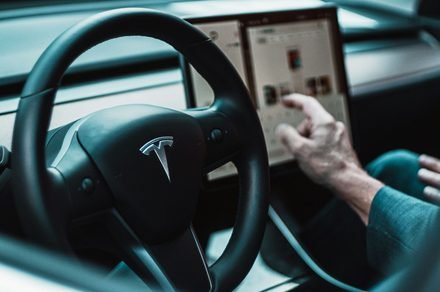
Tesla kills Autopilot for good and Musk warns of FSD price hikes
Autopilot is dead; Musk says “subscribe or drive yourself”
Tesla
Unsplash
It feels like the end of an era for Tesla buyers in North America. The company has officially pulled the plug on “Autopilot” as a standard inclusion, signaling a massive shift toward a pay-to-play future. If you order a new Model 3 or Model Y today, it won’t come with the lane-keeping tech that used to be a hallmark of the brand. Instead, you are left with basic cruise control – pretty much the same “dumb” system you’d find on an economy car from a decade ago – unless you are willing to sign up for a monthly subscription.
This pivot is clearly about money and control. Elon Musk has been hinting at this for a while, but the timeline is now set in stone: the option to buy Full Self-Driving (FSD) for a one-time fee of around $8,000 is disappearing on February 14, 2026. After that date, it is subscriptions all the way down, currently priced at about $99 a month. Musk has already warned that this price will likely climb as the software gets smarter, effectively turning driver assistance into a recurring utility bill rather than a feature you own. It is essentially the “Netflix-ification” of your daily commute.
There is also a significant legal angle here that can’t be ignored
California regulators have been breathing down Tesla’s neck about the “Autopilot” name being misleading for years, arguing it gave drivers a false sense of security. By killing the “Autopilot” branding and rolling the advanced features into the paid FSD tier, Tesla essentially sidesteps that fight while simultaneously smoothing out its revenue stream. It is a strategic masterstroke: appease the regulators and force users into a payment model that looks better on quarterly earnings reports.
For existing owners, nothing changes
Your car keeps the features it has, so there is no need to panic. But for new buyers, the value proposition just got significantly more complicated. You are no longer buying a car that steers itself out of the box; you are buying hardware that requires a monthly rent check to unlock its brain. It is a bold gamble that bets customers are hooked enough on the tech to keep paying forever. Considering only about 12% of owners were buying the software previously, Tesla is banking on the lower monthly entry price to hook a wider audience.
Ultimately, this forces a tough decision on buyers. Do you pay the monthly fee for safety and convenience, or do you drive a futuristic EV with archaic cruise control? Some might appreciate the flexibility of only subscribing during road trips, but for many, the idea of renting features in a car you already bought feels like a bitter pill to swallow. As Tesla pushes toward unsupervised driving, they are making it clear: the future of autonomy isn’t free, and it definitely isn’t a one-time purchase.
Moinak Pal is has been working in the technology sector covering both consumer centric tech and automotive technology for the…
Your future BMW electric M3 will still sound like a real M car
Bmw gives its electric M3 fake engine noise, but the fancy kind
The transition to electric vehicles has always had one major stumbling block for car enthusiasts: the sound. Or rather, the lack of it. For decades, the soul of a performance car has been tied to the noise it makes—the intake gasp, the exhaust crackle, the mechanical symphony of pistons and valves. Now, as BMW prepares to launch its first-ever fully electric M3, the company is tackling this problem head-on, and their solution is surprisingly old-school.
Instead of trying to invent a new “sound of the future” filled with abstract spaceship hums and digital warbles, BMW’s Motorsport division is digging into its own history books. New videos from the development team reveal that the upcoming electric M3 will feature a synthetic audio system built from high-fidelity recordings of the brand’s most iconic internal combustion engines. We aren’t talking about generic engine noises here; BMW is literally sampling the legends.
This is the tech that makes Volvo’s latest EV a major step forward
When it comes to EVs, Volvo hasn’t been afraid to experiment. It’s tried repurposing a platform from its internal-combustion cars (for the EX40 and EC40, nee XC40 Recharge and C40 Recharge), a flagship SUV that’s also a technology demonstrator (the EX90) and a radical reinvention of its brand (with the EX30). The Swedish automaker’s latest EV takes yet another approach — one that could make it the most important Volvo EV yet.
The 2027 Volvo EX60 boasts engineering improvements in a package that’s likely to have mass appeal. It’s based on a new architecture that offers improved range and charging performance, backed by software with now-obligatory AI integration. And as a five-seat SUV similar in size to the current Volvo XC60 — the automaker’s bestselling model — it’s exactly the type of car most people are looking for.
Your cheap Chevrolet EV might not be cheap for Long
GM confirms limited Chevy Bolt EV run as Kansas plant repurposes for gas vehicles and Buick production.
General Motors’ effort to bring back the Chevrolet Bolt EV as an affordable electric vehicle is already facing a roadblock. Although the refreshed 2027 Chevy Bolt EV has just started arriving at U.S. dealerships with a sub-$30,000 price tag, Bloomberg reports that GM officials now say the new model will be in production for only about 18 months before the line winds down around mid-2027.
This shift comes as GM continues reshuffling its manufacturing footprint, with its Fairfax Assembly plant in Kansas City, Kansas, set to switch from Bolt EV output to other vehicles, including gas-powered models and a relocated Buick crossover. The decision marks a significant pivot away from making one of the U.S. market’s most affordable electric cars, at least for now.
