

The American Tradition of Trying to Address Anxiety with Parks
As summer approaches, America’s national parks are bracing for an influx of visitors, even as deep federal cuts to park services likely mean fewer camp employees, closed campgrounds, long lines, and cancelled programs. Travelers have been warned away from some national parks by experts, urged to reschedule for next year.
But millions are still opting to go. Last summer, a record 332 million people visited America’s 63 national parks. Based on yearly upward trends, the estimates for this summer are even higher. In a “hold-your-breath year” for national park tourism, Americans are still turning en masse to the natural environment as respite from the stresses of modern life.
The frenzy shouldn’t surprise us. With festering worries related to economic uncertainty, inflated costs, and federal policy whiplash, the popularity of park vacations is no coincidence. Rather, the rush to escape to these beautiful sanctuaries echoes a long history of Americans turning to nature for relief from anxiety, particularly during moments of sudden and widely felt changes.
In the 1870s, the United States was in the midst of the most spectacular transformations yet in its history. The end of the American Civil War brought an end to slavery and the emancipation of some 4 million Black people, while a slew of new innovations brought irreversible changes to the day-to-day lives of all Americans.
Read More: When History Tourism Puts Profit Before the Past
New machinery brought advanced manufacturing, jobs, speedier production of goods, and lower costs for consumers. Hundreds of thousands of miles of telegraph cable delivered information at break-neck speed, forever reshaping how Americans accessed news, communicated, conducted business, and envisioned the world. And the completion of a continent-crossing railroad in 1869 revolutionized travel, making it possible to move people and cargo across vast distances in hours, rather than weeks or months.
Spurred by monumental developments in technology, industry, and travel, more Americans than ever before—including new immigrants—made their way to growing cities, seeking work, education, entertainment, and exposure to new people, ideas, and possibilities.
Sudden and rapid change fired up excitement about the future. But it also stirred anxieties.
During this time, American doctors noticed more and more seemingly healthy patients with a range of complaints about hard-to-explain medical issues, including digestive problems, hair loss, sexual dysfunction, aches and pains without identifiable injuries, and profound exhaustion without obvious cause.
In response, a widely respected neurologist named George Miller Beard offered a theory. Americans, he said, were suffering from a malady called “neurasthenia.” Writing in The Boston Medical and Surgical Journal, Beard borrowed an old term used to describe “weakness of the nerves” and reintroduced it to the medical community as a “morbid condition” afflicting Americans at a worrisome rate. In his 1881 book American Nervousness, Beard also pinpointed the key culprit: modern change.
For instance, new communication technology delivered shocking news of faraway crime, disaster, and war; mechanization in industry brought extreme economic volatility and labor strife; speedy railroad travel introduced the real possibility of horrific accidents involving “wholesale killings.” Even the invention of the pocket watch, a simple hand-held timepiece, fostered a maniacal obsession with punctuality. Americans were “under constant strain,” Beard warned, “to get somewhere or to do something at some definite moment.”
Constant strain was a big problem, according to Beard and his contemporaries. Victorian-era neurologists theorized that the body functioned like an electrical machine, powered by energy distributed through the nervous system. When Americans spent too much energy navigating the extreme shifts and new worries in their modern lives, they experienced aches, pains, exhaustion, irritability, and malaise. Doctors also theorized that urban life only made such conditions worse by further taxing and weakening the body.
In response, a range of popular remedies and medical treatments for neurasthenia emerged. Some doctors recommended that women suffering symptoms should halt all physical and intellectual activity. Colloquially known as the “rest cure,” this treatment—famously recounted in “The Yellow Wallpaper,” a horror novella written by Charlotte Perkins Gilman—involved isolation in the home, bed rest for weeks, and an embargo on reading, writing, drawing, socializing, and exercising.
Women patients and doctors, including New York City physician Grace Peckham, successfully argued that the rest cure was not only quack medicine but more harmful to patients than the nervous sickness itself. Thus, it didn’t stick.
What did catch on was the “West cure,” a different kind of treatment originally reserved for men. Neurologists worried that the urban environment, factory work and office jobs, and other modern pressures were making men tired, indecisive, and physically weak. On doctor’s orders, male patients ventured into the western wilderness, where, it was thought, the natural environment would inspire the mind and reinvigorate the body. Prescriptions emphasized physical exercise, including hiking and horseback riding.
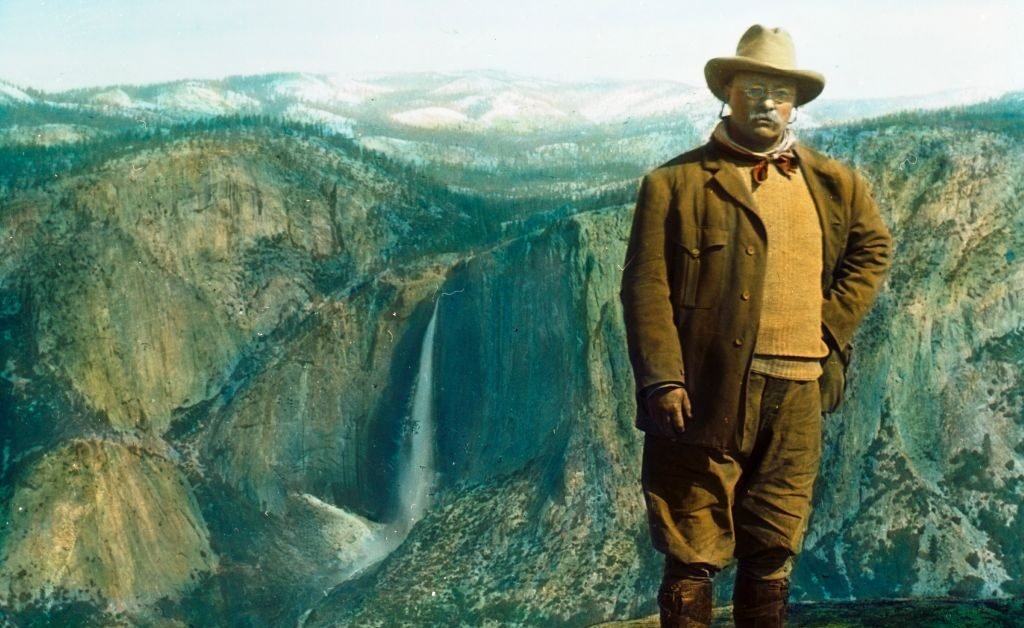
The legacies of this are notable. In the 1880s, Theodore Roosevelt, a young, well-to-do New Yorker at the time, suffered from a range of neurasthenic conditions including asthma, and he sought treatment. Roosevelt was so inspired by his own privileged experience of the West cure, and its restorative outcomes, that later, as president, he built upon state park preservation and forest protection acts to dramatically expand federal support for public access to park lands, including National Parks. Most famously, in 1903, Roosevelt partnered with naturalist John Muir—also diagnosed as neurasthenic—to expand federal protection for Yosemite in the Sierra Nevada mountain range in California.
Initially, it was urban elite white men, like Roosevelt, who were most likely to have the means to travel and to pay for the therapy of riding horses, hunting game, and sleeping under the stars. But the notion of the natural world as an antidote for the stresses of modern life appealed broadly, across lines of class, race, and gender.
By the end of the 19th century, city planners, imagining more healthful, walkable, livable urban environments, also incorporated green spaces for urban residents to enjoy for free. From small picnic areas and playgrounds to sprawling urban parks designed to feel like the bucolic countryside, American cities began providing West cure benefits without the steep price tag or the need to travel.
Camping became another popular, and more affordable, option for vacations from modernity. Working people could purchase a simple tent, one-burner stove, and a few other provisions, load up the horse and buggy and head to a park or campground just outside the city. This cheap and accessible alternative to West cure travel ballooned in popularity in the early 20th century, with the proliferation of camping guides and camping clubs, the growth of the National Park Service, and the introduction of the car. Enthusiasm for camping and national park tourism as affordable restorative activities endured through the 20th century. And they remain as popular as ever today.
Neurasthenia as a diagnostic category, has not endured. It disappeared in the early 20th century, thanks mainly to the rise of psychoanalysis and expanding knowledge about mental health and conditions like chronic fatigue, anxiety disorders, phobias, and depression.
But its most popular remedy—particularly exercise, outdoor recreation, and reflection in nature—has proved truly beneficial for both mental and physical health.
Amid unsettling changes, Americans touted the curative powers of the natural world, fueling the call for outdoor exercise and recreation, and laying the groundwork for the astounding growth of national and state park tourism. Today, with so much to worry about, it is important to remember how national and state parks, and the workers who run and sustain them, have long played a healing role in American society. As we head off to America’s many majestic park destinations—our favorite “mental health escapes” and “calmcation” getaways—may this history reinforce the need to preserve, protect, and invest in them, especially in uncertain times.
Felicia Angeja Viator is associate professor of history at San Francisco State University, a culture writer, and curator for the GRAMMY Museum.
Made by History takes readers beyond the headlines with articles written and edited by professional historians. Learn more about Made by History at TIME here. Opinions expressed do not necessarily reflect the views of TIME editors.
