

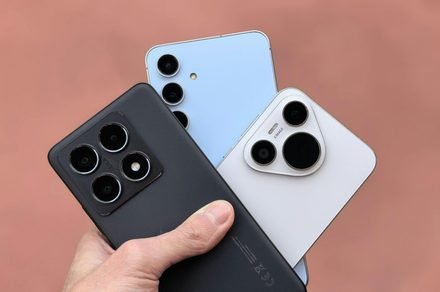
This chip can make future phones thinner and faster through tiny ‘earthquakes’
The design uses surface acoustic waves to replace bulky wireless components
Andrey Matveev / Pexels
Researchers from the University of Colorado Boulder, University of Arizona, and Sandia National Laboratories have developed a new device that generates controlled vibrations on the surface of a microchip. These waves could help future smartphones become thinner, faster, and more efficient at handling wireless signals.
According to the research paper, they have developed a surface acoustic wave (SAW) phonon laser that can create “the tiniest earthquakes imaginable”. Instead of light, this laser sends mechanical waves that skim along the surface of a material.
Phones already rely on surface acoustic waves to clean up messy wireless signals, but it requires multiple components. This new approach aims to compress much of that work into a single, compact chip, freeing up space while improving performance.
How tiny earthquakes could reshape phone hardware
The chip is built in layers. At the base is silicon, the standard foundation of modern electronics. On top sits lithium niobate, a piezoelectric material that turns electrical signals into mechanical motion. A layer of indium gallium arsenide helps accelerate electrons when current flows through the device.
When powered up, the structure generates surface vibrations that bounce around, reinforce each other, and eventually spill out in a controlled stream, much like how a laser releases light. Those vibrations currently operate at around one gigahertz, which already puts them in the range used for wireless communication.
Researchers believe the design can be pushed to much higher frequencies, opening the door to faster signal processing and cleaner filtering. That could reduce the need for multiple radio components inside phones, which is one reason modern devices are packed so tightly.
Beyond smartphones, this kind of vibrating chip could influence how future wireless hardware is designed, from wearables to networking gear. Instead of relying only on electrons, engineers are starting to use sound-like waves to move information more efficiently.
It also fits into a broader push to rethink how devices manage heat and performance, with phone makers exploring liquid cooling borrowed from PCs and even diamond-based materials that could keep future chips cooler and faster.
The latest breakthrough is a reminder that some of the next big gains in tech will not come from flashy screens, but from invisible physics quietly reshaping what fits inside our pockets.
Manisha likes to cover technology that is a part of everyday life, from smartphones & apps to gaming & streaming…
Scientists are teaching OLED screens how to shine smarter
Brighter displays might not drain your battery faster
You know that annoying moment when you step outside on a sunny day, pull out your phone, and suddenly can’t see a single thing on the screen? You’re squinting, cranking the brightness slider all the way to the max, and watching your battery percentage nosedive in real-time. It’s a struggle we all deal with. Well, a team of researchers over in South Korea might have just fixed that for good, and they managed to do it without turning our sleek phones into bulky bricks.
A group from KAIST, led by Professor Seunghyup Yoo, just published some pretty massive findings in Nature Communications. Basically, they have figured out a way to make OLED screens—the kind found in most high-end phones and TVs these days—significantly brighter. And the best part? They didn’t have to sacrifice that ultra-thin, flat look that we all love.
Anthropic’s Cowork turns Claude into your hands-on digital teammate
Automate mundane tasks without writing a single line of code.
Anthropic has announced a new tool that brings Claude Code’s advanced capabilities to less tech-savvy users, letting them perform various actions without writing a single line of code. Dubbed Cowork, the tool can access folders on a user’s computer and read, modify, or delete files on their behalf.
Claude Cowork can also spin up new projects using information from the folder, enabling tasks like generating reports based on a user’s notes. Anthropic says the tool can even be used for organizing old receipts and creating an expense-tracking spreadsheet, or cleaning up a messy downloads folder.
Anthropic’s Claude will soon help you make sense of your Apple Watch health data
The AI assistant will analyze your wearable metrics and offer clearer health insights.
Anthropic just stepped into the healthcare AI space with the launch of Claude for Healthcare, a new suite of tools designed for providers, payers, and patients. Following in the footsteps of OpenAI’s ChatGPT Health, Claude for Healthcare aims to bring AI safely into medical contexts, helping users access and understand their health information more effectively.
As part of this push, Anthropic is introducing new integrations that let users connect their health data to Claude. In the US, subscribers on the Claude Pro and Max plans can give the AI assistant secure access to lab results and health records, and unlock features that make that data actionable.
