Close Menu

    Subscribe to Updates

    Get the latest creative news from FooBar about art, design and business.

    What's Hot

    How Boll & Branch leverages AI for operational and creative tasks

    While holdcos build ‘death stars of content,’ indie creative agencies take alternative routes

    Future of Marketing Briefing: AI’s branding problem is why marketers keep it off the label

    Facebook X (Twitter) Instagram
    • Artificial Intelligence
    • Business Technology
    • Cryptocurrency
    • Gadgets
    • Gaming
    • Health
    • Software and Apps
    • Technology
    Facebook X (Twitter) Instagram Pinterest Vimeo
    Tech AI Verse
    • Home
    • Artificial Intelligence

      Read the extended transcript: President Donald Trump interviewed by ‘NBC Nightly News’ anchor Tom Llamas

      February 6, 2026

      Stocks and bitcoin sink as investors dump software company shares

      February 4, 2026

      AI, crypto and Trump super PACs stash millions to spend on the midterms

      February 2, 2026

      To avoid accusations of AI cheating, college students are turning to AI

      January 29, 2026

      ChatGPT can embrace authoritarian ideas after just one prompt, researchers say

      January 24, 2026
    • Business

      The HDD brand that brought you the 1.8-inch, 2.5-inch, and 3.5-inch hard drives is now back with a $19 pocket-sized personal cloud for your smartphones

      February 12, 2026

      New VoidLink malware framework targets Linux cloud servers

      January 14, 2026

      Nvidia Rubin’s rack-scale encryption signals a turning point for enterprise AI security

      January 13, 2026

      How KPMG is redefining the future of SAP consulting on a global scale

      January 10, 2026

      Top 10 cloud computing stories of 2025

      December 22, 2025
    • Crypto

      How Polymarket Is Turning Bitcoin Volatility Into a Five-Minute Betting Market

      February 13, 2026

      Israel Indicts Two Over Secret Bets on Military Operations via Polymarket

      February 13, 2026

      Binance’s October 10 Defense at Consensus Hong Kong Falls Flat

      February 13, 2026

      Argentina Congress Strips Workers’ Right to Choose Digital Wallet Deposits

      February 13, 2026

      Monero Price Breakdown Begins? Dip Buyers Now Fight XMR’s Drop to $135

      February 13, 2026
    • Technology

      How Boll & Branch leverages AI for operational and creative tasks

      February 13, 2026

      While holdcos build ‘death stars of content,’ indie creative agencies take alternative routes

      February 13, 2026

      Future of Marketing Briefing: AI’s branding problem is why marketers keep it off the label

      February 13, 2026

      ‘A brand trip’: How the creator economy showed up at this year’s Super Bowl

      February 13, 2026

      From feeds to streets: How mega influencer Haley Baylee is diversifying beyond platform algorithms 

      February 13, 2026
    • Others
      • Gadgets
      • Gaming
      • Health
      • Software and Apps
    Check BMI
    Tech AI Verse
    You are at:Home»Technology»This quantum radar could image buried objects
    Technology

    This quantum radar could image buried objects

    TechAiVerseBy TechAiVerseAugust 12, 2025No Comments5 Mins Read3 Views
    Facebook Twitter Pinterest Telegram LinkedIn Tumblr Email Reddit
    This quantum radar could image buried objects
    Share
    Facebook Twitter LinkedIn Pinterest WhatsApp Email

    This quantum radar could image buried objects

    Physicists have created a new type of radar that could help improve underground imaging, using a cloud of atoms in a glass cell to detect reflected radio waves. The radar is a type of quantum sensor, an emerging technology that uses the quantum-mechanical properties of objects as measurement devices. It’s still a prototype, but its intended use is to image buried objects in situations such as constructing underground utilities, drilling wells for natural gas, and excavating archaeological sites.

    Like conventional radar, the device sends out radio waves, which reflect off nearby objects. Measuring the time it takes the reflected waves to return makes it possible to determine where an object is. In conventional radar, the reflected waves are detected using a large antenna, among other receiver components. But in this new device, the reflected waves are registered by detecting the interactions between the returning waves and the atom cloud.

    The current incarnation of the radar is still bulky, as the researchers have kept it connected to components on an optical table for ease of testing. But they think their quantum radar could be significantly smaller than conventional designs. “Instead of having this sizable metal structure to receive the signal, we now can use this small glass cell of atoms that can be about a centimeter in size,” says Matthew Simons, a physicist at the National Institute of Standards and Technology (NIST), who was a member of the research team. NIST also worked with the defense contractor RTX to develop the radar.  

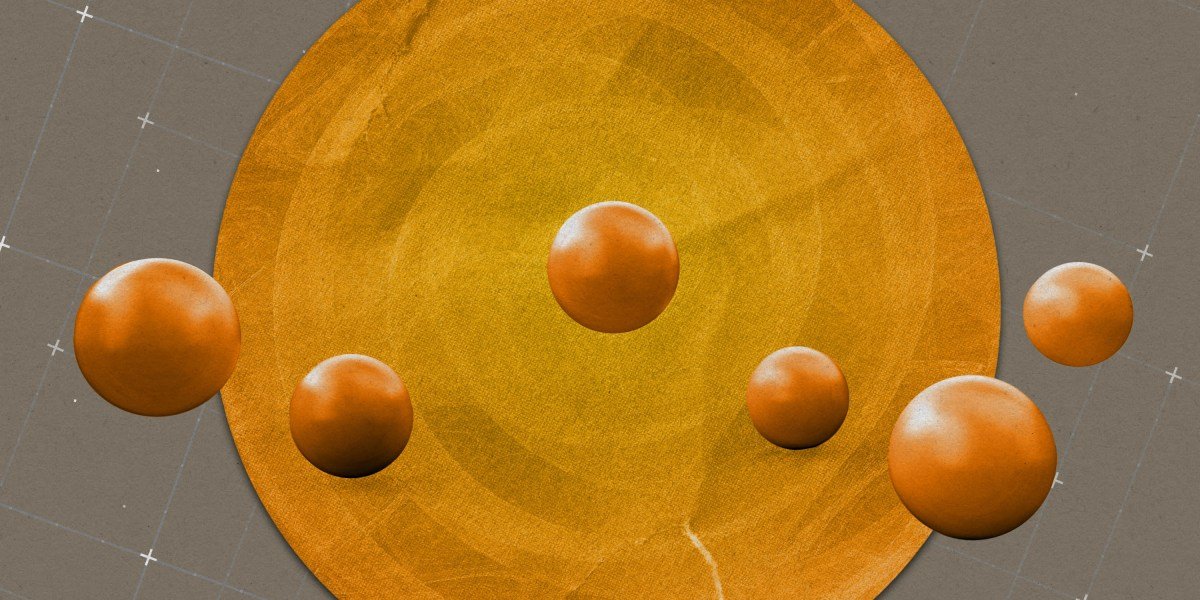
    The glass cell that serves as the radar’s quantum component is full of cesium atoms kept at room temperature. The researchers use lasers to get each individual cesium atom to swell to nearly the size of a bacterium, about 10,000 times bigger than the usual size. Atoms in this bloated condition are called Rydberg atoms. 

    When incoming radio waves hit Rydberg atoms, they disturb the distribution of electrons around their nuclei. Researchers can detect the disturbance by shining lasers on the atoms, causing them to emit light; when the atoms are interacting with a radio wave, the color of their emitted light changes. Monitoring the color of this light thus makes it possible to use the atoms as a radio receiver. Rydberg atoms are sensitive to a wide range of radio frequencies without needing to change the physical setup, says Michał Parniak, a physicist at the University of Warsaw in Poland, who was not involved in the work. This means a single compact radar device could potentially work at the multiple frequency bands required for different applications.

    Simons’s team tested the radar by placing it in a specially designed room with foam spikes on the floor, ceiling, and walls like stalactites and stalagmites. The spikes absorb, rather than reflect, nearly all the radio waves that hit them. This simulates the effect of a large open space, allowing the group to test the radar’s imaging capability without unwanted reflections off walls. 

    MATT SIMONS, NIST

    The researchers placed a radio wave transmitter in the room, along with their Rydberg atom receiver, which was hooked up to an optical table outside the room. They aimed radio waves at a copper plate about the size of a sheet of paper, some pipes, and a steel rod in the room, each placed up to five meters away. The radar allowed them to locate the objects to within 4.7 centimeters. The team posted a paper on the research to the arXiv preprint server in late June.

    The work moves quantum radar closer to a commercial product. “This is really about putting elements together in a nice way,” says Parniak. While other researchers have previously demonstrated how Rydberg atoms can work as radio wave detectors, he says, this group has integrated the receiver with the rest of the device more sleekly than before. 

    Other researchers have explored the use of Rydberg atoms for other radar applications. For example, Parniak’s team recently developed a Rydberg atom sensor for measuring radio frequencies to troubleshoot chips used in car radar. Researchers are also exploring whether radar using Rydberg-atom receivers could be used for measuring soil moisture.

    This device is just one example of a quantum sensor, a type of technology that incorporates quantum components into conventional tools. For example, the US government has developed gyroscopes that use the wave properties of atoms for sensing rotation, which is useful for navigation. Researchers have also created quantum sensors using impurities in diamond to measure magnetic fields in, for example, biomedical applications.

    One advantage of quantum sensors is the inherent consistency of their core components. Each cesium atom in their device is identical. In addition, the radio receiver relies on the fundamental structure of these atoms, which never changes. Properties of the atoms “can be linked directly to fundamental constants,” says Simons. For this reason, quantum sensors should require less calibration than their non-quantum counterparts. 

    Governments worldwide have invested billions of dollars to develop quantum sensors and quantum computers, which share similar components. For example, researchers have built quantum computers using Rydberg atoms as qubits, the equivalent to bits in a conventional computer. Thus, advances in quantum sensing can potentially translate into advances into quantum computing, and vice versa. Parniak has recently adapted an error-correction technique from quantum computing to improve a Rydberg-atom-based sensor. 

    Researchers still need to continue developing quantum radar before it can be made commercially viable. In the future, they need to work on improving the device’s sensitivity to fainter signals, which could involve improving the coatings for the glass cell. “We don’t see this replacing all radar applications,” says Simons. Instead, he thinks it will be useful for particular scenarios that require a compact device.

    Share. Facebook Twitter Pinterest LinkedIn Reddit WhatsApp Telegram Email
    Previous ArticleTDK backs Ultraviolette with $21M to take India-made electric motorcycles global
    Next Article The Download: a quantum radar, and chipmakers’ deal with the US government
    TechAiVerse
    • Website

    Jonathan is a tech enthusiast and the mind behind Tech AI Verse. With a passion for artificial intelligence, consumer tech, and emerging innovations, he deliver clear, insightful content to keep readers informed. From cutting-edge gadgets to AI advancements and cryptocurrency trends, Jonathan breaks down complex topics to make technology accessible to all.

    Related Posts

    How Boll & Branch leverages AI for operational and creative tasks

    February 13, 2026

    While holdcos build ‘death stars of content,’ indie creative agencies take alternative routes

    February 13, 2026

    Future of Marketing Briefing: AI’s branding problem is why marketers keep it off the label

    February 13, 2026
    Leave A Reply Cancel Reply

    Top Posts

    Ping, You’ve Got Whale: AI detection system alerts ships of whales in their path

    April 22, 2025668 Views

    Lumo vs. Duck AI: Which AI is Better for Your Privacy?

    July 31, 2025257 Views

    6.7 Cummins Lifter Failure: What Years Are Affected (And Possible Fixes)

    April 14, 2025153 Views

    6 Best MagSafe Phone Grips (2025), Tested and Reviewed

    April 6, 2025111 Views
    Don't Miss
    Technology February 13, 2026

    How Boll & Branch leverages AI for operational and creative tasks

    How Boll & Branch leverages AI for operational and creative tasks By Gabriela Barkho  • …

    While holdcos build ‘death stars of content,’ indie creative agencies take alternative routes

    Future of Marketing Briefing: AI’s branding problem is why marketers keep it off the label

    ‘A brand trip’: How the creator economy showed up at this year’s Super Bowl

    Stay In Touch
    • Facebook
    • Twitter
    • Pinterest
    • Instagram
    • YouTube
    • Vimeo

    Subscribe to Updates

    Get the latest creative news from SmartMag about art & design.

    About Us
    About Us

    Welcome to Tech AI Verse, your go-to destination for everything technology! We bring you the latest news, trends, and insights from the ever-evolving world of tech. Our coverage spans across global technology industry updates, artificial intelligence advancements, machine learning ethics, and automation innovations. Stay connected with us as we explore the limitless possibilities of technology!

    Facebook X (Twitter) Pinterest YouTube WhatsApp
    Our Picks

    How Boll & Branch leverages AI for operational and creative tasks

    February 13, 20260 Views

    While holdcos build ‘death stars of content,’ indie creative agencies take alternative routes

    February 13, 20260 Views

    Future of Marketing Briefing: AI’s branding problem is why marketers keep it off the label

    February 13, 20260 Views
    Most Popular

    7 Best Kids Bikes (2025): Mountain, Balance, Pedal, Coaster

    March 13, 20250 Views

    VTOMAN FlashSpeed 1500: Plenty Of Power For All Your Gear

    March 13, 20250 Views

    This new Roomba finally solves the big problem I have with robot vacuums

    March 13, 20250 Views
    © 2026 TechAiVerse. Designed by Divya Tech.
    • Home
    • About Us
    • Contact Us
    • Privacy Policy
    • Terms & Conditions

    Type above and press Enter to search. Press Esc to cancel.