

Trump’s Trade War Is Strengthening China’s Soft Power
President Donald Trump’s sweeping tariffs on Chinese imports have sent millions of manufacturers, retailers, and small businesses on both sides of the Pacific scrambling to cope with a sudden and punishing rise in costs. After Beijing responded with its own retaliatory measures, the White House said that a wide range of Chinese-made goods—from toys to electronics—will now face an effective tariff rate of 145 percent, a steep jump from the 34 percent figure Trump initially outlined just last week.
But despite looming economic pain, China is not backing down or making concessions to Trump. If anything, the government appears more defiant than ever, especially after some political narratives about the country’s manufacturing strength have started to shift in recent years. In the long run, in fact, an escalating battle with the US could wind up being an opportunity for China to leverage its growing soft power. “If the US is determined to fight a tariff and trade war, China’s response will continue to the end,” Liu Pengyu, spokesperson for the Chinese embassy in Washington, DC, said in a statement to WIRED.
The US previously justified its punitive trade measures against China by citing the country’s troubling human rights record and accusing it of repeatedly stealing American intellectual property. But China has now developed its own global tech brands, is home to a leading artificial intelligence startup, and has opened more branches of domestic drink shop Mixue than there are Starbucks or McDonald’s locations worldwide. The Trump administration’s alleged human rights abuses, meanwhile, are alarming civil liberties groups and observers around the world.
“This is kind of an interesting confluence of events where you have this soft power win over on the China side combined with effectively a complete abdication of soft power altogether from the United States,” says Kevin Xu, founder of the technology hedge fund Interconnected Capital and a former White House staffer under President Obama.
Many Chinese citizens seem pleased that their leaders are standing up to the US, though public polling in the country can be sparse and unreliable. As Trump’s tariffs went into effect, the Chinese government appeared to censor hashtags that mentioned the specifics of the measures, like “104 tariff rate,” but it allowed others focused on making fun of the United States to continue circulating. “America is fighting a trade war while begging for eggs,” read one particularly popular hashtag coined by China’s state broadcaster.
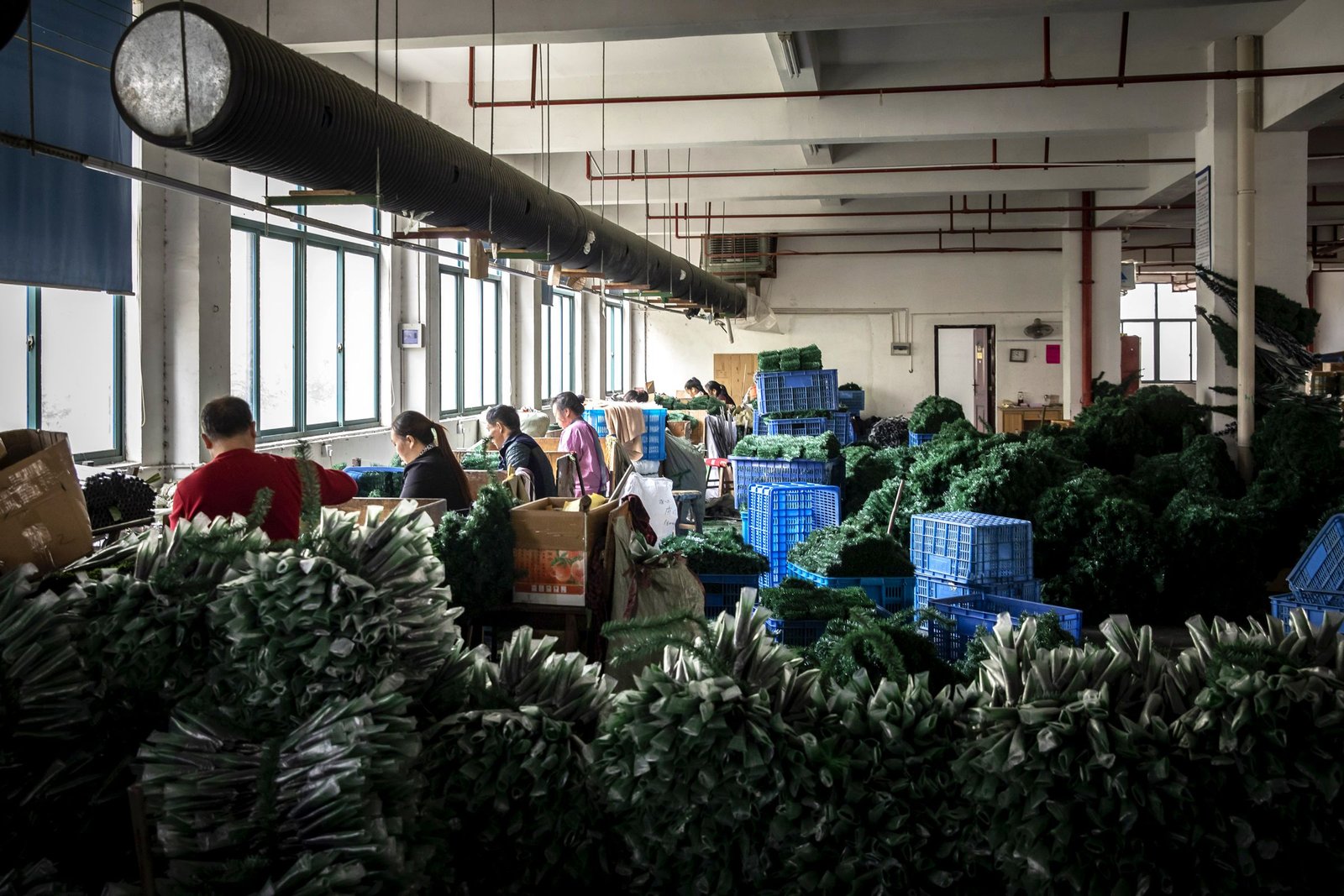
“We support our country in standing firm to the end! We’re not afraid of temporary hardship—what we fear is eternal cowardice,” says the owner of an artificial Christmas tree factory in China who asked to remain anonymous due to the risks of speaking to foreign media outlets. The owner tells WIRED that the tariffs are already having negative impacts on her industry, and she expects the competition for non-US markets like South America and Russia to be stiff next year, but “no matter what, we’ll get through it.”
Trump administration officials have promoted the tariffs as a way to boost US manufacturing and create more high-paying jobs. But American small business owners painted a very different picture of the situation on TikTok. In one video, the founder of a trendy hair accessories brand rolled her eyes and explained that the company’s products “literally cannot be made here.” In another, the CEO of a shoe company similarly said China “is just the only place I could manufacture.” The owner of a company that makes self-checkout kiosks lamented about how awful his experiences have been working with suppliers in the US compared to those in China. “What it’s about is Americans are a bunch of babies and they are hard to work with,” he told the camera.
The founder of a London-based clothing brand struck a more heartwarming tone, uploading a slideshow of pictures of herself posing with the garment workers her company partners with in China, set to The Fray song “Look After You.” The text overlaid on one photo read “Our wins are their wins.” The TikTok post received over 55,000 likes, an indication of how attitudes toward China have evolved among at least some Western consumers, compared to the past, when the country’s factories were mostly associated with pumping out cheap, flimsy goods. “Suddenly people see, oh, it’s not this imagined ‘slave labor’ that’s making my clothes, they’re actually humans,” says Tianyu Fang, a fellow at the New America think tank and one of the cofounders of the Chinese internet culture newsletter Chaoyang Trap.
In recent weeks, as the Trump administration’s ever-changing trade policies enraged close American allies like Canada, a number of prominent commentators have even begun suggesting that perhaps the era of American exceptionalism was over. The coming decades, they argued, would now be defined by the rise of China.
“The Chinese century, brought to you by Donald Trump,” David Frum, a staff writer at The Atlantic and former speechwriter for George W. Bush said in a social media post on April 2. New York Times opinion writer Thomas Friedman published a column the same day raving about a recent trip to China during which he witnessed the country’s impressive infrastructure and technological development. It was headlined “I Just Saw the Future. It Was Not in America.”
“When people say this is the Chinese century, what they really mean is that the consensus that this will be the American century is being broken,” says Fang.
Growing Influence
When Trump’s most comprehensive tariffs caused global stock markets to take a nosedive earlier this week, US social media influencer Darren Watkins Jr., better known as IShowSpeed to his over 100 million collective followers, was wrapping up a sprawling tour across China with stops in Beijing, Shanghai, Shenzhen, and other cities. Watkins spent days livestreaming himself mingling with Chinese celebrities and taking a boat ride with Hong Kong’s glittering skyline as the backdrop. By broadcasting in real time, IShowSpeed’s fans got an “unprecedented opportunity” to see “an unfiltered China,” Yaling Jiang, CEO of the strategy firm ApertureChina, wrote in her newsletter.
Many Americans got another direct glimpse inside China earlier this year when the US was set to ban TikTok nationwide. Anticipating the app might soon disappear, hundreds of thousands of people flocked to RedNote, another Chinese-owned social media app, where they saw posts of people in China showing off their domestic-made electric cars and comfortable urban apartments. TikTok itself, which was created by the Chinese tech giant ByteDance, is a testament to China’s growing soft power. Trump has vowed to save the app, and despite warnings from US lawmakers about the data security risks it poses, fewer Americans support banning it than did a few years ago.
But positive depictions of China won’t shield it from the economic damage ahead. Trump’s tariffs are so high that they will likely bring trade between the world’s two largest economies to a screeching halt. The signs of that disruption are already visible: Bloomberg reported that Amazon has canceled a number of wholesale product orders, like $500,000 worth of Chinese-made beach chairs for the upcoming US summer season, while a toy maker in China’s Guangdong province told The Wall Street Journal that a longtime client in Maryland similarly canceled a shipment scheduled to be delivered in June.
In as little as a few weeks, Americans may have a harder time finding some products on store shelves, which will eventually lead to higher consumer prices. The Chinese workers who make those items, meanwhile, could soon find themselves out of work. “The US is facing shortages and inflation, and on the Chinese side, they’re facing job losses and deflation,” says Gerard DiPippo, acting associate director of the RAND China Research Center and an expert on China’s economy. DiPippo adds that he’s stocking up on cooking ingredients from China in case they become unavailable, like szechuan peppercorns.
While there are some ways the Chinese government could try to stimulate spending and prop up local businesses, its options are fairly limited. Over the past few years, a domestic housing market crash has eroded the savings of China’s middle class and youth unemployment has soared, causing demand for things like shopping and eating at restaurants to fall. In response, China focused even more on increasing exports, making the country especially vulnerable to Trump’s attacks. China sent about $400 billion worth of goods to the US last year, and there are few other places it could shift that trade instead.
It’s unclear how things will unfold. China’s economic challenges could limit its ability to extend influence globally, and many will continue to view its authoritarian regime with skepticism. In the future, the cultural void left by the US may remain vacant as the world becomes increasingly fragmented. “I personally see the vacuum scenario more possible, where we’re all kind of fending for ourselves,” says Xu.
Zeyi Yang contributed to this report.
