

UCLA develops eyelid-mounted sensor to track fatigue with 96% accuracy – NotebookCheck.net News
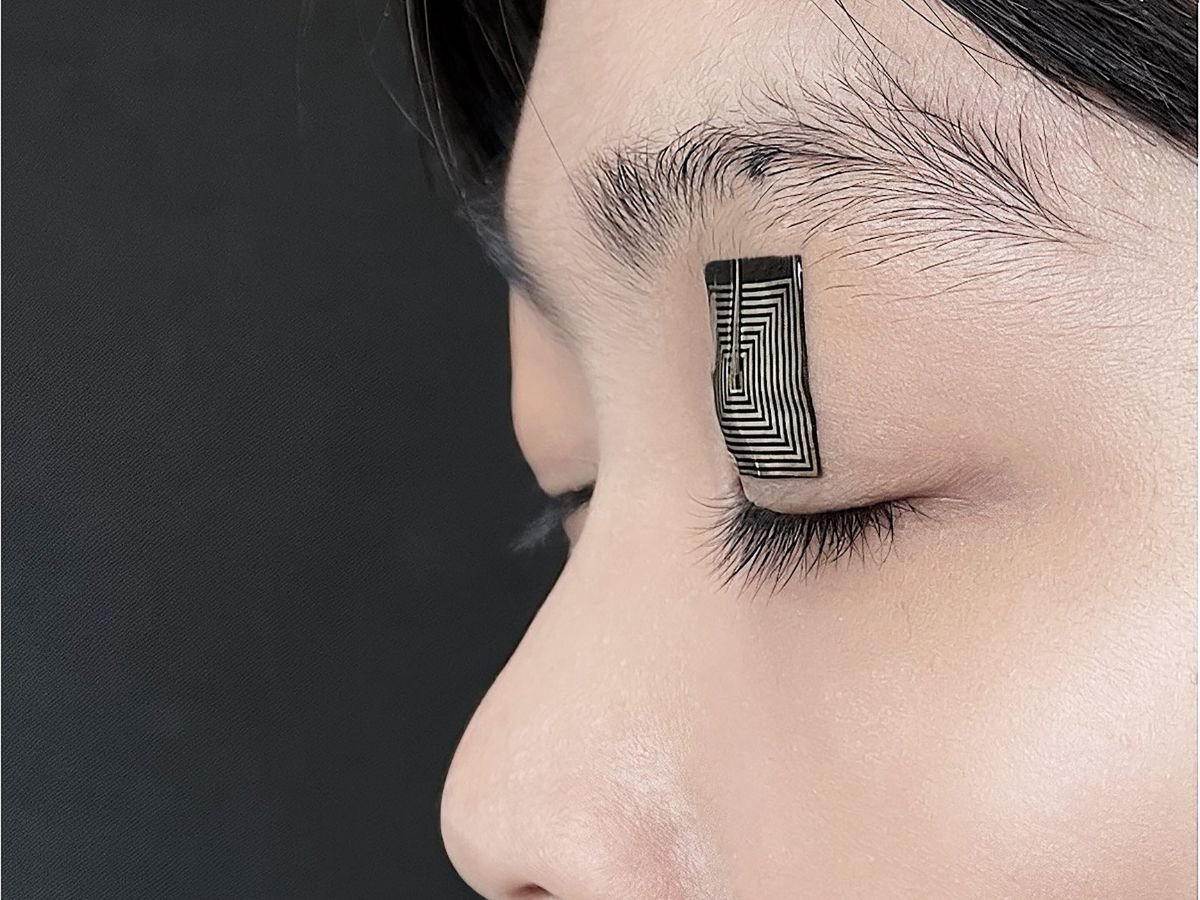
A team of researchers at UCLA has developed an on-eyelid sensor that tracks blinking patterns to decode fatigue levels in real-time. The breakthrough was made possible by a waterproof bioelectronic material.
Researchers at the University of California Los Angeles (UCLA) have developed a new soft, self-powered sensor that can reliably measure a person’s fatigue level by tracking eyelid movements. This new device — detailed in the journal Nature Electronics — combines a novel sensor with an AI algorithm to decode fatigue. With a reported accuracy of 96.4%, this sensor could lead to the development of a new class of sensors.
The breakthrough is built on the discovery of giant magnetoelastic effect in soft materials, which was made in 2021 by the same UCLA team. This effect enables a soft polymer composite to convert the mechanical stress from an eyelid’s movement into a measurable magnetic and then electrical signal.
This sensor is made of a silicone rubber layer embedded with micromagnets and a thin, conductive gold coil that is patterned onto a thermoplastic elastomer. It is a stretchable, waterproof sensor, and is designed to be worn on the eyelid. It translates eyelid movements into high-fidelity signals. These signals are then processed by a neural network. The AI analyzes six different eye-blink parameters from the sensor’s data to categorize a person’s level of fatigue.
In a broader view, the giant magnetoelastic effect in soft systems represents a transformative scientific discovery, yet its full theoretical and experimental potential remains to be unlocked. — Dr. Chen, leader of the research.
Related Articles
Chibuike Okpara – Tech Writer – 208 articles published on Notebookcheck since 2024
I have always been fascinated by technology and digital devices my entire life and even got addicted to it. I have always marveled at the intricacy of even the simplest digital devices and systems around us. I have been writing and publishing articles online for about 6 years now, just about a year ago, I found myself lost in the marvel of smartphones and laptops we have in our hands every day. I developed a passion for learning about new devices and technologies that come with them and at some point, I asked myself, “Why not get into writing tech articles?” It is useless to say I followed up the idea — it is evident. I am an open-minded individual who derives an infinite amount of joy from researching and discovering new information, I believe there is so much to learn and such a short life to live, so I put my time to good use — learning new things. I am a ‘bookworm’ of the internet and digital devices. When I am not writing, you will find me on my devices still, I do explore and admire the beauty of nature and creatures. I am a fast learner and quickly adapt to changes, always looking forward to new adventures.
Chibuike Okpara, 2025-09-21 (Update: 2025-09-21)

