

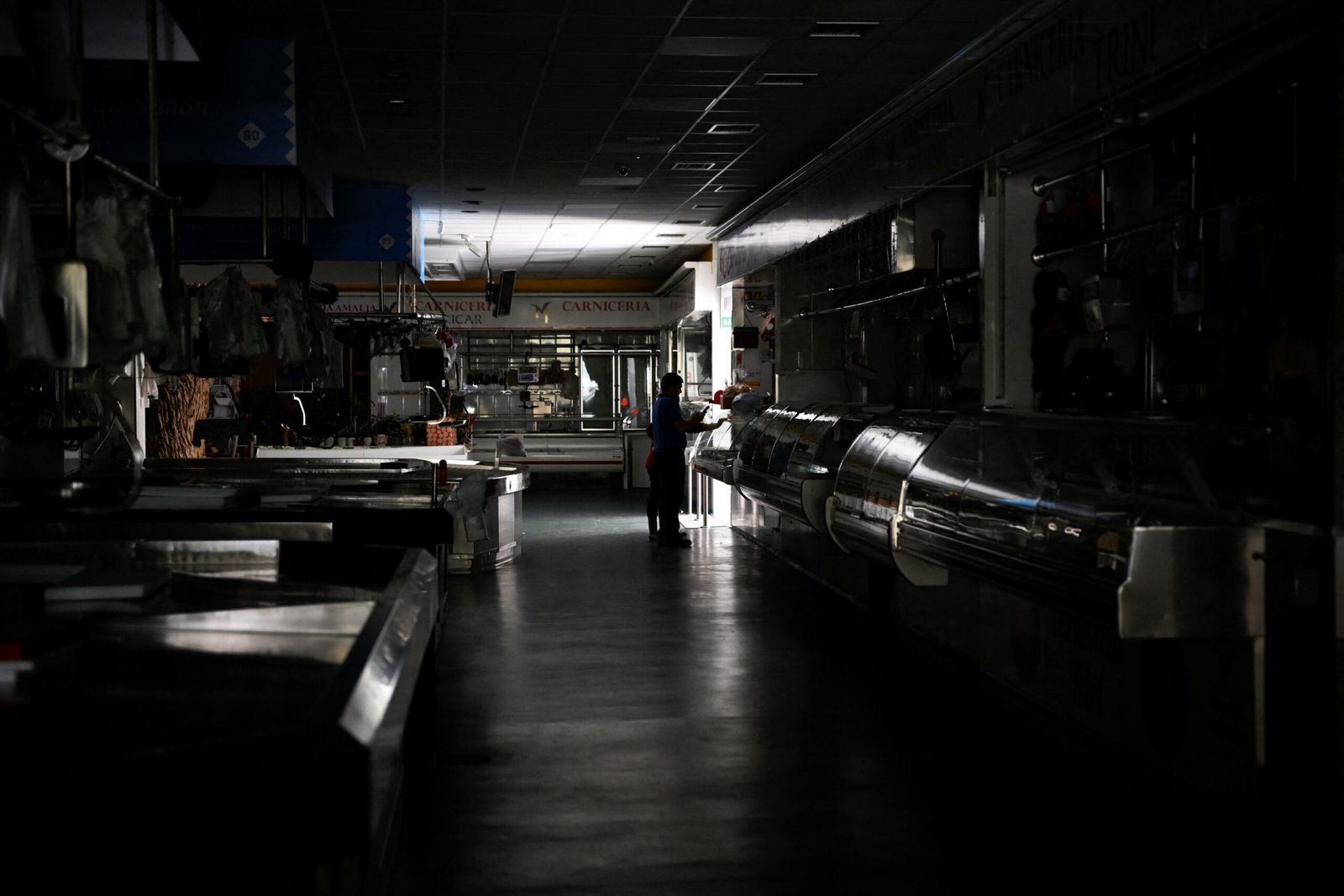
What Caused the European Power Outage?
The causes of the power outage that left millions in Spain and Portugal without electricity on Monday have yet to be fully determined, though service has now been restored across 99 percent of the Iberian peninsula. Red Eléctrica, the public company in charge of operating Spain’s transmission infrastructure, has preliminarily ruled out a cyberattack, human error, or unusual weather or atmospheric conditions as a cause of the outage. The company points out that the incident could have originated from two “disconnections of generation,” possibly linked to the inherent volatility of renewable sources.
Specialists emphasize that this type of total blackout—an exceptional and infrequent event—is also a security mechanism of the electricity system itself. For a grid to operate stably, energy production must be kept in balance with consumption; imbalances can cause blackouts as well as potentially damage infrastructure.
Maintaining grid balance is the responsibility of the system operator, who monitors parameters such as electrical frequency, voltage, and load from substations in real time. When there are significant discrepancies between generation and demand, automatic disconnections are activated in specific areas of the grid to avoid imbalances. In the most serious situations, the impacts of these triggered disconnections can extend to the entire network.
“This generalized blackout occurred because, in just five seconds, more than half of the electricity-generation capacity was lost,” Álvaro de la Puente Gil, professor of electrical engineering at the School of Mining Engineering of the University of León, said in comments to the Science Media Centre (SMC) in Spain. The grid, unable to balance such a sharp drop between generation and demand, protected itself by automatically disconnecting both internally and from the rest of the European grid.
In comments to the SMC, Miguel de Simón Martín, professor of electrical engineering at the University of León, explains that balance on a grid is typically guaranteed by three things. First is a complex network of interconnected lines, known as meshes, that distribute electrical flows across the grid to prevent overloads. Second, there are interconnections with neighboring countries’ grids, which allow energy to be imported or exported as needed to balance generation and demand.
Finally, there is something called “mechanical inertia.” Synchronous generators—the large spinning machines that generate electricity in power stations—also store a lot of energy in their very large rotating parts. Imagine, say, a coal-fired power station. Even if it stops burning coal to generate more power, the huge, heavy turbines it uses to create electricity will continue spinning for some time because of the energy stored up in them. Known as mechanical inertia, this phenomenon can act as a buffer against abrupt fluctuations in the grid. When there are imbalances between energy generation and demand, synchronous generators can speed up or slow down their rotational speed to balance things out, essentially acting as a shock absorber to the grid by absorbing or releasing energy as needed.
“A large, well-meshed grid, with strong interconnections and abundant synchronous generators, will be more stable and less prone to failures,” says De Simón Martín “The Spanish peninsular power grid has historically been robust and reliable thanks to its high degree of meshing at high and very high voltage, as well as its large synchronous generation capacity. However, its weak point has always been its limited international interconnection, conditioned by the geographical barrier of the Pyrenees.”
According to his data, the electricity exchange capacity between Spain and the rest of Europe—in other words, how much energy the country can draw from or send into the continent—barely represents 3 percent of the country’s installed capacity. This is well below the European Union’s 15 percent target for member states to achieve by 2030.
Users board buses outside Atocha station in Madrid after its closure due to a massive blackout that affected Spain on April 28, 2025.
Photograph: THOMAS COEX/Getty Images
The increasing integration of renewable energy into the Spanish system may have exacerbated the disconnection issues and subsequent need to balance the grid. According to Spain’s National Integrated Energy and Climate Plan, the country has set a target for 81 percent of its electricity to come from clean sources by 2030. At the end of last year, renewables already accounted for 66 percent of installed capacity in Spain and generated 58.95 percent of the country’s electricity. The main sources were wind, solar, and hydro.
De Simón Martín points out that, unlike thermal or hydroelectric power plants, wind and solar systems lack mechanical inertia, as they are connected to the grid not via synchronous generators but by electronic inverters. The robustness of the overall energy system therefore falls as the proportion of these inertia-lacking energy sources grows—essentially, fewer synchronous generators means less grid-wide ability to handle sudden changes in balance. “With low interconnection capacity and a high share of inverter-based renewable generation, our grid today is more vulnerable and has less margin to react to disturbances,” De Simón Martíne concludes.
How to Prevent Another Massive Blackout
Although the probability of a similar event occurring again in the short or medium term is low, experts agree that it is urgent to implement measures to strengthen the resilience of the system.
Manuel Alcázar Ortega, deputy director of the Department of Electrical Engineering at the Polytechnic University of Valencia, told the SMC that an immediate solution would be to “limit the production of photovoltaic energy at times of low demand, in favor rolling generation that provides inertia to the system and can respond better to frequency variations.” He also considers it necessary to incorporate frequency and voltage stabilizers in the grid to counteract the loss of inertia caused by the high presence of renewables.
De la Puente Gil adds that a priority should be “to increase electricity interconnections with France and other European countries, so that the peninsula is no longer so isolated.” He also thinks there needs to be more flexibility in the existing system on the peninsula, with “more storage mechanisms that can compensate for the variability of renewable energies. All of this requires investment, planning and a clear strategy for a secure energy transition.”
In press conference held on Tuesday, Pedro Sánchez, the Spanish prime minister, denied that high use of solar and wind or poor links with the European power grid were the main causes of the outage, but also said that no hypotheses as to what happened could be ruled out. Both the Spanish government and the European Commission have said that they are launching investigations into what caused the grid to fail.
This story originally appeared on WIRED en Español and has been translated from Spanish.
