

What Happens When a Chinese Battery Factory Comes to Town
When the rest of WIRED subscribers get their hands on our next print magazine, you, dear readers of Made in China, can proudly say you heard about it here first. The issue is all about China and includes stories about robots, AI boyfriends, a Chinese town that became the crystal capital of the world, and a Chinese DNA database built for family reunions. Like this newsletter, the issue is our attempt to document how deeply Chinese technology now shapes everyday life—no matter where you live in the world.
As part of the issue, I reported a story on how Chinese lithium battery companies like CATL, BYD, and Gotion are now building factories on nearly every continent. The trend challenges traditional narratives about “Made in China,” which often center on cheap labor, heavy pollution, and government subsidies. Instead, I set out to track every battery factory outside China owned by a Chinese company. With help from the New York–based think tank Rhodium Group, we identified 68 facilities that have been built or announced over the past decade.
Entering a New Phase
The worldwide expansion of Chinese battery factories signifies the country is entering a new phase of manufacturing. Chinese companies have become so efficient and technologically advanced that they can now relocate their factories anywhere and still find ways to be more competitive than local players. In WIRED’s China issue, we charted that unprecedented growth in a series of maps and graphs. You can check them all out here.
The world is still grappling with what this paradigm shift will mean for the future of energy and geopolitics. But the batteries produced by these factories are already reshaping the transition to clean energy. The experts I spoke with said the growing presence of Chinese batteries—and the overseas factories that make them—could transform everything from local labor relations to how technology is transferred across borders.
When a Chinese Factory Comes to Town
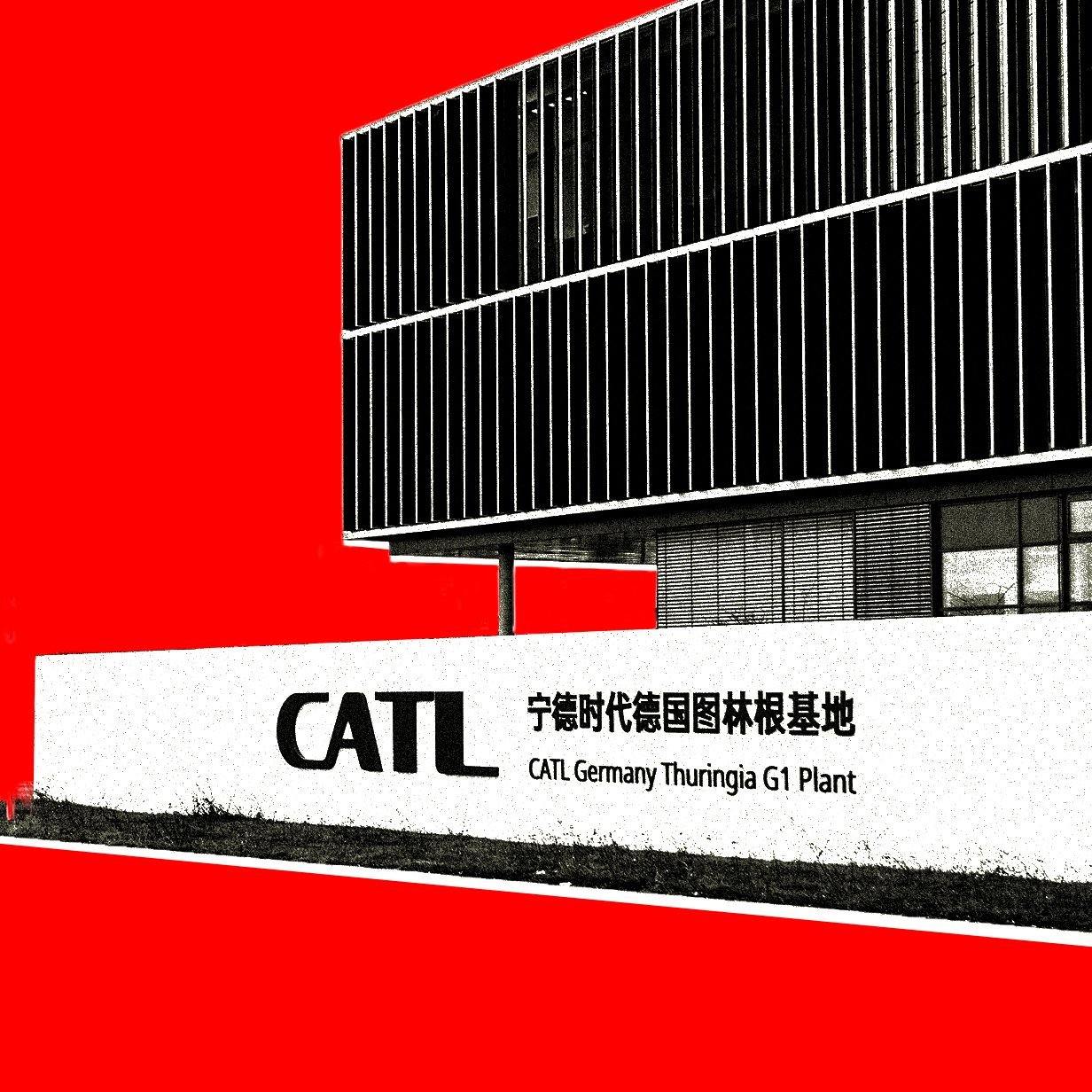
Hungary is one of the most striking examples of what happens when Chinese battery companies expand abroad. The country is home to at least four plants already under construction, including possibly the biggest overseas factory ever planned by a Chinese battery company that’s worth approximately $8.5 billion. Hungary has become a gateway for Chinese firms to sell their products to the European market. As a result, it also provides an early blueprint for how communities will react when a Chinese battery factory opens up shop in their backyard.
Many people in Hungary are skeptical about whether Chinese companies will prioritize hiring locals or bring in cheaper workers from elsewhere instead. They arrived in the country at a time when local labor supply was low because many Hungarians moved to other parts of Europe in recent years in search of work, says András Bartók, an assistant professor at the Ludovika University of Public Service who has studied Hungary’s relationship with Japan and China. The companies have worked with the Hungarian government to bring in migrant labor from Central Asia and Southeast Asia, but that has prompted backlash from local residents. When CATL, the world’s largest lithium battery maker, laid off more than 100 employees at its planned Hungarian factory site last summer, the local municipality launched an investigation into whether the firm had kept its stated promise to hire locally.
CATL is also facing local protests in Hungary over its water use and environmental footprint, criticisms that it inherited from Japanese and Korean battery companies that built factories there over the last two decades. “Way before these Chinese [investments] were announced, there were national-level protests with how groundwater is polluted during battery manufacturing,” says Bartók. A Hungarian court also ordered a Samsung battery plant to suspend production in October because of pollution concerns. Because the Chinese companies announced their investments in drought-prone regions, they were immediately swept into already heated media debates about the limited availability of natural resources.
At the end of the day, local residents may feel disconnected from these batteries, and from the green energy transition they enable, because Hungarians are not the target consumers. Most lithium batteries produced in Hungary are destined for Western European car markets, where consumers are wealthier and already sold on the need to shift to clean energy. “The average Hungarian has the money to buy a 10-year-old used car from Germany, usually powered by diesel or gas. They don’t have the money to buy electric vehicles,” says Bartók.
Sluggish Demand
It’s worth keeping in mind that not all of the international deals announced by Chinese battery makers have panned out. Among the 68 factory investments we found, at least five of them have been paused or officially canceled, in some cases even after they had already begun construction. Part of that is because consumer adoption of EVs in these markets has proved to be a much more gradual process than in China.
Chinese battery makers planned aggressive global expansions at a time when governments were giving generous subsidies to factory projects and tax credits to consumers who bought electric cars, and they now have to recalibrate as that enthusiasm wanes. In the US, the Inflation Reduction Act passed under Joe Biden incentivized both Chinese and American companies to build factories, but then the EV subsidies outlined in the legislation were canceled under President Donald Trump. Even Europe, which previously set a goal to cease gas car production entirely by 2035, is now having second thoughts.
“Battery manufacturers, of course, would be less incentivized to make a big investment if they are not sure what the policy direction is,” says Alexander Brown, a senior analyst studying industrial policy at the Mercator Institute for China Studies.
What if the world doesn’t want EVs? Some battery companies are already deploying a backup plan: pivot to energy storage. Ford, which is building a massive battery plant in Michigan using CATL’s manufacturing technology, announced in December that it would shift from making EV batteries to producing those for energy storage. Envision AESC, another major Chinese battery company whose plans to expand in the US were on pause for most of last year, also recently announced its existing plant in Tennessee will shift from making EV batteries to storage batteries.
While some parts of the traditional car industry might be lobbying against EVs, everyone seems happy about having more batteries in grids and homes that can prevent power outages and even allow consumers to sell electricity back to the grid. (Well, at least almost everyone. The Pakistani national utility operator and the Chinese banks that lend money to it are not so happy about the rise of Chinese storage batteries, as another piece in our package expertly discussed.)
The good news at least is that energy storage technology has seldom been politicized. In the US, both deeply Democratic California and Republican Texas have become heavy adopters of grid-level battery storage, so Chinese ambitions for building more factories will likely not go completely to waste.
Reverse Technology Transfer
For the partner companies and governments working with Chinese battery makers to bring factories to their countries, the goal has always been clear: exchange market access and subsidies for the promise that these firms will eventually train local workers to produce state-of-the-art batteries on their own.
The irony here should not be lost on anyone who is paying attention to the global automotive industry. Over the last three decades, American, European, Japanese, and Korean automakers were happy to exchange their technological know-how for access to the Chinese auto market. But today, that relationship has been reversed.
Ford CEO Jim Farley laid out this dynamic clearly in an interview with New York Times columnist Thomas Friedman last year: “The way we compete with them is to get access to their IP, just the way they needed ours 20 years ago, and then use our innovative ecosystem and American ingenuity and our great scale and our intimacy with the customer to beat them globally,” he explained.
French President Emmanuel Macron doubled down on the same idea at the World Economic Forum this week, saying China is welcome to invest in Europe if it can “contribute to our growth, to transfer some technologies, and not just to export towards Europe.”
This is the right approach, says Brian Engle, chairman of NAATBatt International, a US trade association for the battery industry. Engle used to be a gas car engineer, but he has now transitioned to researching battery safety. Just like the European countries, he predicts, the US is going to learn to “bring that revenue home, we’re gonna enable these new technologies, we’re gonna grow our economy.” At the moment, “the only long game we keep betting on is petroleum which, frankly, shows zero vision. This is a technology evolution that’s not reversing,” Engle says.
This is an edition of Zeyi Yang and Louise Matsakis’ Made in China newsletter. Read previous newsletters here.
