Close Menu

    Subscribe to Updates

    Get the latest creative news from FooBar about art, design and business.

    What's Hot

    Stop talking to AI, let them talk to each other: The A2A protocol

    Swedish pet insurtech Lassie raises $75M Series C after hitting $100M ARR

    Understanding the valuation of intangible assets in tech deals

    Facebook X (Twitter) Instagram
    • Artificial Intelligence
    • Business Technology
    • Cryptocurrency
    • Gadgets
    • Gaming
    • Health
    • Software and Apps
    • Technology
    Facebook X (Twitter) Instagram Pinterest Vimeo
    Tech AI Verse
    • Home
    • Artificial Intelligence

      Read the extended transcript: President Donald Trump interviewed by ‘NBC Nightly News’ anchor Tom Llamas

      February 6, 2026

      Stocks and bitcoin sink as investors dump software company shares

      February 4, 2026

      AI, crypto and Trump super PACs stash millions to spend on the midterms

      February 2, 2026

      To avoid accusations of AI cheating, college students are turning to AI

      January 29, 2026

      ChatGPT can embrace authoritarian ideas after just one prompt, researchers say

      January 24, 2026
    • Business

      The HDD brand that brought you the 1.8-inch, 2.5-inch, and 3.5-inch hard drives is now back with a $19 pocket-sized personal cloud for your smartphones

      February 12, 2026

      New VoidLink malware framework targets Linux cloud servers

      January 14, 2026

      Nvidia Rubin’s rack-scale encryption signals a turning point for enterprise AI security

      January 13, 2026

      How KPMG is redefining the future of SAP consulting on a global scale

      January 10, 2026

      Top 10 cloud computing stories of 2025

      December 22, 2025
    • Crypto

      Berachain Jumps 150% as Strategic Pivot Lifts BERA

      February 12, 2026

      Tom Lee’s BitMine (BMNR) Stock Faces Cost-Basis Risk — Price Breakdown at 10%?

      February 12, 2026

      Why the US Jobs Data Makes a Worrying Case for Bitcoin

      February 12, 2026

      MYX Falls Below $5 as Short Sellers Take Control — 42% Decline Risk Emerges

      February 12, 2026

      Solana Pins Its $75 Support on Short-Term Buyers — Can Price Survive This Risky Setup?

      February 12, 2026
    • Technology

      Stop talking to AI, let them talk to each other: The A2A protocol

      February 13, 2026

      Swedish pet insurtech Lassie raises $75M Series C after hitting $100M ARR

      February 13, 2026

      Understanding the valuation of intangible assets in tech deals

      February 13, 2026

      The Asus Zenbook S 16 Is $500 Off and Has Never Been This Cheap

      February 13, 2026

      ‘Uncanny Valley’: ICE’s Secret Expansion Plans, Palantir Workers’ Ethical Concerns, and AI Assistants

      February 13, 2026
    • Others
      • Gadgets
      • Gaming
      • Health
      • Software and Apps
    Check BMI
    Tech AI Verse
    You are at:Home»Technology»What you may have missed about GPT-5
    Technology

    What you may have missed about GPT-5

    TechAiVerseBy TechAiVerseAugust 12, 2025No Comments6 Mins Read2 Views
    Facebook Twitter Pinterest Telegram LinkedIn Tumblr Email Reddit
    What you may have missed about GPT-5
    Share
    Facebook Twitter LinkedIn Pinterest WhatsApp Email

    What you may have missed about GPT-5

    Before OpenAI released GPT-5 last Thursday, CEO Sam Altman said its capabilities made him feel “useless relative to the AI.” He said working on it carries a weight he imagines the developers of the atom bomb must have felt.

    As tech giants converge on models that do more or less the same thing, OpenAI’s new offering was supposed to give a glimpse of AI’s newest frontier. It was meant to mark a leap toward the “artificial general intelligence” that tech’s evangelists have promised will transform humanity for the better. 

    Against those expectations, the model has mostly underwhelmed. 

    People have highlighted glaring mistakes in GPT-5’s responses, countering Altman’s claim made at the launch that it works like “a legitimate PhD-level expert in anything any area you need on demand.” Early testers have also found issues with OpenAI’s promise that GPT-5 automatically works out what type of AI model is best suited for your question—a reasoning model for more complicated queries, or a faster model for simpler ones. Altman seems to have conceded that this feature is flawed and takes away user control. However there is good news too: the model seems to have eased the problem of ChatGPT sucking up to users, with GPT-5 less likely to shower them with over the top compliments.

    Overall, as my colleague Grace Huckins pointed out, the new release represents more of a product update—providing slicker and prettier ways of conversing with ChatGPT—than a breakthrough that reshapes what is possible in AI. 

    But there’s one other thing to take from all this. For a while, AI companies didn’t make much effort to suggest how their models might be used. Instead, the plan was to simply build the smartest model possible—a brain of sorts—and trust that it would be good at lots of things. Writing poetry would come as naturally as organic chemistry. Getting there would be accomplished by bigger models, better training techniques, and technical breakthroughs. 

    That has been changing: The play now is to push existing models into more places by hyping up specific applications. Companies have been more aggressive in their promises that their AI models can replace human coders, for example (even if the early evidence suggests otherwise). A possible explanation for this pivot is that tech giants simply have not made the breakthroughs they’ve expected. We might be stuck with only marginal improvements in large language models’ capabilities for the time being. That leaves AI companies with one option: Work with what you’ve got.

    The starkest example of this in the launch of GPT-5 is how much OpenAI is encouraging people to use it for health advice, one of AI’s most fraught arenas. 

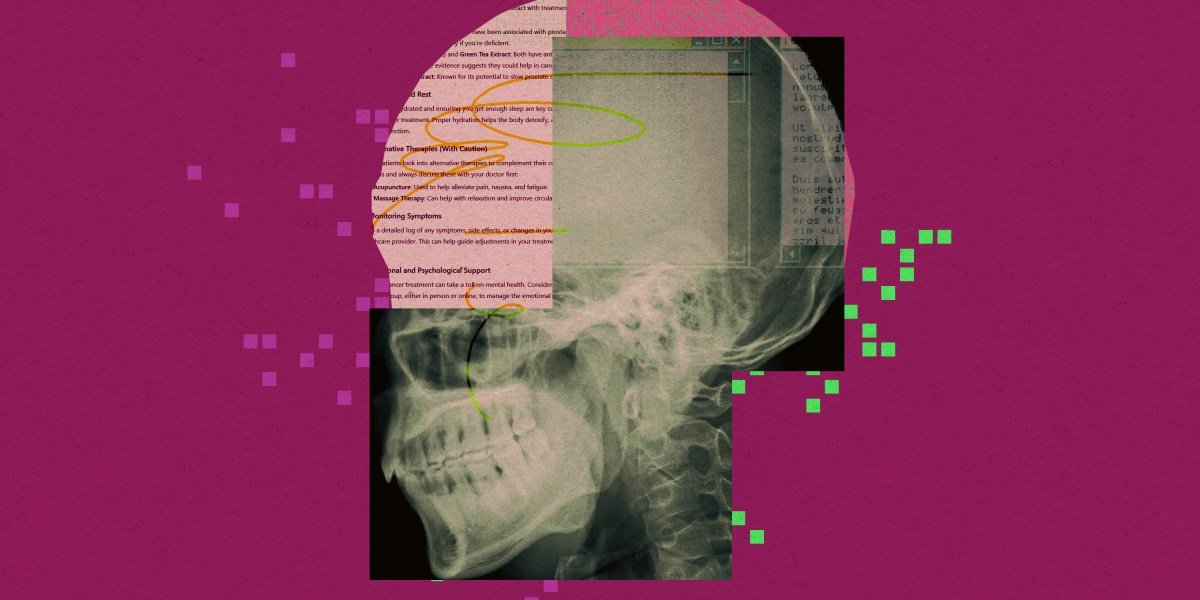
    In the beginning, OpenAI mostly didn’t play ball with medical questions. If you tried to ask ChatGPT about your health, it gave lots of disclaimers warning you that it was not a doctor, and for some questions, it would refuse to give a response at all. But as I recently reported, those disclaimers began disappearing as OpenAI released new models. Its models will now not only interpret x-rays and mammograms for you but ask follow-up questions leading toward a diagnosis.

    In May, OpenAI signaled it would try to tackle medical questions head on. It announced HealthBench, a way to evaluate how good AI systems are at handling health topics as measured against the opinions of physicians. In July, it published a study it participated in, reporting that a cohort of doctors in Kenya made fewer diagnostic mistakes when they were helped by an AI model. 

    With the launch of GPT-5, OpenAI has begun explicitly telling people to use its models for health advice. At the launch event, Altman welcomed on stage Felipe Millon, an OpenAI employee, and his wife, Carolina Millon, who had recently been diagnosed with multiple forms of cancer. Carolina spoke about asking ChatGPT for help with her diagnoses, saying that she had uploaded copies of her biopsy results to ChatGPT to translate medical jargon and asked the AI for help making decisions about things like whether or not to pursue radiation. The trio called it an empowering example of shrinking the knowledge gap between doctors and patients.

    With this change in approach, OpenAI is wading into dangerous waters. 

    For one, it’s using evidence that doctors can benefit from AI as a clinical tool, as in the Kenya study, to suggest that people without any medical background should ask the AI model for advice about their own health. The problem is that lots of people might ask for this advice without ever running it by a doctor (and are less likely to do so now that the chatbot rarely prompts them to).

    Indeed, two days before the launch of GPT-5, the Annals of Internal Medicine published a paper about a man who stopped eating salt and began ingesting dangerous amounts of bromide following a conversation with ChatGPT. He developed bromide poisoning—which largely disappeared in the US after the Food and Drug Administration began curbing the use of bromide in over-the-counter medications in the 1970s—and then nearly died, spending weeks in the hospital. 

    So what’s the point of all this? Essentially, it’s about accountability. When AI companies move from promising general intelligence to offering humanlike helpfulness in a specific field like health care, it raises a second, yet unanswered question about what will happen when mistakes are made. As things stand, there’s little indication tech companies will be made liable for the harm caused.

    “When doctors give you harmful medical advice due to error or prejudicial bias, you can sue them for malpractice and get recompense,” says Damien Williams, an assistant professor of data science and philosophy at the University of North Carolina Charlotte. 

    “When ChatGPT gives you harmful medical advice because it’s been trained on prejudicial data, or because ‘hallucinations’ are inherent in the operations of the system, what’s your recourse?”

    This story originally appeared in The Algorithm, our weekly newsletter on AI. To get stories like this in your inbox first, sign up here.

    Share. Facebook Twitter Pinterest LinkedIn Reddit WhatsApp Telegram Email
    Previous ArticleSam Altman and the whale
    Next Article Study uncovers dark market making millions from video game cheats
    TechAiVerse
    • Website

    Jonathan is a tech enthusiast and the mind behind Tech AI Verse. With a passion for artificial intelligence, consumer tech, and emerging innovations, he deliver clear, insightful content to keep readers informed. From cutting-edge gadgets to AI advancements and cryptocurrency trends, Jonathan breaks down complex topics to make technology accessible to all.

    Related Posts

    Stop talking to AI, let them talk to each other: The A2A protocol

    February 13, 2026

    Swedish pet insurtech Lassie raises $75M Series C after hitting $100M ARR

    February 13, 2026

    Understanding the valuation of intangible assets in tech deals

    February 13, 2026
    Leave A Reply Cancel Reply

    Top Posts

    Ping, You’ve Got Whale: AI detection system alerts ships of whales in their path

    April 22, 2025668 Views

    Lumo vs. Duck AI: Which AI is Better for Your Privacy?

    July 31, 2025256 Views

    6.7 Cummins Lifter Failure: What Years Are Affected (And Possible Fixes)

    April 14, 2025153 Views

    6 Best MagSafe Phone Grips (2025), Tested and Reviewed

    April 6, 2025111 Views
    Don't Miss
    Technology February 13, 2026

    Stop talking to AI, let them talk to each other: The A2A protocol

    Stop talking to AI, let them talk to each other: The A2A protocol Have you…

    Swedish pet insurtech Lassie raises $75M Series C after hitting $100M ARR

    Understanding the valuation of intangible assets in tech deals

    The Asus Zenbook S 16 Is $500 Off and Has Never Been This Cheap

    Stay In Touch
    • Facebook
    • Twitter
    • Pinterest
    • Instagram
    • YouTube
    • Vimeo

    Subscribe to Updates

    Get the latest creative news from SmartMag about art & design.

    About Us
    About Us

    Welcome to Tech AI Verse, your go-to destination for everything technology! We bring you the latest news, trends, and insights from the ever-evolving world of tech. Our coverage spans across global technology industry updates, artificial intelligence advancements, machine learning ethics, and automation innovations. Stay connected with us as we explore the limitless possibilities of technology!

    Facebook X (Twitter) Pinterest YouTube WhatsApp
    Our Picks

    Stop talking to AI, let them talk to each other: The A2A protocol

    February 13, 20262 Views

    Swedish pet insurtech Lassie raises $75M Series C after hitting $100M ARR

    February 13, 20262 Views

    Understanding the valuation of intangible assets in tech deals

    February 13, 20262 Views
    Most Popular

    7 Best Kids Bikes (2025): Mountain, Balance, Pedal, Coaster

    March 13, 20250 Views

    VTOMAN FlashSpeed 1500: Plenty Of Power For All Your Gear

    March 13, 20250 Views

    This new Roomba finally solves the big problem I have with robot vacuums

    March 13, 20250 Views
    © 2026 TechAiVerse. Designed by Divya Tech.
    • Home
    • About Us
    • Contact Us
    • Privacy Policy
    • Terms & Conditions

    Type above and press Enter to search. Press Esc to cancel.