

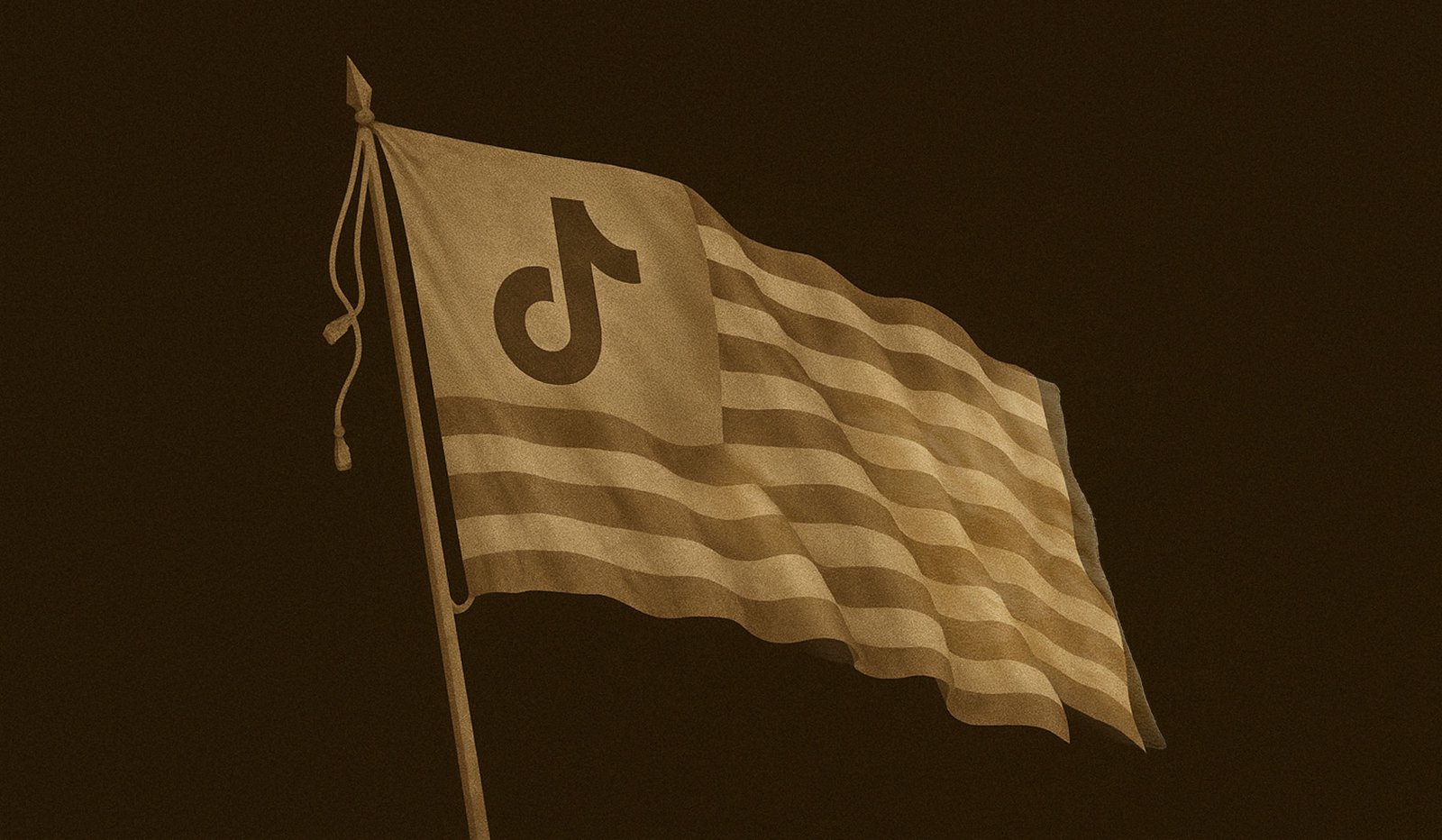
After watching X’s ownership issues play out, marketers brace for TikTok whiplash in 2026
After spending 2025 in regulatory limbo, TikTok is entering 2026 with a clearer ownership path in the U.S. Now, whether the new ownership structure is enough to satiate marketers (and continue to garner their ad dollars) is still an open question.
The deal, which was announced in late December and set to close on Jan. 22, according to Axios, ends the years-long saga of TikTok’s Chinese parent ByteDance to sell the company’s U.S. operation to domestic owners. Oracle, Silver Lake and Abu Dhabi-based MGX together will own 45% of the U.S. entity, 20% will be retained by ByteDance and nearly one-third of the company will be held by affiliates of existing ByteDance investors, per Axios.
If TikTok’s changing of hands is anything like Elon Musk’s chaotic takeover of X (formerly Twitter), some marketers fear they’ll start the year with whiplash.
“From the advertiser perspective, it almost felt like you were just watching this chaos unfold that you can’t control. All you can do is control where your ad spend and your dollars go,” said Kira Henson, director of paid social and search at Good Apple, an independent media agency, on X’s takeover in comparison to TikTok’s new proposed ownership deal.
X’s ad business has started to turn around since the takeover. The platform is expected to take in $2.46 billion in global ad revenue this year, up from $2.26 billion in 2025, according to eMarketer. TikTok’s ad business, however, eclipses those figures. Almost $1 out of every $7 spent on social network ads was expected to go to TikTok, which eMarketer said will generate more than $17 billion in U.S. ad revenue alone.
Inside TikTok’s tumultuous year
At the start of 2025, legislative pressure against TikTok continued to mount to either change ownership or face a ban in the U.S. Tech companies, investment and private equity groups alike all threw their hat in the ring. By December, TikTok had reportedly signed a deal to divest its U.S. entity to a joint venture, which will be called “TikTok USDS Joint Venture LLC,” per Axios.
U.S. companies like Oracle, Silver Lake private equity firm and others, will be the main investors in a domestically-owned version of the app that runs on a licensed copy of TikTok’s core algorithm — or, TikTok U.S. The proposed new structure has already spooked creators who fear the app’s beloved algorithm will become a political battleground. Meanwhile, some marketers are already planning to scale back spending in the new year. The ink has yet to dry as the new deadline ban is set for Jan. 22, 2026. Still, it’s left marketers uneasy.
The question is whether TikTok can avoid the same fate as X, where the lines between social media and politics were marred, putting users and advertisers in turbulence.
Executive shake ups and shakedowns
In light of the ban and the proposed framework for new ownership, several key executives jumped ship. Around spring time, TikTok underwent layoffs, restructuring and lost key executives, including Sameer Singh, general manager for global business solutions in North America, Jack Bamberger, general manager of agency business for the region, and Blake Chandlee, who oversaw advertising sales and marketing globally. Chandlee stepped down in March to take on an advisory role as part of a company reorganization.
The executive shuffle is reminiscent of X. Ahead of Musk’s $44 billion takeover, some execs left of their own volition, like God-is Rivera, then Twitter’s global director of culture and community. Meanwhile, Musk fired CEO Parag Agrawal, CFO Ned Segal, general counsel Sean Edgett and head of legal policy, trust and safety Vijaya Gadde.
While not a hostile takeover like at X, marketers still draw parallels in the platforms losing seasoned industry professionals. Noah Mallin, founder of Mallination, a marketing consultancy, put it bluntly: “Losing that level of talent understanding of what advertisers are looking for, that’s hard to make up for.”
Political backlash
Then there’s the political undertones. Part of the kickup around Musk’s takeover of X tracks back to his political affiliation with Trump. Plus, the platform drew criticism for easing hate-speech rules, relaxing moderation, suspending journalists, and reinstating banned accounts such as Trump’s.
TikTok found itself in Trump’s line of fire during his first presidency in 2020. The president signed an executive order, citing national security reasons and thus pressuring the Chinese-owned app to sell its U.S. assets to an American company. Trump’s attitude has since shifted from banning TikTok altogether to saving it via U.S. ownership. The attitude change is in part to the 2024 election, in which election campaigns leveraged TikTok-led influencer strategies.
For the most part, elements of the new TikTok remain unclear — and that’s if it even comes to fruition. But one recurring name in the new ownership structure is Larry Ellison, database billionaire and so-called Trump favorite, per The New York Times. As the through lines between politics and social media get murkier, marketers worry less about censorship and more about changes to the algorithm and user behavior on the app.
“The people who are acting in this scenario are not the advertisers, and so that’s the thing that is tricky. Elon Musk, Trump, all of the other actors, they’re just thinking about politics and business,” Henson said.
What actually happened with X?
After Musk took over X, the relationship with advertisers went cold. Between chaotic leadership, political controversy and algorithmic changes, advertisers fled the coup. The big sticking point, however, was brand safety. It became a big point of contention between advertisers and Musk, leading to threats to cut off ad spend, a lawsuit and eventual unraveling of the Global Alliance of Responsible Media (GARM), a voluntary committee setting industry standards.
“The political side of it was where the headlines came, and a lot of people focusing around brand safety. But the reality is Twitter has always been plagued with fake accounts, bots,” said Freddy Dabaghi, chief transformation officer at full-service agency Crispin.
X had issues around performance and brand safety even before Musk’s takeover marking it lower on the ad spend priority list with its cultural cachet making it more of a “water cooler for major events,” per Mallin.
Unless the president and the U.S. consortium get involved in TikTok’s day-to-day operations in the same way Musk was involved with X, it’s unlikely TikTok will face the same fate in that regard, per marketers. The short-form video platform has maintained its focus on advertiser satisfaction and investment, according to the marketers Digiday spoke with for this piece. Meaning, TikTok seems to care more about advertisers than X did at the height of Musk’s takeover. (Recall Musk telling advertisers to go f**k themselves during an interview at The New York Times DealBook Summit back in 2023.)
Performance over politics
TikTok hasn’t reached too big to fail status yet, but its platform usage has steadily increased as has ad spend. As Digiday previously reported, eMarketer forecasted in September that TikTok’s U.S. ad revenue would rake in $14.03 billion this year, increasing 22.3% to $17.17 billion next year, and a further 24.8% increase to $21.43 billion in 2027. TikTok Shop has also been a big get. In fact, TikTok Shop crossed $500 million in U.S. sales during this year’s Black Friday Cyber Monday week, per Business Insider.
TikTok’s key differentiators (and maybe its saving grace) is strong ad performance, its footing in e-commerce and growing user base. As long as TikTok maintains its audience, there’s a case to be made for TikTok in marketing budgets and strategies.
“It’s where people are, and so advertisers are going to want to follow those eyeballs,” said an agency exec who spoke on background.
Final outlook
TikTok may not be immune to some of the volatility that plagued X, but its proven performance and position in the market are giving it a longer leash with advertisers — at least for now. Final details of what the new TikTok will look like are coming into focus and marketers are watching closely.
“If the user experience holds steady, we expect spend to fluctuate only as media buyers pause to recalibrate their data,” Henson said. “But if these updates negatively impact how users interact with the app, the shift in spend could signal a migration to where the user attention has moved next.”
