

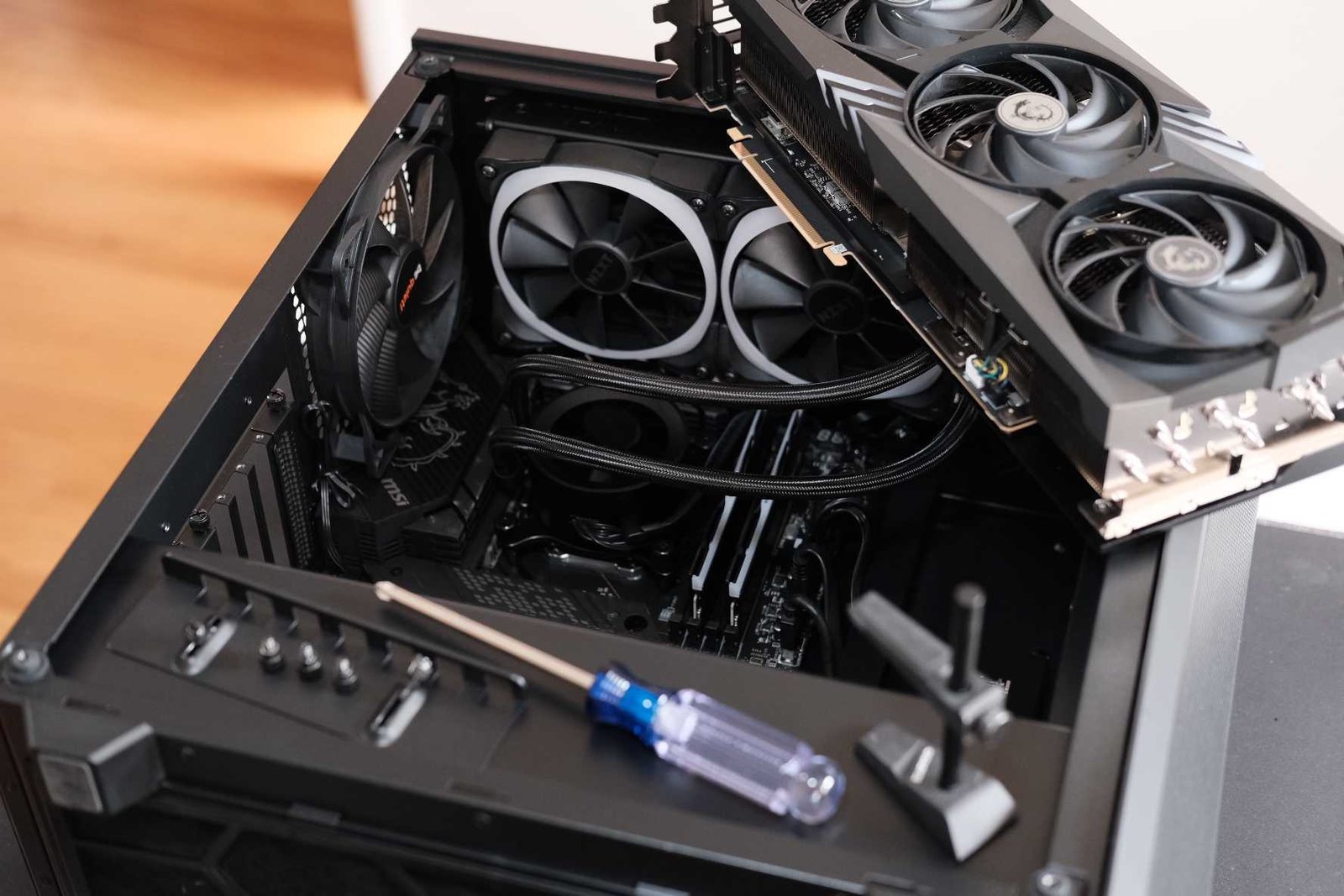
DIY PC building is a no-fly zone in 2026. (Thanks, RAM.) Now what?
Image: Adam Patrick Murray / Foundry
I don’t typically make New Year’s resolutions, but 2026 is a special exception. You can thank stratospheric memory prices for that—and a little scare that happened right before Christmas. Micro Center briefly marked a handful of SSDs for sale at their suggested list price, alarming DIY PC builders with the thought of $600+ 2TB NVMe drives.
I lived a few potential lifetimes in the short period before Micro Center restored its real prices. That is, I imagined several possible paths for what I’d do if I couldn’t afford PC building. More specifically: What I would have fun doing.
Being a hardware enthusiast is more than just devotion to the hobby, in my book. It involves a certain perspective about technology overall—a deep appreciation and interest in what those things can do at full blast. Limiting myself to focusing only on new PC parts cuts out so much of what I could dive into.
So I thought awhile on what “full blast” would mean for me in 2026, a likely year of building drought. I narrowed it to two main angles:
- What hobbies adjacent to PC building have I let languish or neglected?
- Could I find new or alternative uses for the hardware I already have?
Then I thought about what gets my attention, and in what ways. Mechanical keyboards and elaborate homebrew NAS setups would be too expensive for me to pick up as building hobbies…but not as areas for greater learning. Nothing’s stopping me from plunging down the rabbit hole of deeply absorbing the ins and outs without any hands-on time.
And if I need a more immediate project, I could finally sit down with both Jellyfin and Plex, as well as my media collection, and finally properly rip everything for local streaming. As I’ve intended to do for literal years now. (Yeah…)
Foundry
But I’ll confess, I’d find tinkering with my existing hardware much more interesting than diving into media software. I have so much of it on hand already, and in true proto-hoarder fashion, I’m reluctant to give it up. Especially when I don’t know if I could afford to replace it. Especially when 2026 will likely be another Year of Linux.
So here are my resolutions, in order of firm plans:
- Start at least one Linux project. (I say start because I don’t know if success is possible for my initial goal: To convert my old beloved Chromebook at last.) Use at least one or two distros for a few months.
- Expand my knowledge in areas I know less or even nothing about. Networking is currently a top contender. So is rolling my own NAS with old parts and old drives, just to see how I’d like it.
- Attempt a repurposing that isn’t typical for the hardware. (For example: Repurposing an Android-based E-Ink tablet as a second screen.)
- If successful with Resolution #1, attempt to convert remaining applicable hardware to Linux.
If 2026’s theme is “We have ____ at home,” then you know what? I’m going to try to enjoy the experience. We touched on this idea briefly at the end of our final TFN episode of the year, when we finished making all of our 2026 predictions. All the time I would normally spend on new technology, I can repurpose to becoming smarter and savvier about existing technology. I find that pretty exciting still.
In this episode of The Full Nerd
…We’re on break! We’ll be back in January, live from CES 2026!
Not caught up on episodes? Take a moment and subscribe now to The Full Nerd Network YouTube channel, then activate notifications. We also answer viewer questions in real-time!
Our channel now includes our NEW shows too—dive into episodes of Dual Boot Diaries and The Full Nerd: Extra Edition during this holiday downtime!
And if you need more hardware talk during the rest of the week, come join our Discord community—it’s full of cool, laid-back nerds. We’ve been chatting a bunch lately and it’s all good vibes.
This week’s streamlined nerd news
Just a small handful of links for this holiday break edition—a little mix of nostalgia, confusion, and hope. You know, how I start every new year. (Mostly kidding.)
Next week will be a deluge of news, thanks to CES 2026, so I figure we can all take it easy on reading while we still can!
Mateusz Dach
- Bitrot comes for everything: So having an easy, decently affordable backup method for my old SNES game saves? I’m in.
- Oddly specific: The Raspberry Pi was part of the banned devices list at New York City’s mayoral inauguration. Huh.
- Did Microsoft do anything right in 2025? My colleague (and TFN regular) Mark Hachman evaluates the wins, fails, and sheer WTF moments of last year.
- Miss Unix v4? It’s back: Well, sort of. You can at least indulge in some nostalgia thanks to the University of Utah and software engineer Mark Riedstra.
- Hm, Brad may have to recalibrate his advice: GeForce Now subscriptions now universally have a 100 hour cap on gameplay. That definitely changes its value. But also, if you’re able to game more than 100 hours a month, please share your life tips as a working adult.
- Nanobots, roll out: I choose to be excited by the prospect of medical advancements, rather than dwell on the possibility of dystopian biological warfare.
Wishing you all a happy new year—I’m looking forward to seeing what comes in 2026, with all of you alongside. Catch you next week!
~Alaina
This newsletter is dedicated to the memory of Gordon Mah Ung, founder and host of The Full Nerd, and executive editor of hardware at PCWorld.
Author: Alaina Yee, Senior Editor, PCWorld
A 14-year veteran of technology and video games journalism, Alaina Yee covers a variety of topics for PCWorld. Since joining the team in 2016, she’s written about CPUs, Windows, PC building, Chrome, Raspberry Pi, and much more—while also serving as PCWorld’s resident bargain hunter (#slickdeals). Currently her focus is on security, helping people understand how best to protect themselves online. Her work has previously appeared in PC Gamer, IGN, Maximum PC, and Official Xbox Magazine.
