

Ex-ArianeGroup CEO backs Pangea to build 3D-printed aerospike rocket engines
Aerospike rocket engines are the stuff of legend in the space industry. Conceived in the 1960s, their unique spiked-nozzle design promises better efficiency, reusability, and performance at all altitudes. But their complexity — and the shutdown of major space programmes towards the end of the 20th century — meant they never entered the mainstream.
But now, startups are dusting off old designs and using new technologies to revive aerospike engines for modern spaceflight. One of these ventures is Spain’s Pangea Aerospace.
Founded in 2018, Pangea has been operating under the radar for most of its seven-year history. But today, the company announced a €23mn Series A funding round as it looks to ramp up development of its 3D-printed aerospike rocket engine.
Among the investors was André-Hubert Roussel, former CEO of ArianeGroup, who oversaw the development of Europe’s only heavy-lift rocket in operation, Ariane 6. Roussel joined Pangea’s board last year.
“It’s incredibly valuable to have such a figure investing in and advising us as we embark on our next stage of growth,” Pangea’s CCO and co-founder Xavier Llairó told TNW.
Roussel praised the company’s plans on LinkedIn. “Strong team, strong technology, building the future of space propulsion,” he said.
An aerospike rocket revolution?
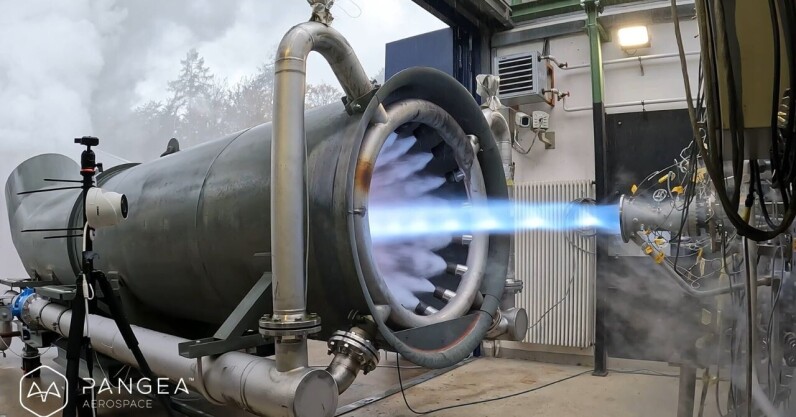
In 2021, Pangea successfully conducted a hot-fire test of Demo-P1, the world’s first aerospike methalox engine.
“We’ve been silently making breakthroughs in cooling techniques, additive manufacturing, and materials science that are now paying off,” said Llairó. “We’re sure we can produce aerospike engines at a low cost.”