

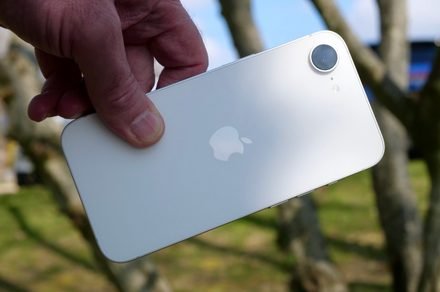
The next-gen iPhone Air could bring a thinner Face ID
Apple may double down on ultra-thin design with the iPhone Air 2, pairing a slimmer Face ID system with internal changes to support long-rumored camera upgrades.
Nirave Gondhia / Digital Trends
The first-generation iPhone Air invented a new market segment — ultra-thin smartphones — but didn’t do as well as the company expected. Now that the segment has a couple of players, it’s all the more important for the Cupertino giant to maintain its lead, especially as the pioneer.
To achieve that, the company has been planning to upgrade the iPhone Air 2 with a secondary camera, something we’ve known for a while. However, a new leak from the Chinese tipster Instant Digital now claims that the next-generation slim iPhone could also get a slimmer Face ID module.
Slimmer Face ID could mean a smaller Dynamic Island
“Apple is commissioning a supplier to customize an ultra-thin Face ID component,” reads the Weibo post (translated from Chinese Simplified). The slim Face ID component could refer either to a specific part of the module or to the entire module.
It could result in a visibly smaller Face ID cutout on the iPhone Air 2’s screen, and therefore, a smaller Dynamic Island, similar to that rumored for the iPhone 18 Pro models. At the same time, the smaller component could help free up some space inside the slim iPhone’s chassis.
The freed-up space, along with other engineering optimizations, should make way for the secondary ultrawide camera on the iPhone Air 2’s back, in the horizontal plateau.
Launch timeline remains unclear for iPhone Air 2
What’s even more interesting is the tipster’s claim about the slimmer Face ID module making its way to an upcoming MacBook Pro. However, I’m taking this information with a pinch of salt, as there aren’t any other industry sources that have claimed Face ID will be on a future MacBook model.
If everything goes well, Apple might launch the iPhone Air 2 in September 2026, alongside the iPhone 18 Pro and Apple’s first foldable iPhone. However, some rumors also suggest that the smartphone could arrive in the spring of next year, around March 2027.
For more than five years, Shikhar has consistently simplified developments in the field of consumer tech and presented them…
Samsung’s prettiest Galaxy Z Flip7 might be the one you can’t buy
The Milano Cortina 2026 edition is reserved for athletes, with a 100GB 5G eSIM and on-site support.
Samsung has unveiled a special Galaxy Z Flip7 for Milano Cortina 2026 that most people will never see on a store shelf. It will be provided only to athletes competing at the Olympic and Paralympic Winter Games, with Samsung distributing the phones to nearly 3,800 Olympians and Paralympians from about 90 countries.
The phone is being treated like part of the Games kit, built to help athletes get through Village life and share the moments that matter.
Early look shows Apple’s Liquid Glass-style blur effects coming to Android 17
Google tests blur effects in Android 17
Google may be quietly rethinking how Android looks, and an early glimpse of Android 17 suggests visual changes that feel very familiar. New evidence has surfaced showing blur effects in Android 17’s system interface, hinting at a design direction that echoes Apple’s Liquid Glass style.
Blur and transparency are not entirely new concepts for Android. What makes this Android 17 sighting notable is how deliberate and system-level the effects appear to be.
Qualcomm’s Snapdragon 8 Elite Gen 6 Pro may reach 5.0GHz with Samsung heat tech
Your future phone may run faster than your laptop, and just as hot
If you follow the smartphone world closely, you know that we have hit a bit of a wall recently. For the last few years, Qualcomm has been relentlessly pushing clock speeds higher and higher, but physics is starting to push back. It doesn’t matter how fast a chip can go if it gets so hot within three minutes of gaming that it has to throttle itself down to a crawl. The current Snapdragon 8 Elite Gen 5 is a beast, sure, but it is already dancing right on the edge of what is thermally possible inside a device that sits in your pocket.
However, if recent whispers from the tech grapevine are to be believed, Qualcomm is getting ready to smash through that ceiling later this year – and they might be doing it by borrowing a trick from their biggest rival.
