

We need targeted policies, not blunt tariffs, to drive “American energy dominance”
Heat Exchange
MIT Technology Review’s guest opinion series, offering expert commentary on legal, political and regulatory issues related to climate change and clean energy. You can read the rest of the pieces here.
The current 90-day pause on rolling out most of the administration’s so-called “reciprocal” tariffs presents a critical opportunity. Rather than defaulting to broad, blunt tariffs, the administration should use this window to align trade policy with a focused industrial strategy—one aimed at winning the global race to become a manufacturing powerhouse in next-generation energy technologies.
By tightly aligning tariff design with US strengths in R&D and recent government investments in the energy innovation lifecycle, the administration can turn a regressive trade posture into a proactive plan for economic growth and geopolitical advantage.
The president is right to point out that America is blessed with world-leading energy resources. Over the past decade, the country has grown from being a net importer to a net exporter of oil and the world’s largest producer of oil and gas. These resources are undeniably crucial to America’s ability to reindustrialize and rebuild a resilient domestic industrial base, while also providing strategic leverage abroad.
But the world is slowly but surely moving beyond the centuries-old model of extracting and burning fossil fuels, a change driven initially by climate risks but increasingly by economic opportunities. America will achieve true energy dominance only by evolving beyond being a mere exporter of raw, greenhouse-gas-emitting energy commodities—and becoming the world’s manufacturing and innovation hub for sophisticated, high-value energy technologies.
Notably, the nation took a lead role in developing essential early components of the cleantech sector, including solar photovoltaics and electric vehicles. Yet too often, the fruits of that innovation—especially manufacturing jobs and export opportunities—have ended up overseas, particularly in China.
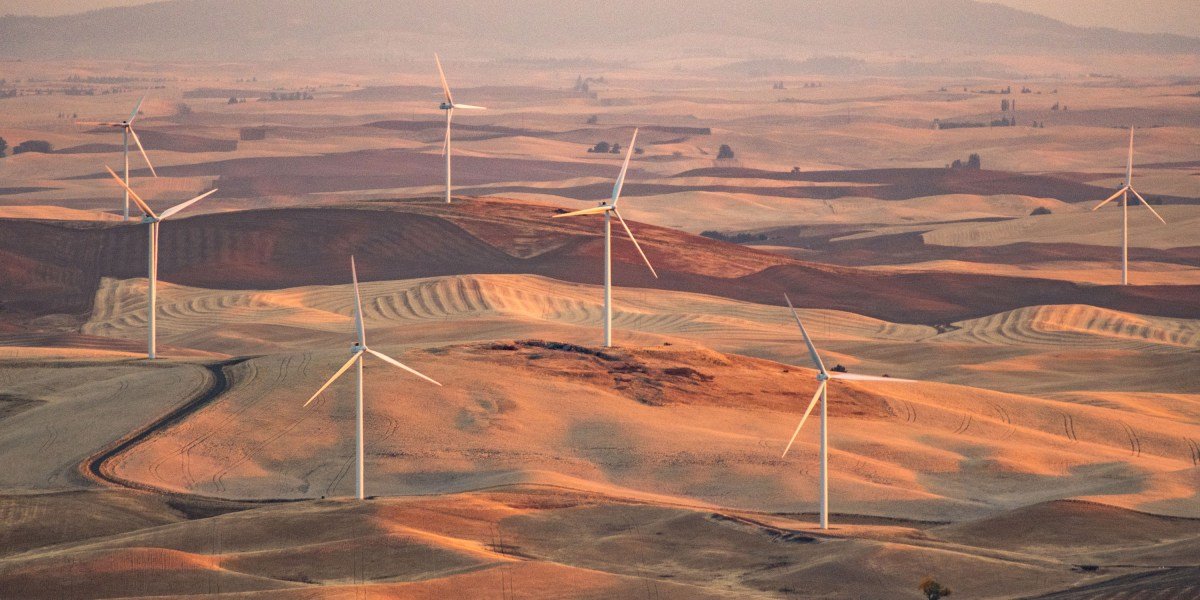
China, which is subject to Trump’s steepest tariffs and wasn’t granted any reprieve in the 90-day pause, has become the world’s dominant producer of lithium-ion batteries, EVs, wind turbines, and other key components of the clean-energy transition.
Today, the US is again making exciting strides in next-generation technologies, including fusion energy, clean steel, advanced batteries, industrial heat pumps, and thermal energy storage. These advances can transform industrial processes, cut emissions, improve air quality, and maximize the strategic value of our fossil-fuel resources. That means not simply burning them for their energy content, but instead using them as feedstocks for higher-value materials and chemicals that power the modern economy.
The US’s leading role in energy innovation didn’t develop by accident. For several decades, legislators on both sides of the political divide supported increasing government investments into energy innovation—from basic research at national labs and universities to applied R&D through ARPA-E and, more recently, to the creation of the Office of Clean Energy Demonstrations, which funds first-of-a-kind technology deployments. These programs have laid the foundation for the technologies we need—not just to meet climate goals, but to achieve global competitiveness.
Early-stage companies in competitive, global industries like energy do need extra support to help them get to the point where they can stand up on their own. This is especially true for cleantech companies whose overseas rivals have much lower labor, land, and environmental compliance costs.
That’s why, for starters, the White House shouldn’t work to eliminate federal investments made in these sectors under the Bipartisan Infrastructure Law and the Inflation Reduction Act, as it’s reportedly striving to do as part of the federal budget negotiations.
Instead, the administration and its Republican colleagues in Congress should preserve and refine these programs, which have already helped expand America’s ability to produce advanced energy products like batteries and EVs. Success should be measured not only in barrels produced or watts generated, but in dollars of goods exported, jobs created, and manufacturing capacity built.
The Trump administration should back this industrial strategy with smarter trade policy as well. Steep, sweeping tariffs won’t build long-term economic strength.
But there are certain instances where reasonable, modern, targeted tariffs can be a useful tool in supporting domestic industries or countering unfair trade practices elsewhere. That’s why we’ve seen leaders of both parties, including Presidents Biden and Obama, apply them in recent years.
Such levies can be used to protect domestic industries where we’re competing directly with geopolitical rivals like China, and where American companies need breathing room to scale and thrive. These aims can be achieved by imposing tariffs on specific strategic technologies, such as EVs and next-generation batteries.
But to be clear, targeted tariffs on a few strategic sectors are starkly different from Trump’s tariffs, which now include 145% levies on most Chinese goods, a 10% “universal” tariff on other nations and 25% fees on steel and aluminum.
Another option is implementing a broader border adjustment policy, like the Foreign Pollution Fee Act recently reintroduced by Senators Cassidy and Graham, which is designed to create a level playing field that would help clean manufacturers in the US compete with heavily polluting businesses overseas.
Just as important, the nation must avoid counterproductive tariffs on critical raw materials like steel, aluminum, and copper or retaliatory restrictions on critical minerals—all of which are essential inputs for US manufacturing. The nation does not currently produce enough of these materials to meet demand, and it would take years to build up that capacity. Raising input costs through tariffs only slows our ability to keep or bring key industries home.
Finally, we must be strategic in how we deploy the country’s greatest asset: our workforce. Americans are among the most educated and capable workers in the world. Their time, talent, and ingenuity shouldn’t be spent assembling low-cost, low-margin consumer goods like toasters. Instead, we should focus on building cutting-edge industrial technologies that the world is demanding. These are the high-value products that support strong wages, resilient supply chains, and durable global leadership.
The worldwide demand for clean, efficient energy technologies is rising rapidly, and the US cannot afford to be left behind. The energy transition presents not just an environmental imperative but a generational opportunity for American industrial renewal.
The Trump administration has a chance to define energy dominance not just in terms of extraction, but in terms of production—of technology, of exports, of jobs, and of strategic influence. Let’s not let that opportunity slip away.
Addison Killean Stark is the chief executive and cofounder of AtmosZero, an industrial steam heat pump startup based in Loveland, Colorado. He was previously a fellow at the Department of Energy’s ARPA-E division, which funds research and development of advanced energy technologies.
